
How Much Electric Does A Wind Turbine Produce
Ever look out at a field of wind turbines, those giant, elegant windmills of the modern age, and wonder, "Just how much juice are those things squeezing out of the breeze?" It's a fair question, right up there with "Where do all the socks go in the dryer?" and "Why is my Wi-Fi always slow when I'm trying to stream a movie?"
We're surrounded by electricity; it's the invisible force powering our lives. But unlike a wall socket, which mysteriously provides endless energy (until the bill comes, anyway), wind turbines are a bit more… nuanced.
It's All About Size and Speed
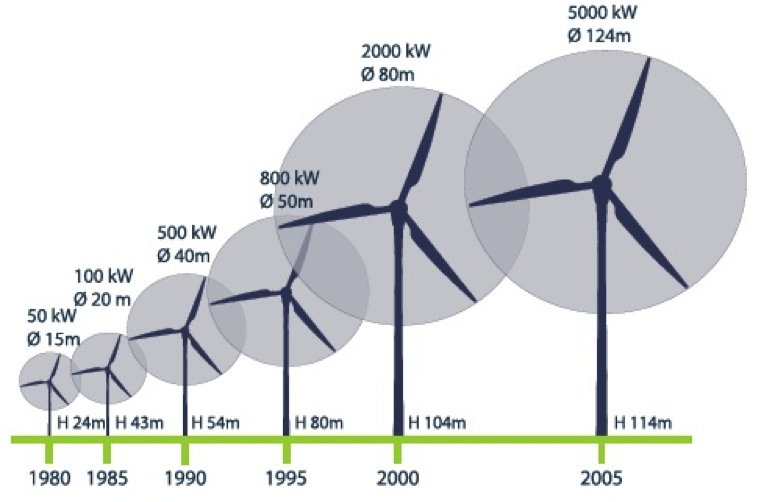
Think of it like this: a tiny desk fan isn't going to cool down a stadium, and a hairdryer isn't going to power your entire house (trust me, I've tried). Same with wind turbines. Size matters. A small turbine, the kind you might see on a farm or powering a single cabin, will produce significantly less electricity than a massive one soaring high above a wind farm.
Must Read
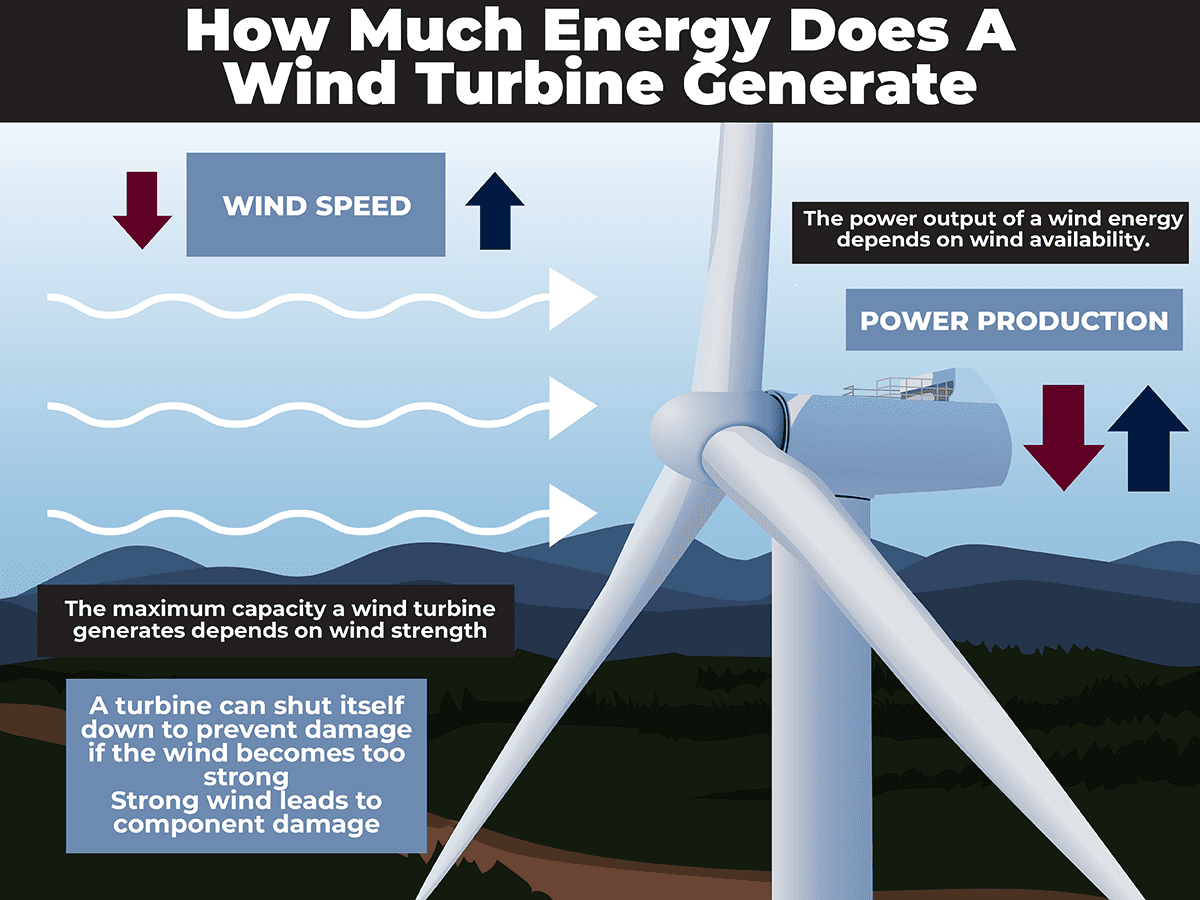
Now, let's talk speed. Wind, of course, is the key ingredient. Imagine trying to bake a cake without an oven. Pointless, right? Turbines need wind to spin those majestic blades. The faster the wind, the faster they spin, and the more electricity they generate. It's like trying to pedal a bike uphill in molasses versus downhill with a tailwind. Huge difference!
Generally, a modern utility-scale wind turbine, the kind you see in vast wind farms, can have a capacity of anywhere from 2 to 8 megawatts (MW). That's a lot of power! To put that in perspective, one megawatt can typically power hundreds of homes. So, a single large turbine could potentially supply electricity for thousands of households.
Capacity Factor: The Real-World Reality Check
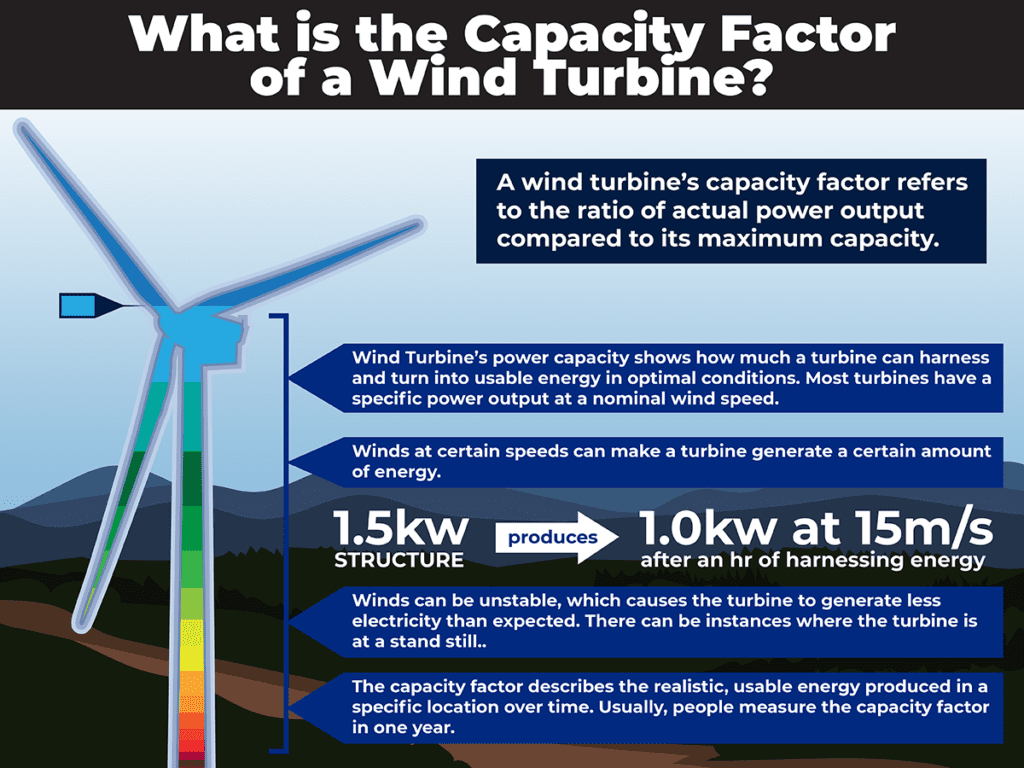
Okay, before you start picturing your electric bill plummeting to zero thanks to a single turbine, there’s a slight catch. Turbines don't always operate at their maximum capacity. Wind is fickle! Sometimes it's howling like a banshee, other times it's barely a whisper. This is where the "capacity factor" comes in.
The capacity factor is essentially the average power output over a period of time, compared to the maximum potential output. Think of it like a student who gets straight A's on all their homework, but then only shows up to half the tests. They have the potential to get an A, but in reality, their grade might be lower.
Most wind turbines have a capacity factor of around 30-50%. This means they're producing 30-50% of their maximum rated power on average. So, that 8 MW turbine might actually be churning out something closer to 2.4 to 4 MW on a consistent basis. Still impressive, but it’s important to keep it real.
So, How Many Homes Can a Turbine Power?
Here’s where things get a bit fuzzy, because electricity consumption varies wildly. A family that leaves all the lights on, blasts the AC 24/7, and has a fleet of electric vehicles will use a lot more power than a single person living in a tiny, energy-efficient apartment.

As a very general rule of thumb, a 1 MW wind turbine with a capacity factor of 40% can power around 300-400 homes. Again, that's just an average. A 2 MW turbine? Potentially 600-800 homes. An 8 MW behemoth? Could be 2400-3200 homes! See, those windmills are working harder than you thought.
The Bigger Picture
The important thing to remember is that wind turbines are a key piece of the puzzle in our transition to cleaner energy. They’re not a magic bullet, but they contribute significantly to reducing our reliance on fossil fuels. Each turbine, spinning gracefully against the sky, is helping to power our homes, our businesses, and our future. It's a breath of fresh air, literally, and figuratively.
So, the next time you see a wind turbine, give it a little nod. It's out there, braving the elements, doing its part to keep the lights on and the Netflix streaming. And that, my friends, is something to appreciate.
