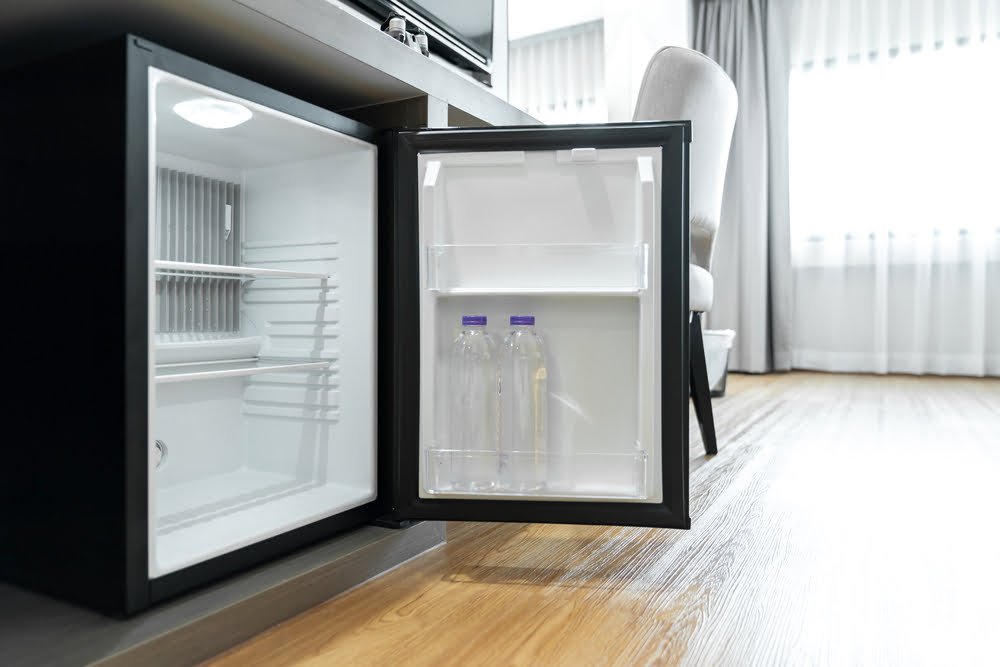
How Much Does A Mini Refrigerator Cost To Run
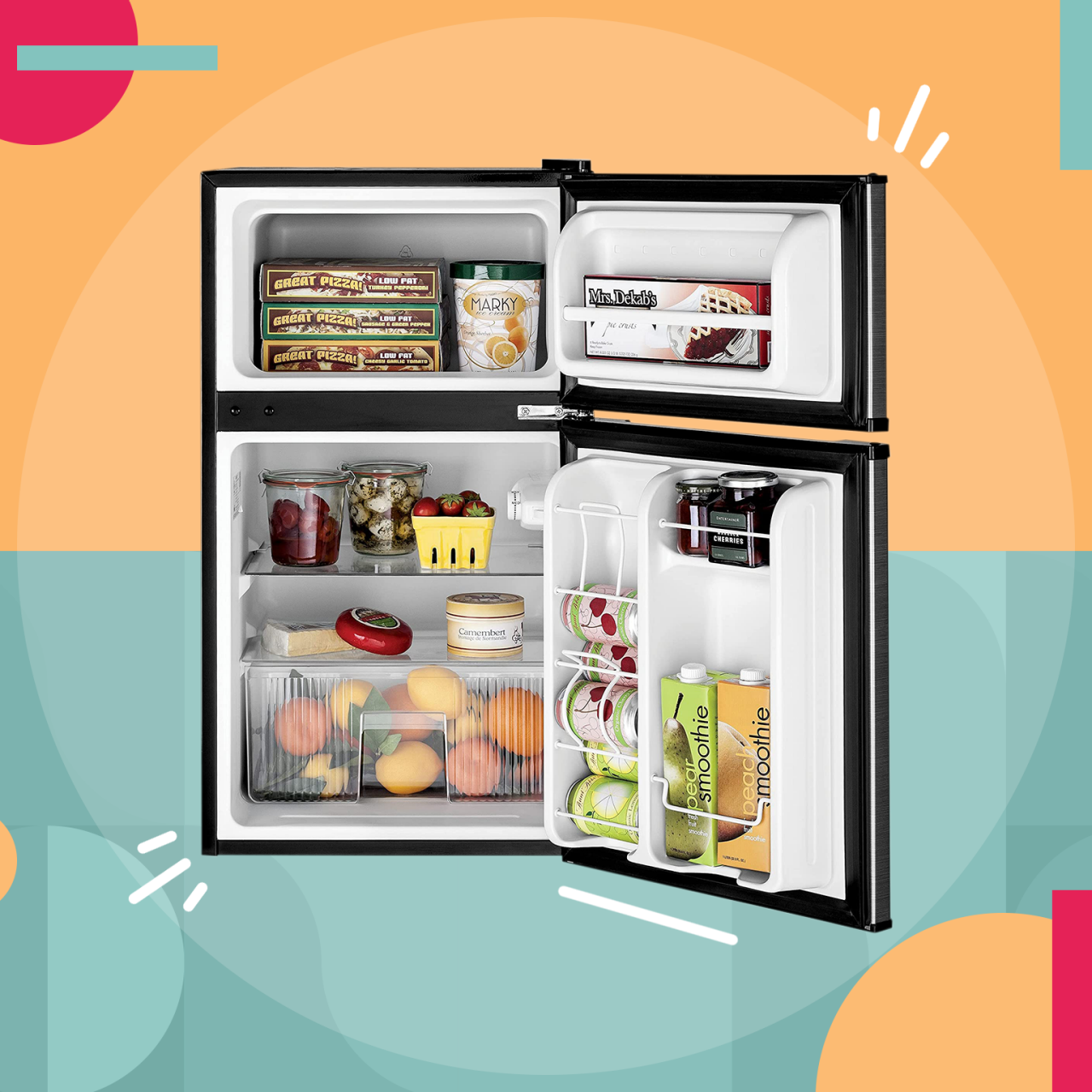
Let's talk mini fridges. Those compact cool cats that nestle under desks, chill beverages in dorm rooms, and generally make life a little bit more convenient. But how much does that convenience actually cost you, beyond the initial purchase price? We're diving deep (well, as deep as a mini fridge allows) into the world of energy consumption and figuring out just how much those frosty perks are impacting your electricity bill.
The Watt's Up: Understanding Energy Usage
The key to unlocking the mystery of mini fridge operating costs lies in understanding wattage. You'll find the wattage information listed on a sticker, usually located on the back or inside the fridge. This number tells you how much power the fridge consumes when it's running. The lower the wattage, the less energy it uses.
However, here's the catch: your mini fridge isn't running 24/7. It cycles on and off to maintain the set temperature. That's why you need to consider the duty cycle – how often it's actively cooling. A fridge in a hot room will naturally run more often than one in a cooler environment.
Must Read
To get a rough estimate of daily energy usage, you can use this formula:
(Wattage / 1000) x Hours Used Per Day = Kilowatt-hours (kWh) per Day

For example, let's say your mini fridge is rated at 100 watts and runs for an average of 8 hours a day:
(100 / 1000) x 8 = 0.8 kWh per Day
From Kilowatts to Cold, Hard Cash
Now that you know the daily kWh consumption, you need to find out the cost of electricity in your area. This information is readily available on your electricity bill or on your provider's website. Let's assume electricity costs $0.15 per kWh (this can vary significantly depending on where you live – think San Francisco vs. rural Texas).
To calculate the daily cost, multiply the daily kWh usage by the cost per kWh:
0.8 kWh x $0.15/kWh = $0.12 per Day

So, in this scenario, your mini fridge costs about $0.12 per day to run. Over a month, that's roughly $3.60. Not exactly breaking the bank, but it's still a cost to consider.
Pro Tips for Minimizing Fridge Frugality
Want to keep those costs even lower? Here are some simple strategies:
- Location, Location, Location: Don't place your mini fridge near a heat source like a radiator or in direct sunlight. This forces it to work harder and consume more energy.
- Temperature Tussle: Avoid setting the temperature too low. Every degree colder requires more energy. Aim for a temperature that keeps your items adequately chilled without being excessively cold.
- Full But Not Overstuffed: A full fridge is actually more efficient than an empty one. The food and drinks help maintain a consistent temperature. However, don't overstuff it, as this can block airflow. Think of it like a perfectly curated bookshelf – organized and functional!
- Defrost Duty: Regularly defrost your mini fridge, especially if it's an older model. Ice buildup reduces efficiency.
- Shop Smart: When buying a mini fridge, look for Energy Star certified models. These are designed to be more energy-efficient.
- The "Airplane Mode" Analogy: Unplug your mini fridge when you know you won't be using it for an extended period, like during a vacation. It's like putting your phone on airplane mode – conserving energy for when you really need it.
Beyond the Bottom Line: A Sustainable Sip
Consider this: even seemingly small appliances contribute to our overall carbon footprint. Every kilowatt-hour saved is a victory for the environment. Thinking about energy consumption is a subtle act of environmental consciousness, a way to align our daily conveniences with a broader sense of responsibility. So, the next time you reach for a chilled beverage from your mini fridge, take a moment to appreciate the cool technology – and the small steps you can take to keep it running efficiently. It's a small fridge, yes, but it's also a small part of a bigger picture.