
How Much Does A Kilowatt Cost

So, you wanna know how much a kilowatt costs, huh? Good question! It’s one of those things we all use every single day but rarely stop to think about, right? Like, we just flip a switch, and poof, light! Or our phone magically charges. But where does that magical 'poof' come from, and more importantly, how much is it secretly dinging your wallet?
Let's grab a metaphorical coffee and chat about it, shall we? Because while it sounds like a super technical question, it’s actually pretty straightforward, with a few playful twists.
First, What Even Is a Kilowatt?
Okay, let's get a tiny bit technical, but not too much, promise. When we talk about how much electricity costs, we're actually talking about a kilowatt-hour, or kWh. Think of it like this:
Must Read
- A kilowatt is how much power something uses at any given moment.
- An hour is… well, an hour!
So, a kWh is that amount of power (1,000 watts, for the super curious) used for one whole hour. It’s the unit your utility company uses to charge you. It's like buying gasoline by the gallon or milk by the liter. You're buying energy in these little kWh chunks.
The Big Reveal: The "It Depends!" Factor
Now, for the big reveal! How much does one of these magical kWhs actually cost? Drumroll please… it depends!
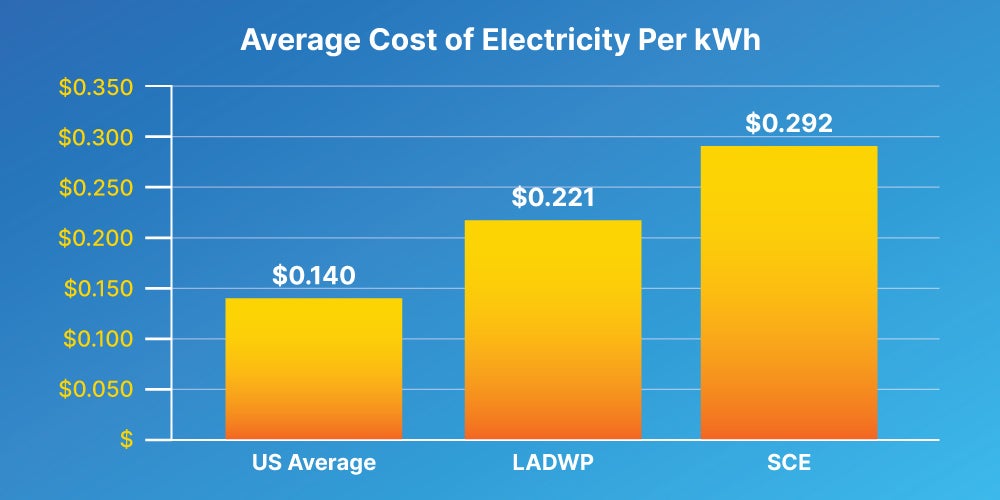
Yeah, I know, super satisfying answer, right? But seriously, it’s like asking how much a cup of coffee costs. Is it from a fancy barista in a big city, or your local diner with free refills? Prices vary wildly depending on a few key things:
- Where you live: Electricity prices can be vastly different from state to state, or even city to city. California, for example, often has some of the highest rates in the US, while states like Louisiana or Washington typically enjoy lower costs.
- Your utility company: Some areas have a choice of providers, others don't. Each company sets its own rates, influenced by their infrastructure, energy sources, and operational costs.
- Time of day: Many places have "time-of-use" rates. This means electricity might be cheaper in the middle of the night (when everyone's asleep and demand is low) and more expensive during peak hours (like dinner time, when all the ovens, TVs, and ACs are blasting).
- The season: Sometimes, costs fluctuate seasonally due to demand for heating or cooling.
- Energy source: Areas relying heavily on expensive fossil fuels might have higher rates than those with abundant hydropower or wind energy.
So, What's the Ballpark? (For the US, Anyway)
Okay, okay, I won't leave you hanging completely. In the United States, as of recent averages, the cost of one kWh typically ranges from about 10 cents to 30 cents. Yeah, that's a pretty big range, isn't it?
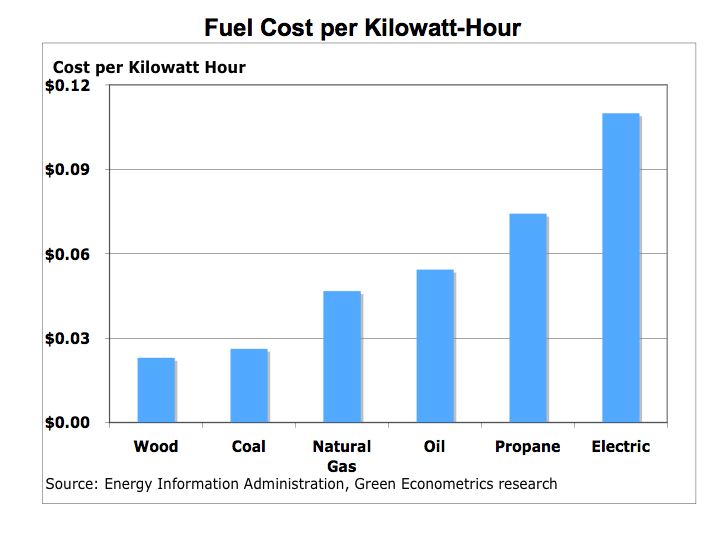
Most folks find themselves somewhere in the middle, maybe around 15 to 20 cents per kWh. But remember, that's an average! Your mileage (or kilowatt-age) may vary.
Putting It Into Perspective: What Can One kWh Do?
So, 15 cents for a kWh. That sounds like... nothing, right? Like finding a penny on the street. But let's put it into perspective. What kind of power does a single kWh give you?
- It could keep a very efficient LED lightbulb (around 10 watts) on for about 100 hours. That's over four days!
- It could charge your smartphone over 100 times. Seriously.
- It could run a typical desktop computer for around 5-7 hours.
- It might run your dishwasher for one full cycle.
- Or power your big-screen TV for about three to four hours.
See? Individually, they’re practically pennies. It's pretty amazing how much work that little unit of energy can do. It's like the tiny but mighty ant of your electricity bill.
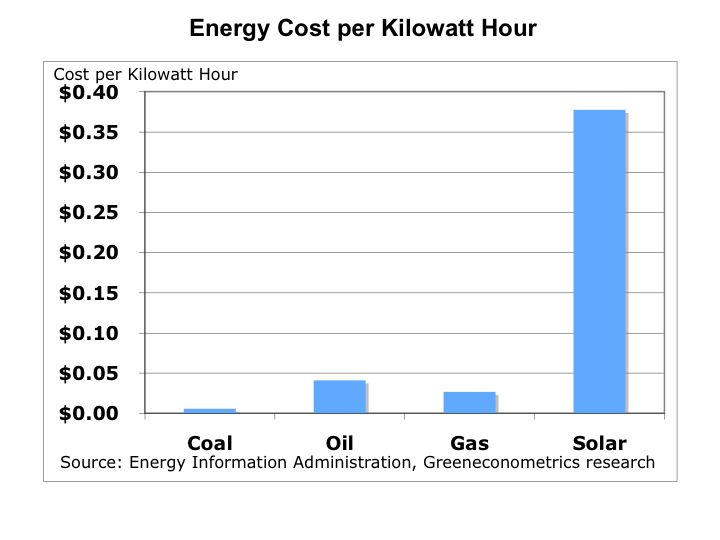
The Sneaky Part: How Pennies Add Up to Dollars
Here's where the "aha!" moment often hits. While one kWh is cheap, we don't just use one, do we? Oh no, my friend. We're using hundreds, sometimes thousands, of them every single month!
That 100-watt lightbulb that runs for 10 hours a day? That's 1 kWh per day. Do that for a month, and you're at 30 kWh. Add your fridge, your TV, your computer, your AC, your hair dryer, your toaster, your electric kettle, and suddenly, those little 15-cent chunks start multiplying like crazy. Before you know it, you're looking at a bill that makes you squint.
.png)
That's why those energy statements show you your total kWh usage for the month. It's the sum of all those tiny energy sips your appliances take.
So, What's a Savvy Energy User To Do?
Knowing the cost of a kWh is the first step to being a smarter energy consumer. Here are a few friendly tips:
- Unplug those "vampire devices": Chargers, TVs, coffee makers... many still draw a tiny bit of power even when 'off' or in standby. It adds up!
- Embrace LEDs: If you haven't switched all your bulbs to LED, what are you waiting for? They use a fraction of the power of old incandescents.
- Be mindful of heating/cooling: This is often the biggest chunk of your bill. A degree or two up in summer or down in winter can make a big difference.
- Check your bill regularly: Understand your usage. Does it spike at certain times? Are you on the best rate plan?
Ultimately, a kilowatt-hour isn't expensive on its own. It's our collective demand, our modern conveniences, and sometimes our absent-mindedness that makes the bill climb. Now that you know its true cost, you can be a little savvier, a little more conscious, and maybe save a few bucks for that actual fancy coffee. Cheers to that!