How Many Watts Would It Take To Run A House
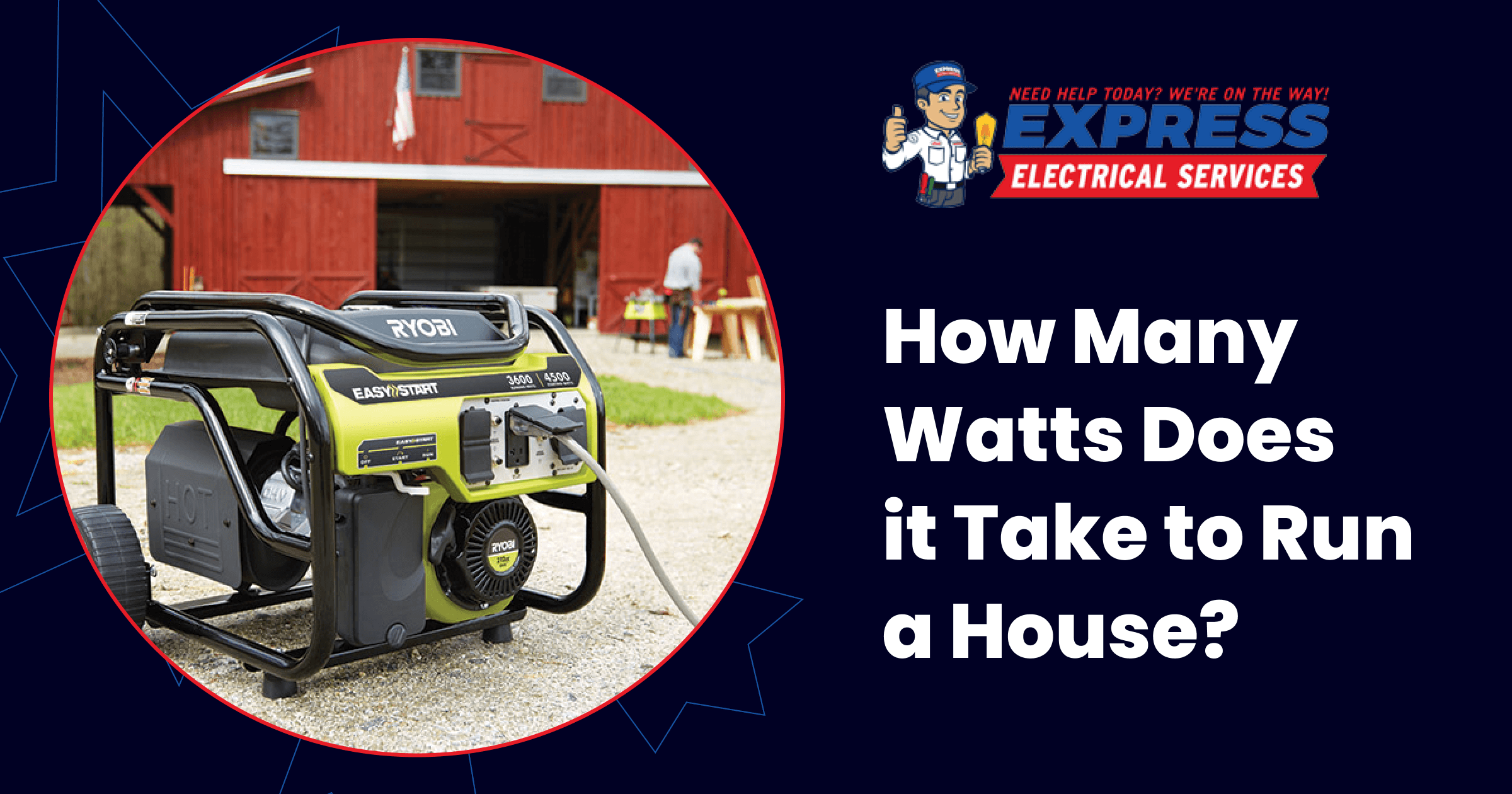
Ever wondered how much power keeps your lights on, your fridge cold, and your internet buzzing? It's a question that seems simple on the surface, but diving into the world of household wattage is like uncovering a hidden blueprint of your daily energy use. And while it might sound like dry technical stuff, understanding the electrical demands of your home can be surprisingly empowering – and even a little fun!
Why should you care about watts and volts? For artists, hobbyists, and anyone with a curious mind, grasping the basics of household electricity opens up a world of possibilities. Think about building your own illuminated sculptures, powering a complex model railroad, or even understanding the energy consumption of your 3D printer. Knowledge is power, and in this case, it's literal! Knowing the wattage demands of your tools allows for informed equipment selection, preventing overloads and potentially sparking some electrifying creations. For example, a sculptor planning to illuminate a large metal piece needs to understand how many LED strips they can safely power from a single outlet. A model railroader needs to calculate the total amperage draw of their locomotives and accessories. Even a casual learner can appreciate the underlying mechanics of their smart home devices!
So, how many watts does it take to run a house? The answer, of course, is it depends! It's a range, not a fixed number. A small apartment might hum along on an average of 1000-2000 watts, while a larger home with multiple appliances and central air conditioning could easily require 5000 watts or more. Consider some specific examples: a simple LED light bulb might only draw 10 watts, while a window air conditioner can pull 500-1000 watts. A microwave oven can gobble up 1000-1500 watts while in use. Electric stoves are notorious energy hogs, easily reaching 2000-5000 watts! These are just individual snapshots. Factoring in intermittent usage, standby power (vampire loads), and varying appliance efficiencies makes estimating a whole-house wattage requirement a dynamic, albeit manageable, challenge.
Must Read
Want to try figuring it out for your own home? Here are a few tips: First, start with your electricity bill. It usually shows your kilowatt-hour (kWh) consumption. Divide that by the number of hours in the billing period to get an average power usage in kilowatts (kW), then multiply by 1000 to get watts. Second, look at the labels on your appliances. Most appliances have a sticker indicating their wattage or amperage. Add up the wattage of all the appliances you typically use simultaneously for a rough estimate of your peak demand. Third, consider investing in a power meter. These devices plug into an outlet and measure the actual power consumption of anything plugged into them. This provides incredibly accurate data for individual appliances.
Ultimately, understanding the wattage needs of your home is more than just a technical exercise. It's about gaining control over your energy consumption, becoming more aware of the impact of your lifestyle, and even sparking a bit of creative innovation. It's surprisingly enjoyable to demystify the electrical systems that power our lives, and the knowledge gained can empower us to make informed choices and live more sustainably. So, grab your calculator, explore your appliances, and dive into the illuminating world of watts!