
How Many Watts To Run Fridge

Ever found yourself staring at your fridge, maybe after a power bill scare, or perhaps dreaming of off-grid adventures, and thought, "Exactly how much juice does this giant, frosty box actually slurp?" You're not alone, my friend! It’s like asking how many coffees a day I need to function. The answer? A bit more nuanced than you’d think, but totally worth diving into.
Let's grab a virtual coffee and chat about it, shall we? Because figuring out how many watts to run a fridge isn't just for energy nerds (though, hey, no judgment!). It’s for anyone who wants to save a buck, plan for a blackout, or just satisfy that nagging curiosity. Spoiler alert: it’s not a single, magic number. Shocking, right?
The Great Wattage Divide: Startup vs. Running
First things first, there are two main wattage numbers you need to know, and they’re like chalk and cheese. Or, rather, a massive jolt of electricity and a gentle hum.
Must Read
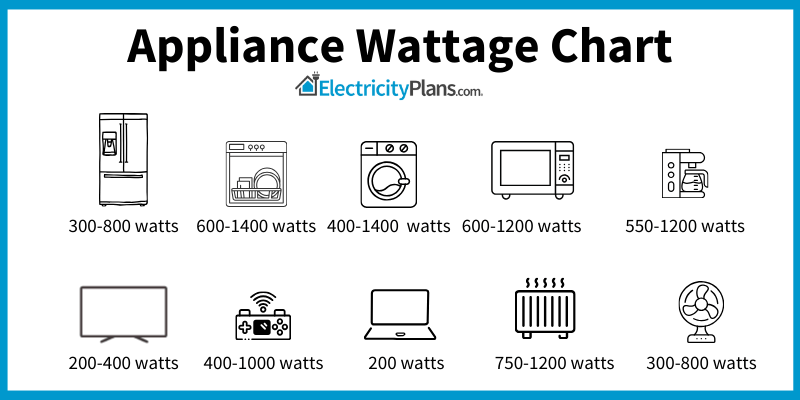
There’s the startup wattage, also known as surge wattage. This is the big kahuna. When your fridge’s compressor kicks on (that little motor that makes it go brrr), it needs a quick, powerful burst of energy. Think of it like a sprint: a lot of effort for a short burst. This can be anywhere from 1000 to 2000 watts, sometimes even more for older, super-sized models. It’s a fleeting moment, but it’s mighty!
Then there's the running wattage. This is the chill, steady pace. Once the compressor is happily humming along, maintaining that glorious chill, it uses much less energy. We’re talking typically between 100 and 300 watts. This is the number that really impacts your daily electricity bill, because your fridge is running more often than it's starting up (thank goodness!).
Why So Many Variables?
Okay, so we’ve got startup and running. But even those ranges are pretty broad, right? That’s because your fridge isn't just a fridge. It's your fridge, and it has its own personality!
Consider these factors, like little clues in a mystery:
Size Matters (A Lot!): A tiny mini-fridge for your dorm room? We're talking super low watts. A giant, side-by-side, smart-screen behemoth with an ice dispenser that looks like it could launch a small rocket? Yeah, that’s going to need more juice. Naturally.
Age and Efficiency: This is a biggie. An old, ancient fridge from the 90s (bless its heart for still running!) is probably about as energy-efficient as a leaky bucket. Newer models, especially those boasting an Energy Star rating, are designed to be much more frugal with their power consumption. They’re like the disciplined dieters of the appliance world.
How You Use It: Yep, you play a role! Do you open the door every five minutes, peering in like a meerkat, trying to decide on a snack? Each time that cold air escapes, your fridge has to work harder to get back to temperature. Also, how full is it? A relatively full fridge (not overstuffed!) actually runs more efficiently than an empty one, as the items inside help retain the cold.
Ambient Temperature: Is your fridge in a sweltering garage or a cool, climate-controlled kitchen? The hotter the surrounding environment, the harder your fridge has to labor to keep its cool. Poor thing!

So, How Do I Find MY Fridge's Watts?
The best way to get a precise number for your specific fridge is to play detective:
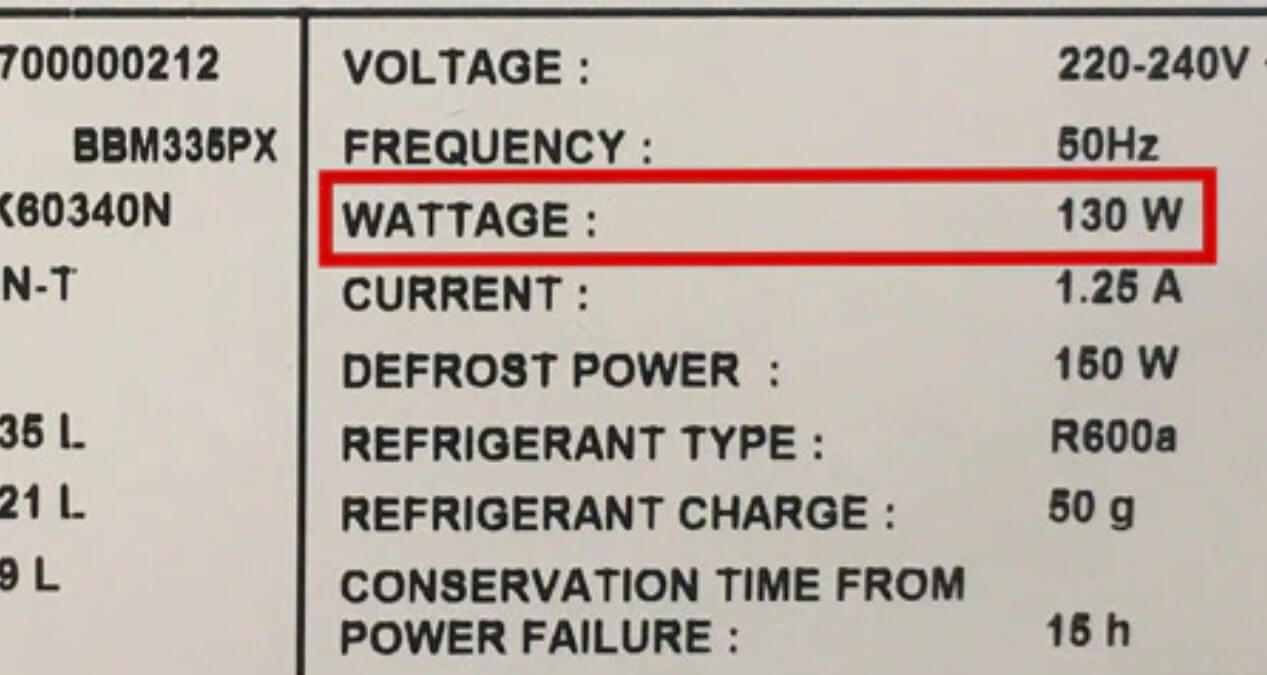
- Look for a sticker inside the fridge, usually on the side wall or behind the kick plate. It often lists the voltage, amperage, and sometimes even the wattage directly.
- Check your owner's manual. If you still have it (bravo!), it should have all the specs.
- Grab a Kill-A-Watt meter. These little gadgets plug into your outlet, and then your appliance plugs into them. They’re super fun and will give you real-time readings of both startup and running watts. Highly recommend for the curious mind!
Why Bother with All This Wattage Talk?
Beyond satisfying our inner detective, knowing your fridge’s wattage is actually super useful:
Saving Money: Understanding your fridge’s habits can help you make smarter choices. Maybe it's time to upgrade that old energy hog? Or perhaps just be more mindful about door-opening habits?

Generator Sizing: Planning for a power outage or a camping trip with a portable fridge? You absolutely need to know these numbers to pick a generator that can handle the startup surge without tripping!
Solar Setups: For our eco-conscious friends dreaming of solar power, knowing appliance wattage is foundational to designing a system that won’t leave your food warm.
Ultimately, your fridge is a vital member of the household. Give it a little attention, understand its power needs, and it'll continue to keep your snacks perfectly chilled without breaking the bank. Now, about that coffee… need a refill?