How Many Watts To Power A House With A Generator
Okay, so picture this: the power’s out. Again. You’re sitting in the dark, wondering if the ice cream in your freezer is slowly morphing into a lukewarm soup of regret. But fear not, my friend! You, the hero of your own blackout narrative, are about to unleash the mighty… generator! But before you become a beacon of light and lukewarm ice cream savior, you need to answer the million-dollar question (or, you know, the several-hundred-dollar-generator question): how many watts do you actually need to power your castle?
Now, I could launch into a super technical explanation involving volts, amps, and the mysterious Ohm’s law. But let’s be honest, after about five seconds, your eyes would glaze over faster than a Krispy Kreme donut. So, we'll skip the physics lesson and go for a more… let’s say “digestible” approach.
The Great Appliance Wattage Hunt
Think of your house as a team of energy-hungry monsters, each demanding their fair share of wattage to function. You, my friend, are the zookeeper (or generator operator, same thing!). Your first task is to figure out just how much each monster eats.
Must Read
The good news is that most appliances have a little sticker somewhere – usually on the back or bottom – that proudly displays their wattage. It might say “1200W” or something similar. This is the running wattage – the power it needs to keep doing its thing. For appliances with motors, like refrigerators or air conditioners, you also need to consider the starting wattage. This is a brief surge of power they need to get going, and it can be two, three, or even four times the running wattage! Think of it as the appliance equivalent of needing a running start to jump over a mud puddle.
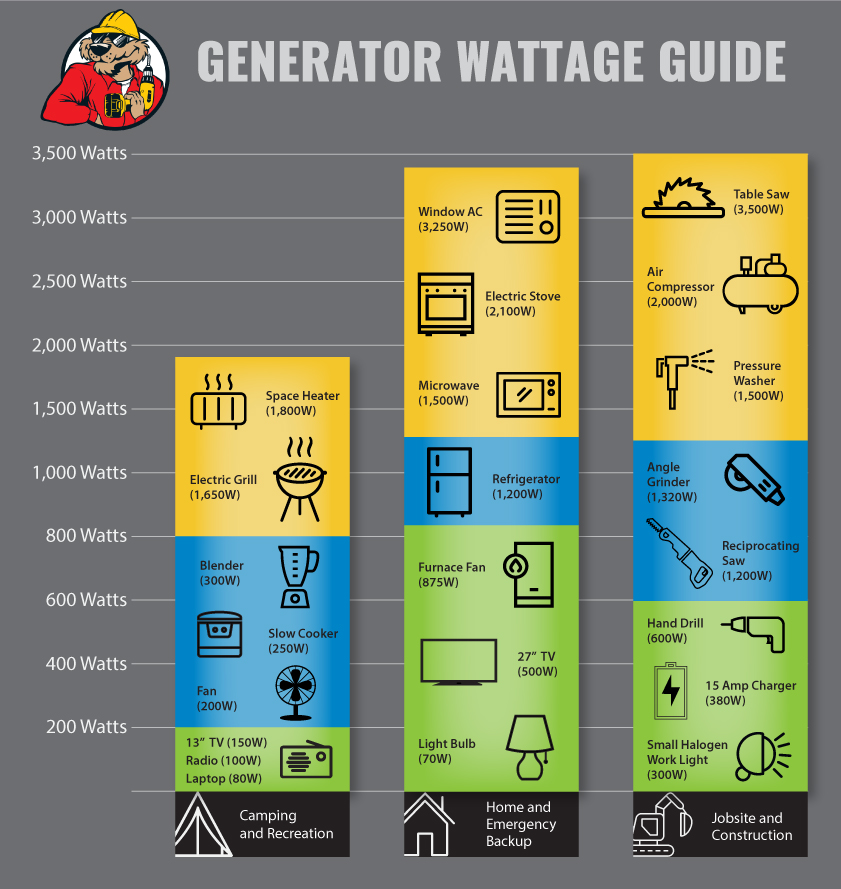
So, grab a notepad (or your phone’s notes app if you’re feeling particularly modern) and embark on the Great Appliance Wattage Hunt! Here are a few of the usual suspects and their approximate wattage demands (remember, these are just estimates – your specific appliances may vary):
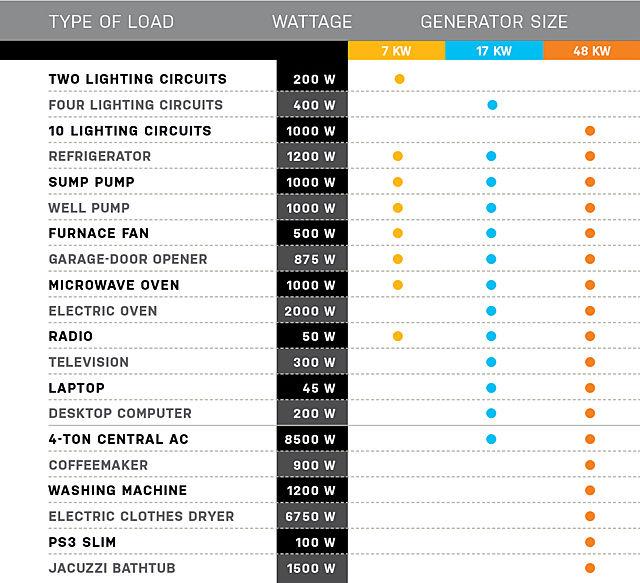
- Refrigerator: Running – 150-200W, Starting – 600-800W (that initial "grmmmmm" takes juice!)
- Air Conditioner (Window Unit): 500-1500W (depending on size – the bigger, the hungrier)
- Lights (LED): 5-15W each (LEDs are the energy-sipping champagne of lighting!)
- Laptop: 50-100W (your lifeline to the outside world, and memes)
- TV: 75-150W (essential for binge-watching during a blackout… priorities!)
- Microwave: 600-1200W (for emergency popcorn, obviously)
- Coffee Maker: 800-1200W (because, let's face it, you need coffee to survive anything)
The Wattage Calculation: It's Easier Than You Think (Probably)
Okay, so you’ve assembled your list of appliances and their wattages. Now, the fun part: adding them all up! This is where you need to be honest with yourself. Are you really going to run the air conditioner, the microwave, and the coffee maker all at the same time? If so, you need to factor in all those wattages. If you’re more likely to stagger their usage (coffee first, then air conditioning, then maybe that emergency popcorn), you can be a bit more strategic.
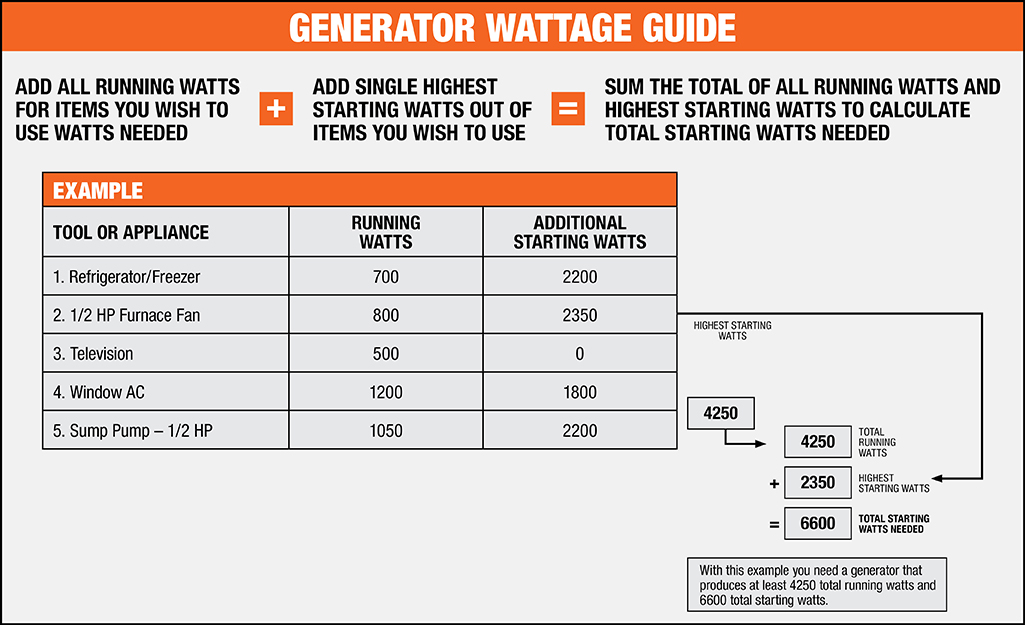
Here’s the basic idea: Add up the running wattages of everything you absolutely need to have running simultaneously. Then, find the appliance with the highest starting wattage (usually the refrigerator or air conditioner) and add that to your total. This gives you a rough estimate of the peak wattage you’ll need from your generator.
Example: Let’s say you need to run the refrigerator (200W running, 800W starting), a few LED lights (50W total), and your laptop (75W). Your running wattage would be 200 + 50 + 75 = 325W. The highest starting wattage is the refrigerator’s 800W. So, your estimated peak wattage would be 325 + 800 = 1125W.
The Golden Rule (and a Word of Warning)
Here's the golden rule of generator sizing: Always overestimate!. It's better to have a generator that's slightly too big than one that's struggling to keep up. Generators run more efficiently when they're not operating at full capacity, and you'll have some headroom for unexpected power needs (like, say, your neighbor suddenly deciding to borrow some juice for their disco ball collection).
And now, a word of warning, delivered in a voice that sounds suspiciously like your mother: Do not overload your generator! Overloading can damage the generator itself and, more importantly, can be a serious fire hazard. Always follow the manufacturer's instructions and be mindful of your wattage usage.
So, What Size Generator Do You Need?
Based on our example, you’d probably want a generator with a surge wattage (the maximum it can handle for a short period) of at least 1200W. To be on the safe side, aiming for something in the 2000-watt range would give you some extra wiggle room.
Remember, this is just a starting point. Take the time to properly assess your own needs and factor in any additional appliances you might want to run. And when in doubt, consult with a qualified electrician. They can help you determine the right generator size for your home and ensure that it's installed safely.
Now go forth and conquer that blackout, my friend! With the power of knowledge (and a properly sized generator), you can keep the lights on, the ice cream frozen (or at least slightly less lukewarm), and the coffee flowing. Just don't invite all your neighbors over – unless you have a really big generator.