Ever gazed at a gadget, a charger, or even a humble light bulb, and noticed those mysterious letters: V, A, W? You might have wondered, with a twinkle in your eye, "How many watts is in one amp?" Ah, my friend, that's a fantastic question, and it's like asking how many high-fives are in one hug – it delightfully depends!
You see, electricity isn't just one thing; it's a dynamic trio, a powerful dance involving three electrical superstars. To truly understand how many watts are in an amp, we need to introduce their best buddy: Volts!
Meet the Electrifying Trio!
Imagine electricity flowing through wires like water gushing through a garden hose. This analogy is your secret weapon to cracking the code!
Amps are all about the sheer quantity of electricity flowing. Think of it as the width of your garden hose or the amount of water actually moving through it. More amps? More electrons are hustling through that wire! It's the "how much" of the electric current.
If you've got a device that pulls a lot of amps, it's like a really thirsty plant needing a wide, open hose to get its fill.
2. Volts (Voltage): The Push, The Pressure!
Now, Volts are the oomph, the pressure, the electrical force that's pushing those electrons along. In our garden hose analogy, volts are the water pressure coming from your faucet. High voltage means a powerful push; low voltage means a gentle nudge.
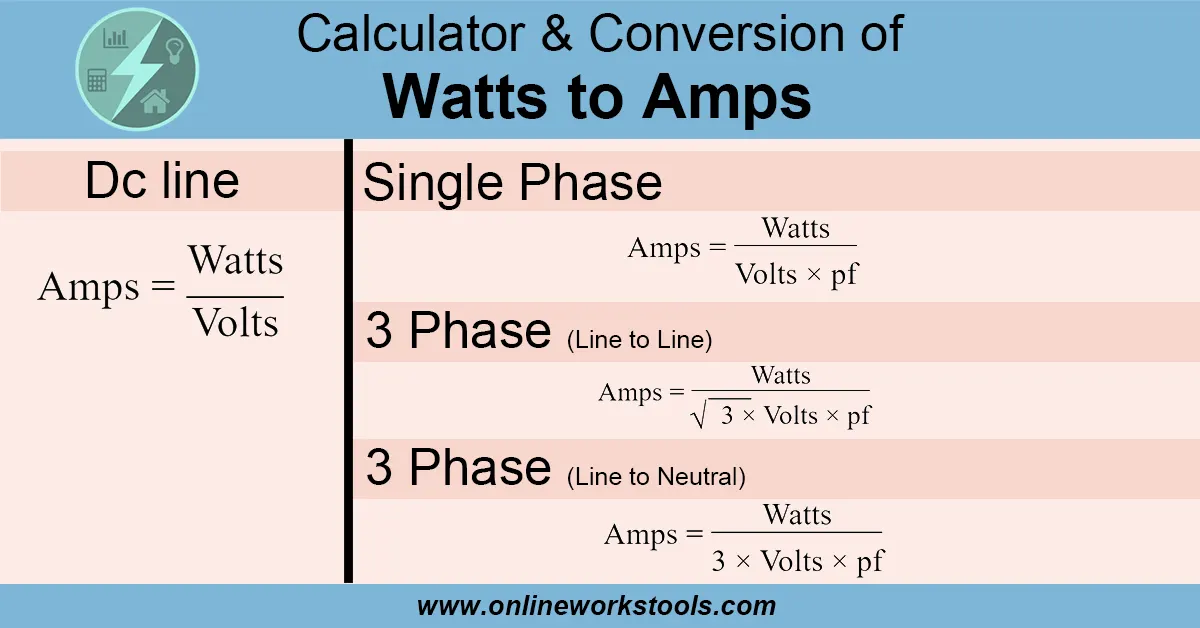
Watts (W) to amps (A) Conversion Calculator | Watts to Amps
Think about it: you can have a super wide hose (high amps), but if there's no pressure (low volts), you're just getting a dribble! Conversely, you can have super high pressure, but if the hose is tiny (low amps), you still won't get much water flowing.
3. Watts (Wattage): The Power, The Work!
And finally, we arrive at Watts! Watts are the grand total, the ultimate measure of electrical power being used or delivered. It's the real muscle, the actual work being done. In our hose analogy, watts are the force of the water coming out of the nozzle – how much impact it has, how far it sprays, or how quickly it can fill a bucket.
Watts tell you how much punch your device truly packs – how bright your light bulb shines, how quickly your microwave heats food, or how much glorious sound your speakers can blast!
3 Ways to Convert Watts to Amps - wikiHow
The Grand Reveal: The Super-Simple Formula!
So, how do these three electrical superheroes combine their powers? It's a surprisingly elegant and easy formula that connects them all in a beautiful, electrifying dance:
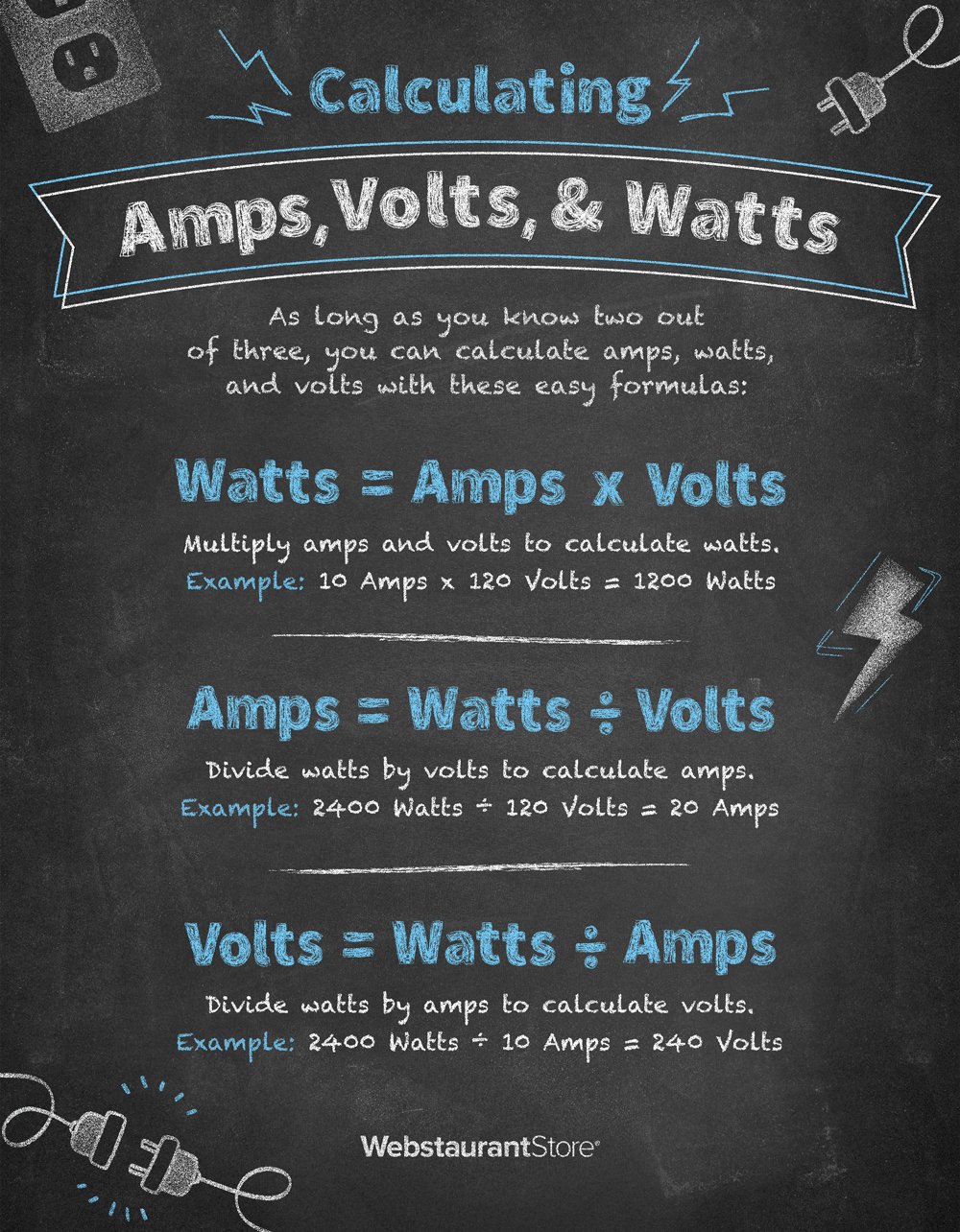
Watts = Volts × Amps
There you have it! The big secret! The number of watts in one amp isn't fixed because it's always, always, always multiplied by the voltage! One amp at 120 volts is a very different beast than one amp at 1.5 volts!
3 Ways to Convert Watts to Amps - wikiHow
Let's Play with Some Numbers!
Imagine you have a device that draws 1 amp. Let's see how its wattage changes with different voltages:
At a tiny 1.5 volts (like a AA battery):
Watts = 1.5 Volts × 1 Amp = 1.5 Watts. That's enough for a small LED or a very tiny motor!
At a standard 120 volts (like your US wall outlet):
Watts = 120 Volts × 1 Amp = 120 Watts. Now we're talking! That's enough to power a decent light bulb or a laptop charger!
How to Convert Watts, Amps, & Volts
At a powerful 230 volts (common in Europe):
Watts = 230 Volts × 1 Amp = 230 Watts. Wow! The same 1 amp, but with more "push," delivers even more power!
See? One amp isn't just one wattage. It's a chameleon, changing its power output based on the voltage it's paired with. It's like having one fantastic singer (the amp) whose impact (the watts) is amplified or softened by the size of the concert hall's sound system (the volts).
Why Does This Matter to You?
Understanding this electrifying relationship makes you an instant electrical detective! When you look at an appliance, those numbers aren't so mysterious anymore. A microwave might say it's 1000 watts. If you know your outlet is 120 volts, you can quickly calculate that it's pulling about 8.3 amps (1000 W / 120 V ≈ 8.3 A) – a pretty hefty draw!
So, the next time someone asks you, "How many watts is in one amp?" you can confidently declare, with a knowing wink, "Ah, my friend, that depends entirely on the volts! It's all about the push!" You're now officially a part of the electrical enlightenment, and isn't that just brilliantly electrifying?