
How Many Watts Is A Dishwasher
Alright, settle in, grab your metaphorical (or actual) coffee, because we're about to tackle one of life's great mysteries, right up there with "where do all my socks go?" and "why does toast always land butter-side down?" Today, we're diving into the electrifying world of your dishwasher! Specifically, we're asking: how many watts is a dishwasher?
You might be picturing some tech wizardry, a secret panel glowing with arcane numbers. Or maybe you're just looking at your power bill with a slightly sweaty brow, wondering which appliance is the real culprit. Let's be real, that glorious box of sudsy magic that saves you from prune-fingers and marital squabbles (who's turn is it to do dishes, again?) has got to be drawing some juice, right?
The Big Reveal (with a Sprinkling of "It Depends")
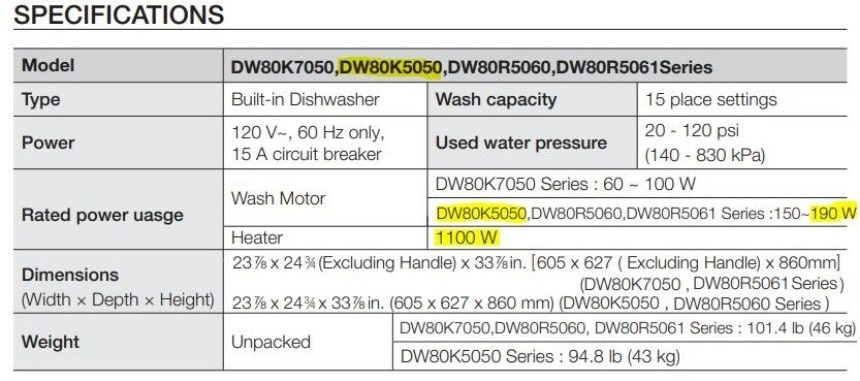
Okay, drumroll please! On average, a typical household dishwasher will pull anywhere from 1200 to 2400 watts during its most intensive phases. "Wait, what?" you might exclaim, spitting a little coffee. "That's a pretty big range!" And you'd be right, my friend. It's like asking how many calories are in a meal – depends on whether you're having a lettuce leaf or a four-course feast, doesn't it?
Must Read
Think of your dishwasher as a tiny, highly specialized athlete. It doesn't just sit there, looking pretty. It's got different muscles it flexes for different tasks, and some of those muscles are serious power hogs.
The Power Players: What Makes Your Dishwasher Chug Watts?
So, what exactly contributes to this wattage rollercoaster? Let's break it down into the prime suspects:
The Heating Element: The Undisputed Wattage Champion
This, folks, is the undisputed heavyweight champion of your dishwasher's power consumption. We're talking about the part that heats the water to scorching temperatures, ensuring your plates are not just clean, but practically sterilized. And also, you know, dry. Imagine trying to heat a bathtub full of water with a hair dryer – that's the kind of dedication we're talking about here. This element alone can gobble up anywhere from 1000 to 2000 watts, sometimes even more! It’s basically a tiny sun inside your machine.
It's working overtime to get that water piping hot for washing and then again for the drying cycle. So, if you're ever wondering where the bulk of that electricity bill comes from, point an accusatory finger (playfully, of course) at the heating element.
The Motor and Pump: The Workhorses
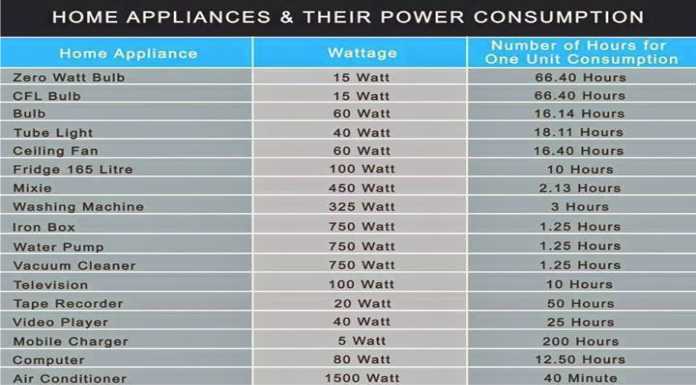
Next up, we have the motor and the pump. These are the unsung heroes, tirelessly spraying water, draining it, and getting it all to circulate around your grime-encrusted dishes. They’re like the personal trainers of your crockery. While vital, they're not quite the power gluttons the heating element is. Typically, the motor and pump combined might draw around 100 to 300 watts. That’s a respectable effort without going completely overboard.
The Control Panel and Electronics: The Brains (Not Brawn)
Your dishwasher has a brain! A little computer that tells it what to do, when to do it, and how long to spin. This includes the fancy buttons, the little lights, and the timer. Compared to the heavy lifting of heating and pumping, the electronics are incredibly efficient, drawing a mere handful of watts – we're talking less than 10 watts. Think of it as the quiet, thoughtful librarian, while the heating element is the boisterous weightlifter.
Cycle Shenanigans and Efficiency Wonders
The wattage also fluctuates wildly depending on the cycle you choose. A quick wash or "eco" cycle will naturally use less energy, especially if it skips the super-hot rinse or heated dry. A heavy-duty "sanitize" cycle, on the other hand, is basically asking your dishwasher to go full superhero mode, blasting everything with maximum heat and power.

And let's not forget about efficiency! An older, clunky dishwasher from the 90s might be less efficient, essentially leaking watts like a sieve. Modern Energy Star certified dishwashers, however, are designed to be much more frugal with their power, often using less hot water and more efficient drying methods (like condensation drying instead of a blast of hot air).
Putting It All in Perspective: Your Power Bill
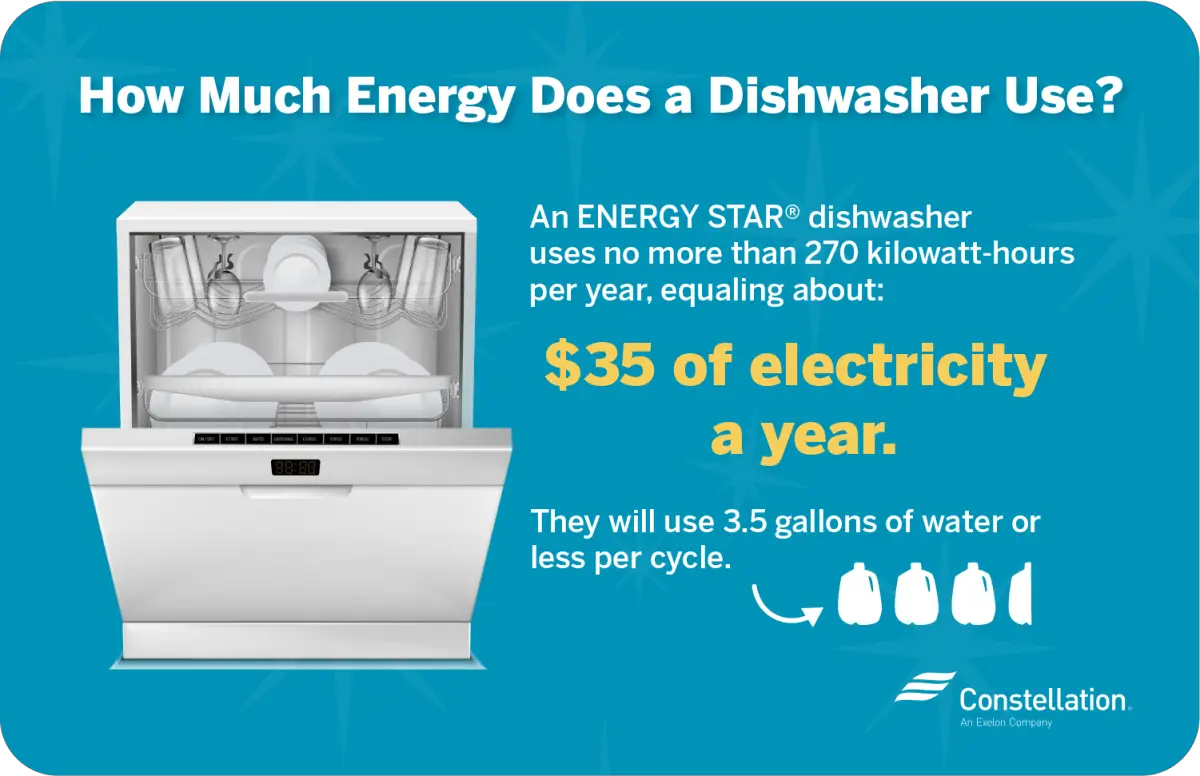
So, what does this all mean for your wallet? Let's say your dishwasher averages 1800 watts during its active cycle (which might be an hour or two), and then goes into a lower power state. To figure out the cost, you'd convert watts to kilowatts (1800 watts = 1.8 kW) and multiply by the hours it runs and your local electricity rate per kilowatt-hour (kWh).
![Dishwasher Wattage [601 Studied | Most Efficient Revealed]](https://ecocostsavings.com/wp-content/uploads/2021/10/how-much-water-does-a-dishwasher-use.jpg)
The good news? Dishwashers are usually only running for a couple of hours a day, maybe even less if you don't run it daily. Compare that to, say, your refrigerator, which is pulling power 24/7 (albeit much less per hour). So while your dishwasher certainly has its moments of peak power consumption, it’s not constantly guzzling electricity.
Just remember, if you’re planning a kitchen renovation, make sure your electrical circuit can handle the might of your chosen dishwasher. You don’t want to trip a breaker every time it decides to get serious about sparkling clean!
The Sparkling Conclusion
In essence, your dishwasher is a marvel of modern convenience, a true workhorse. It’s a bit of a power-guzzler when it's heating things up, but otherwise, it's quite reasonable. So next time you load it up, give a silent nod to that hard-working appliance. It's not just washing dishes; it's orchestrating a mini electrical symphony, all to save you from dishpan hands. And that, my friends, is a service worth understanding!