How Many Watts In An Amp Hour
Ever gazed at the specs on a power bank, a drone battery, or even an electric car, and felt a tiny flicker of confusion? You see terms like "mAh," "Ah," "Volts," and "Watts," and it can feel like a secret language. But understanding these terms, especially the relationship between Amp-hours and Watt-hours, is actually super fun and incredibly empowering! It’s like unlocking a secret code that helps you predict how long your devices will last, compare batteries fairly, and even plan your next off-grid adventure. So, let’s demystify the question: "How many watts in an Amp-hour?"
Here’s the thing right off the bat: Watts and Amp-hours aren't directly interchangeable, because they measure different things. Think of it this way: Amp-hours (Ah) measure the capacity of a battery – how much electrical charge it can store. It's like knowing how many gallons of water a bucket can hold. A battery with more Amp-hours can hold more "juice." You'll often see "mAh" which is milliamp-hours, just one-thousandth of an Amp-hour (so, 1000 mAh = 1 Ah).
Now, Watts (W) measure power – the rate at which energy is used or produced. If Amp-hours are like the size of your water bucket, Watts are like how fast the water is flowing out of it at any given moment. To truly understand the energy contained in a battery, and how much work it can do, we need to bring in a crucial third player: Volts (V). Volts measure electrical pressure or potential difference. It's like the water pressure pushing the water out of your bucket.
Must Read
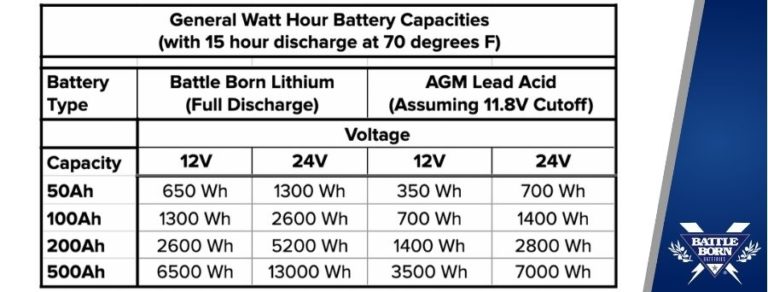
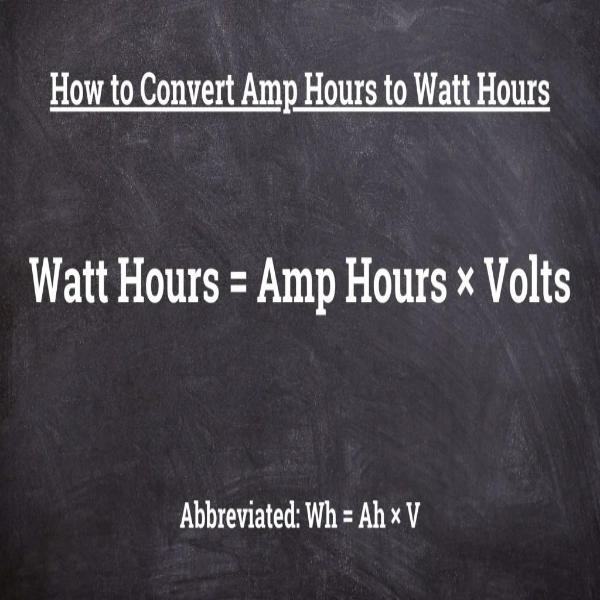
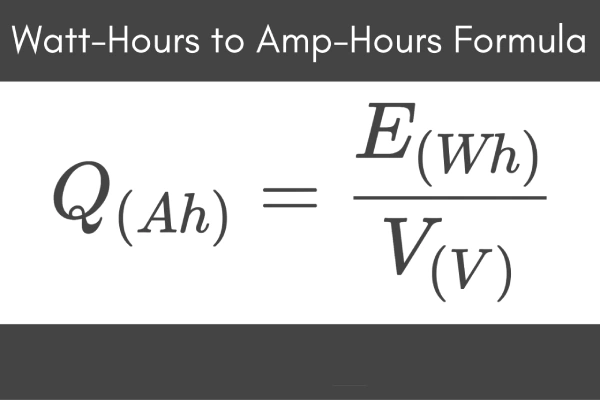
Here's where the magic happens and we clarify the "conversion": The real measure of a battery's total energy is Watt-hours (Wh). Watt-hours tell you how much energy a battery can deliver over a certain time. And you get Watt-hours by simply multiplying your Amp-hours by the battery's voltage! The formula is beautifully simple: Watt-hours (Wh) = Amp-hours (Ah) × Volts (V).
This little formula is a game-changer! Imagine you have two batteries: one is 10 Ah at 5 Volts (like a typical phone power bank), and the other is 10 Ah at 12 Volts (like a small RV battery). If you just looked at the "10 Ah," you might think they hold the same amount of energy. But let’s calculate their true energy content in Watt-hours:
- Battery 1: 10 Ah × 5 V = 50 Wh
- Battery 2: 10 Ah × 12 V = 120 Wh
See? The 12-Volt battery, despite having the same Amp-hour rating, actually holds more than twice the energy! This understanding is incredibly useful. It allows you to truly compare the energy capacity of different batteries, regardless of their voltage. You can figure out how long a 20W device will run on a 100Wh battery (around 5 hours!). It helps you choose the right power bank for your devices, plan solar setups, or simply feel more knowledgeable about the gadgets you use every day.
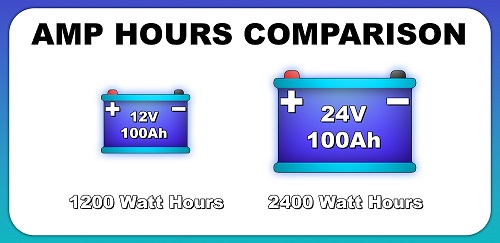
So, while there aren't "watts in an Amp-hour" directly, by bringing in the voltage, you can easily convert Amp-hours into the much more useful measure of Watt-hours. This simple calculation transforms you from a casual user into a savvy power-planner, giving you a clear picture of how much energy you truly have at your fingertips. Happy powering!