
How Many Watts Generator To Run A Refrigerator
Okay, let's talk refrigerators and generators! Sounds electrifying, right? (Pun absolutely intended!). Seriously though, understanding this stuff isn’t just about emergency prep – it's about unlocking freedom. Imagine tailgating with ice-cold drinks, camping like a king (or queen!), or even just having peace of mind during a power outage. So, how many watts do you really need to keep that fridge humming?
Understanding the Wattage Game
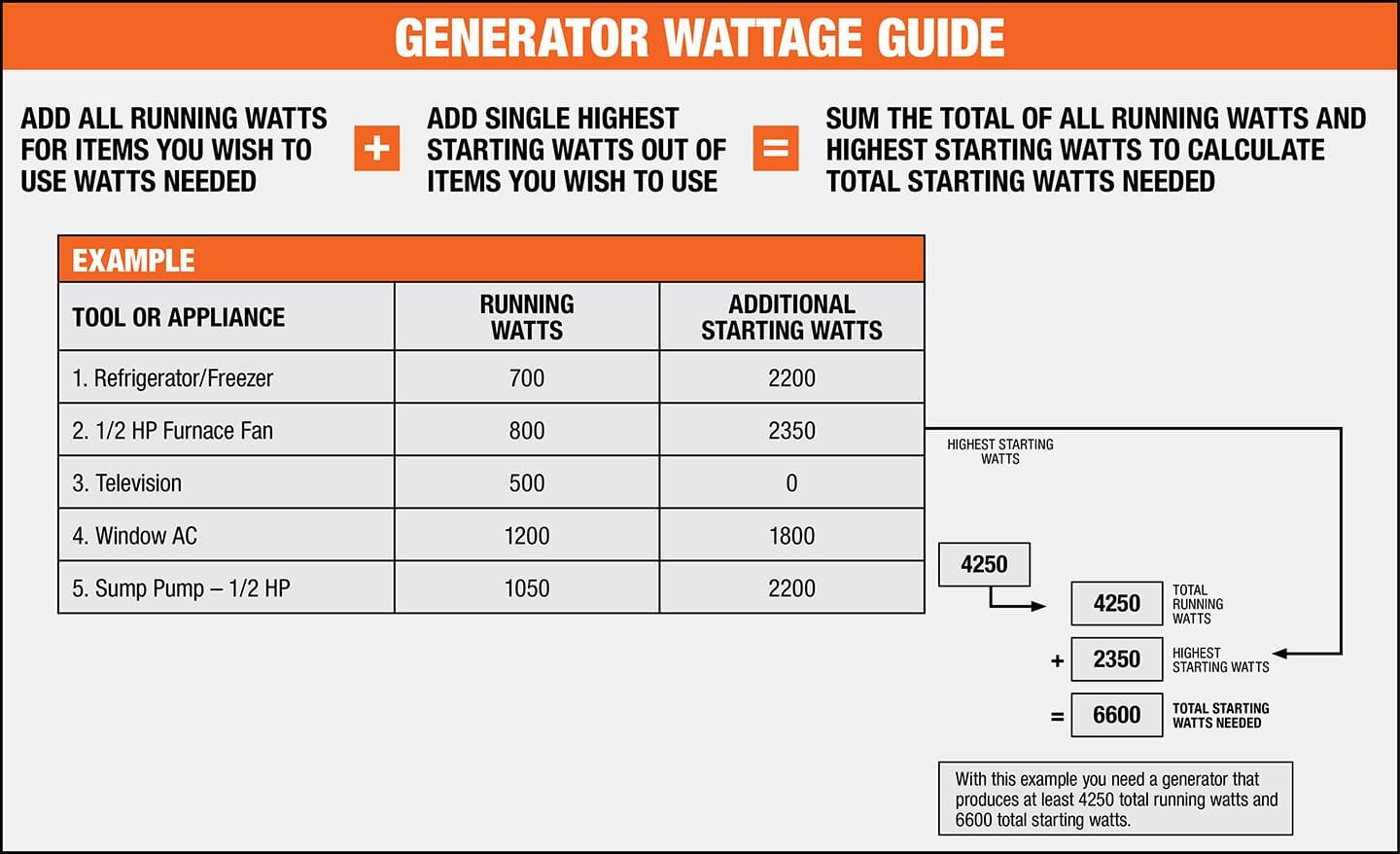
First things first: watts. Think of watts like the energy currency of your appliances. Your refrigerator needs a certain amount to start up (the starting wattage) and a smaller amount to keep running (the running wattage). This is crucial! Why? Because the starting wattage is almost always higher. Like a car needing more juice to turn the engine over than to cruise down the highway. Got it? Good!
Now, where do you find these magical numbers? Look for a sticker – usually on the back or inside of your refrigerator. It might say "watts" or "amperes." If it says amperes (amps), you can easily convert to watts using this formula: Watts = Amps x Volts. In most homes, voltage is around 120V. So, if your fridge says 5 amps, that's 5 x 120 = 600 watts. Boom! You’re doing electrical calculations like a pro!
Must Read
The Starting Surge: The Sneaky Wattage Thief
Here's the kicker: that running wattage? That's just part of the story. Refrigerators use a compressor, and compressors need extra power to get going. This "starting surge" can be two to three times the running wattage! Yes, really!
So, if your fridge has a running wattage of 200 watts, the starting wattage could be anywhere from 400 to 600 watts. Some refrigerators, especially older ones, can even have starting surges exceeding 1000 watts! That's why you can't just rely on the running wattage when picking a generator. It's a rookie mistake!
Figuring Out Your Fridge's True Needs
Alright, let's get practical. Let's say your fridge sticker shows 250 running watts. To be safe, let's estimate a starting surge of three times that amount. That means you’ll need a generator that can handle at least 750 watts just to get the fridge going. But wait, there's more!
Always, always give yourself a buffer. Generators work best when they're not maxed out. So, adding some headroom is a smart move. Instead of a generator that can just handle 750 watts, aim for one that can handle at least 1000 watts. Trust me, your generator (and your peace of mind) will thank you.

Beyond the Fridge: Powering the Party (and the Essentials)
Now, think bigger picture. Are you just running the refrigerator? Probably not. Maybe you want to power some lights, charge your phone, or even run a small fan. Each of those items adds to the total wattage requirement.
So, before you buy a generator, make a list of everything you want to power simultaneously. Add up their running wattages, estimate their starting surges (if applicable – things with motors like fans or power tools have them), and then add a little extra for good measure. Better to have too much power than not enough, right?

Generator Types: A Quick Rundown
You've got a couple of main types of generators to choose from:
- Inverter generators: These are quieter, more fuel-efficient, and produce cleaner power (safer for sensitive electronics). They're generally more expensive.
- Conventional generators: These are typically more powerful for the price and more rugged, but they're also louder and less fuel-efficient.
For running a refrigerator, especially if you're also powering sensitive electronics, an inverter generator is often the best choice, even if it costs a little more. Think of it as an investment in quiet and reliable power. You are worth it!

A Real-World Example: Camping Like a Pro
Imagine this: You're camping in the great outdoors. You've got a portable refrigerator (typically smaller and more efficient than a full-size home fridge). Let's say it needs 150 running watts and has a starting surge of 450 watts. You also want to run a string of lights (50 watts) and charge your phone (10 watts). Your total wattage needs are 450 (fridge starting) + 50 (lights) + 10 (phone) = 510 watts. A small inverter generator rated for 1000 watts would be perfect for this scenario, giving you plenty of headroom and quiet operation.
Don't Be Afraid to Experiment (Safely!)
The best way to figure out the exact wattage needs of your refrigerator is to test it. Borrow a generator (safely and responsibly!), plug in your fridge, and see if it starts up without any issues. This will give you real-world data and eliminate any guesswork. Just be sure to follow all safety precautions and read the generator's manual carefully. Safety first, always!
So, there you have it! Demystifying the world of refrigerators and generators. It's not as complicated as it seems, right? With a little bit of information and some simple calculations, you can confidently choose the right generator for your needs and unlock a whole new world of possibilities. You can conquer your fear of the dark, enjoy perfectly chilled beverages wherever you go, and feel empowered knowing you’re prepared for anything. Now go forth and electrify your life! The power is in your hands!