
How Many Watts Does Toaster Use

Alright, confession time. Every morning, as I stumble into the kitchen, coffee brewing, the aroma of impending toast fills the air. It’s a sacred ritual, right? But sometimes, as I press that lever down, watching those glowing elements fire up, a thought pops into my brain, usually somewhere between my first yawn and the toaster’s first ding:
“Man, how much juice is this thing actually pulling?”
It’s a fleeting thought, often overshadowed by the promise of crispy carbs, but it’s there. And honestly, it’s a pretty valid question. We hear all sorts of scary things about power consumption these days, from leaving chargers plugged in to the sheer terror of an always-on gaming PC. So, what about our humble, yet mighty, toaster? Is it an energy guzzler, or just a quick sipper?
Let’s dive into the fascinating, albeit brief, world of toaster wattage. Because, let’s be real, you’re here because you’ve probably had the exact same thought, haven’t you?
Must Read
What in the Watt?!
First off, a quick and dirty explanation for the uninitiated (or those who, like me, usually zone out during science lessons). Watts are basically a measure of power. Think of it like this: if electricity were water, watts would be how fast that water is flowing out of the tap. The higher the watts, the more power it’s using at that exact moment. Simple, right?
It’s important to remember that watts tell you how much power an appliance can use, or is using right now. It doesn't tell you how much energy it uses over time – that's where kilowatt-hours come in, which is what your electricity bill is based on. But we're getting ahead of ourselves. Let's stick to the immediate punch of power.
The Toaster's Thirsty Secret (or Not-So-Secret)
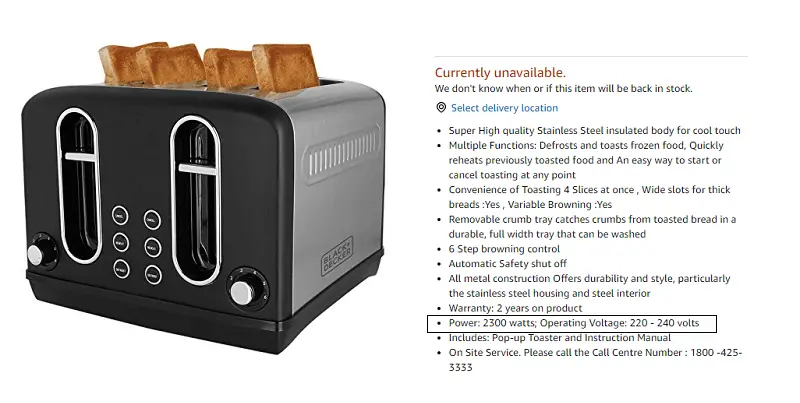
So, how many watts does a typical toaster use? Brace yourself, because it's a bit of a range, but it's generally pretty high for a small kitchen appliance. You're usually looking at something between 800 watts and 1500 watts.
Whoa! Did your eyebrows just shoot up? Mine did the first time I properly looked it up. That's a fair chunk of power, especially compared to, say, charging your phone (which is probably around 5-15 watts).
But why such a wide range? Good question, curious reader! It mostly boils down to a few factors:
1. Number of Slices: A 2-slice toaster will naturally draw less power than a 4-slice toaster. More slots mean more heating elements that need to get glowing hot, simultaneously.
2. Features, Glorious Features: Does your toaster have fancy defrost settings? A bagel button that only toasts one side? Reheat options? All these little extras can influence the wattage. A basic, no-frills model will likely be on the lower end of the range.
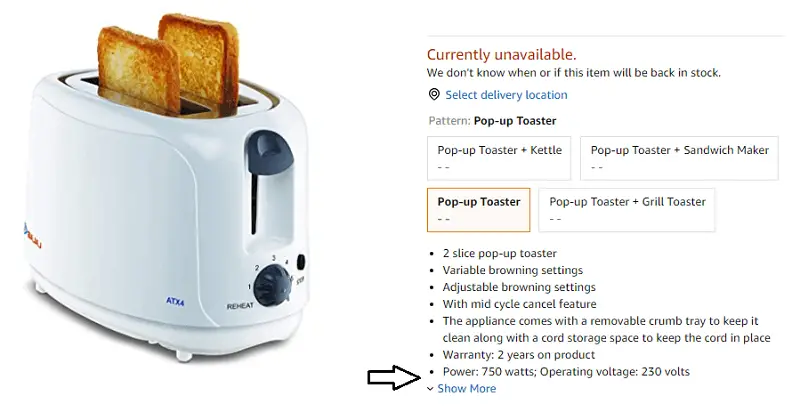
3. Brand and Model Specifics: Just like cars, different toaster manufacturers design their appliances with varying efficiencies and power outputs. Always worth checking the label on the bottom or back of your specific model. It’ll tell you exactly how many watts it’s rated for. Go on, I dare you. Check it!
A Quick Burst, Not a Marathon
Okay, so 800-1500 watts sounds like a lot, right? And it is! For a moment. But here’s the key takeaway:
Toasters use a lot of power, but only for a very short period.
Think about it. How long does it take to toast bread? Two, maybe three minutes? Even if you're making multiple rounds for a hungry family, the total active time is relatively brief. This is a crucial distinction. Compare your toaster to other high-wattage, short-burst appliances like a hair dryer or a microwave oven. They all demand a lot of power instantly to do their job quickly.
![Toaster Wattage 2024 [Lowest W | 226+ Studied | Cost P/Use]](https://ecocostsavings.com/wp-content/uploads/2022/10/toaster-wattage.jpg)
Now, compare that to something like a refrigerator, which uses fewer watts at any given moment (perhaps 100-200W) but runs almost constantly throughout the day and night. Or a gaming PC that might be on for hours, even if its peak usage is lower than a toaster's. That instantaneous high wattage isn't sustained for long, which is why your toaster isn't generally seen as a major energy hog on your electricity bill. It's the equivalent of a sprinter – super powerful for a dash, but then it's done. Your fridge is the marathon runner, steady and long-lasting.
So, What Can You Do (Besides Not Eating Toast)?
Not much, honestly, if you still want that golden-brown goodness! But a couple of trivial-yet-true things to ponder while you wait for your toast:
Match Your Toaster to Your Needs: If you rarely toast more than two slices, a 2-slice toaster will be slightly more energy-efficient than firing up a 4-slice monster for just one piece of bread. Common sense, I know, but sometimes we need a friendly reminder!
Don't Be a Toaster Stander: Staring at your toast isn't going to make it toast faster. Set it and forget it (until the ding, of course). You're only wasting your own precious morning minutes.

Toaster power consumption and electricity cost Don't Re-toast Right Away: If your toast isn't quite done, resist the urge to immediately push the lever down again for another full cycle. Often, a quick half-cycle or even just letting the residual heat do its work can save a tiny bit of energy and prevent over-toasting. You know, for those perfectionists among us.
Unplug It (if you're really, really anal about vampire power): Toasters don't have much in the way of "vampire drain" (power used when off but still plugged in) compared to electronics with clocks or standby modes, but if you're trying to be that person, go for it. Every little bit, right?
The Crunchy Conclusion
So, the next time you press that lever, you'll know. Your toaster is a bit of a power beast, a high-wattage hero of the breakfast table. But it's a short-burst hero, delivering maximum crispiness with minimal long-term energy guilt.
Now, if you’ll excuse me, I think I hear my current batch of toast calling. And no, I won't be staring at it. Probably. Okay, maybe just a quick peek.