
How Many Watts Does Rv Ac Use
Picture this: It’s the middle of August, the sun is blazing down like a dragon breathing fire, and you’re parked somewhere absolutely gorgeous but, let’s be honest, sweltering. You hop into your RV, wipe a bead of sweat from your brow, and with a hopeful sigh, flip on the AC. You brace yourself for that sweet, cool blast of air, but instead… you hear a groan from your generator, or a sad little click, or worse, your battery monitor plummets faster than a lead balloon. Sound familiar?
Yeah, we’ve all been there. That magical box on your roof, while a lifesaver in the heat, is also a bit of a power-hungry beast. And understanding exactly how much of a beast it is, in terms of watts, is absolutely crucial for a comfy, non-sweaty, and non-breaker-tripping RV life. Let's dive in, shall we?
What's the Deal with RV AC Watts?
Alright, so you’re wondering, "How many watts does my RV AC actually use?" If only it were a simple, single number, right? Unfortunately, like most things in RVing, the answer is a resounding: "It depends!"
Must Read
There are a few key players in this wattage game, and understanding them will help you avoid that dreaded generator groan or shore power blackout. Trust me, you don't want to learn this the hard way.
The Two Big Numbers: Running vs. Startup Watts
This is probably the most important distinction you need to grasp. Your RV AC unit doesn't just suck up one constant amount of power. Oh no, it’s far more dramatic than that:

- Running Watts: This is the power your AC uses once it's up and running smoothly, maintaining that lovely cool temperature. It's the steady-state consumption.
- Startup (Surge) Watts: Ah, the tricky one! When your AC compressor first kicks on, it requires a significant burst of power – sometimes 2 to 3 times more than its running watts – for a split second. This is called the surge, or startup, watts. This is often the culprit for tripped breakers or struggling generators, my friend.
Think of it like pushing a heavy car. It takes a lot more initial oomph to get it moving than it does to keep it rolling once it's already in motion.
Breaking Down the Numbers (Roughly!)
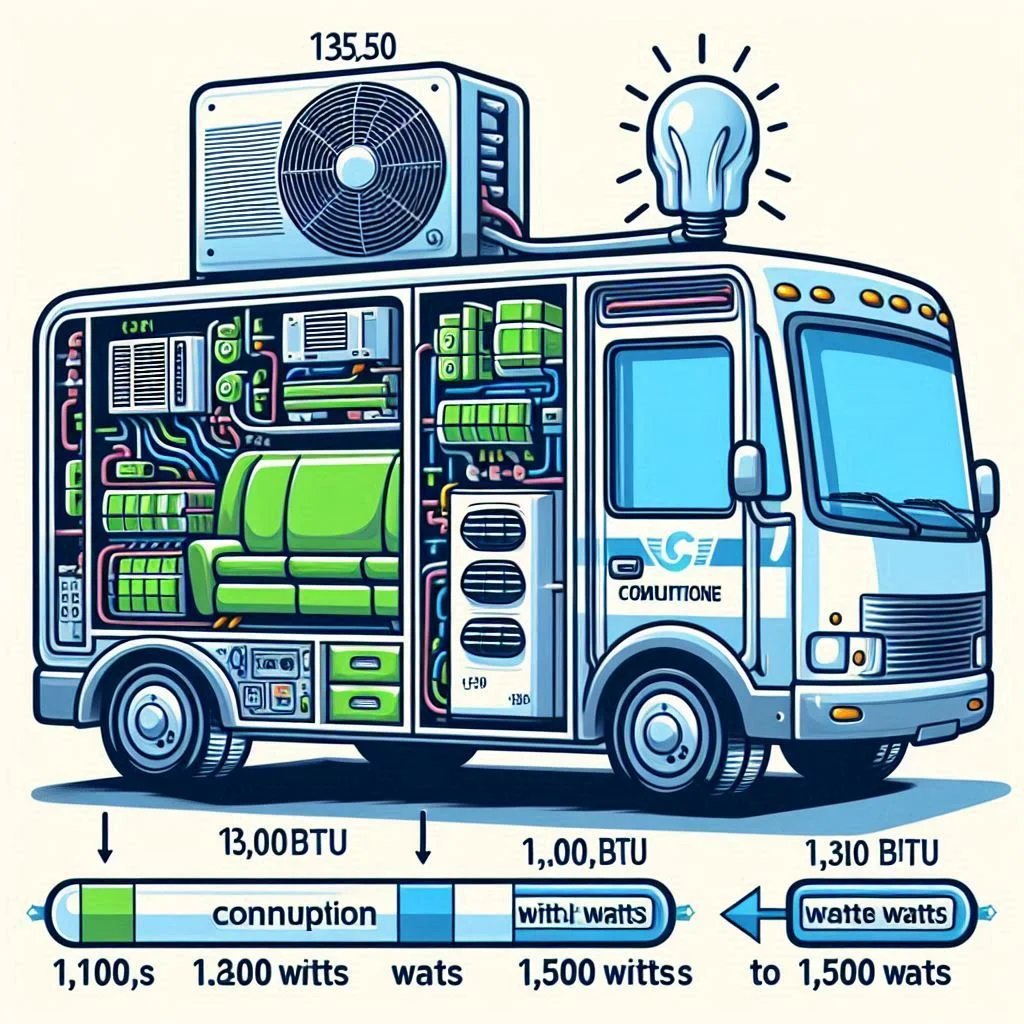
While specific models vary, we can give you some ballpark figures. Most RVs typically come with a 13,500 BTU or a 15,000 BTU (British Thermal Units, a measure of cooling capacity) AC unit. Let’s look at their typical power appetites:

- 13,500 BTU RV AC Unit:
- Running Watts: Usually somewhere between 1,200 – 1,700 watts.
- Startup (Surge) Watts: Brace yourself – this can jump to 2,500 – 3,500 watts (or even more!).
- 15,000 BTU RV AC Unit:
- Running Watts: A bit hungrier, typically 1,500 – 2,000 watts.
- Startup (Surge) Watts: This big boy can demand 3,000 – 4,000 watts (yep, it's a lot!) just to get going.
See why those surge watts are so important? Your power source – be it a generator, an inverter, or even shore power – needs to be able to handle that initial jolt.
Why Does This Matter to YOU?
Understanding these numbers isn't just for bragging rights at the campground (though you can totally use it for that). It directly impacts your ability to stay cool and comfortable without blowing fuses or draining your batteries into oblivion.
Generators: Your Best Friend or Your Worst Nightmare?
If you're boondocking or just away from shore power, your generator is king. But you need to make sure your generator's output (measured in watts) can handle your AC's startup surge. A 3,000-watt generator might barely start a 13,500 BTU AC, especially if other things are running. For a 15,000 BTU unit, you're usually looking at a 3,500 to 4,000-watt generator minimum to be safe, maybe even higher.

Shore Power: 30A vs. 50A
Most smaller RVs have 30-amp service, which gives you about 3,600 watts of total power. A 50-amp service offers a whopping 12,000 watts (across two lines). If you're on 30-amp, running your AC, microwave, and hairdryer all at once is basically asking for trouble. With 50-amp, you’ve got a lot more wiggle room, which is why bigger RVs often have two AC units!
Battery Banks & Inverters: A Different Ballgame
Want to run your AC off your batteries and inverter? While technically possible, it usually requires a massive battery bank and a very robust inverter. Even a 1,500-watt running AC will drain a typical RV battery bank (like two 100Ah batteries) in just a couple of hours. It’s generally not a sustainable long-term solution unless you’re heavily invested in solar and lithium batteries.
Enter the Soft Start Device!
Ever heard of a "soft start" device? These little gadgets are pure magic! They effectively "ramp up" the power to your AC compressor, significantly reducing that notorious startup surge. This means you might be able to start your AC with a smaller generator, or even on a limited inverter setup, that couldn't handle the full surge otherwise. It's often worth the investment if you’re trying to optimize your power use.
Pro-Tips for a Cooler, More Efficient RV!
So, what’s the takeaway? Knowing your watts is power (pun intended!). Here are a few bonus tips to keep you cool and your power grid happy:
- Park Smart: Seek shade! Parking under trees can dramatically reduce the heat load on your RV, making your AC work less hard.
- Insulate Like a Boss: Keep blinds closed, use reflectix in windows, and make sure your vents are sealed. Every little bit helps keep the cool in and the heat out.
- Pre-Cooling Power: If you know it's going to be a scorcher, run your AC early in the day before the RV turns into an oven. It's easier to maintain a cool temp than to drop a really hot one.
- Fan Favorites: Use your fantastic fan or other ceiling fans to help circulate air. Sometimes, a good breeze is all you need!
- Thermostat Taming: Don't set your thermostat to "arctic blast." A few degrees higher can save a lot of energy without feeling much difference.
So there you have it! Your RV AC isn't just a simple on/off switch; it's a dynamic system with a hungry appetite for watts, especially when it first kicks on. Understand these numbers, and you'll be well on your way to a perfectly chilled RV experience, no matter how hot it gets outside. Stay cool out there, my friends!