How Many Watts Does It Take To Run A Refrigerator
Hey there, fridge fanatic! Ever wondered how much juice your trusty food-chilling companion is slurping down? You're not alone! The question of how many watts it takes to run a refrigerator is a common one, and luckily, it's not as complicated as deciphering the back of a yogurt container after a week in the fridge. (Ew! Don't do that!). Let’s break it down in a way that's easier than making toast (which, by the way, requires its own wattage!).
Watts Up With Your Fridge? The Basics
Okay, so what are watts? Think of them as the amount of electrical power your refrigerator needs to do its job – keeping your milk cold, your leftovers tempting, and your ice cream… well, frozen. It’s like the refrigerator’s appetite for electricity! Different fridges have different appetites, naturally.
Generally, a standard refrigerator uses somewhere between 100 and 400 watts while running. But that's just a general ballpark. Consider it the “average height” of refrigerators. There are tiny dorm fridges and massive, side-by-side behemoths, so the wattage can fluctuate wildly.
Must Read
The Startup Surge! (Bigger Than Your Morning Coffee Jolt)
Here’s a sneaky little secret: Your fridge doesn’t constantly use the same amount of watts. When it first kicks on – that little hum you hear that assures you everything’s still frosty – it requires a startup surge. This can be significantly higher than its running wattage. Think of it as needing a big push to get that heavy shopping cart rolling. This surge can be anywhere from 600 to 1200 watts, sometimes even more, depending on the fridge’s age and size.
Don't panic! It's only for a brief moment, but it's important to keep in mind if you're, say, running your fridge off a generator. You need a generator that can handle that initial oomph!

Factors That Fridge-fluence Wattage (See What I Did There?)
Several things play a role in determining your fridge's wattage consumption. It’s not a one-size-fits-all freezer bag, after all!
- Size Matters: A larger fridge, naturally, needs more power. Think about it – more space to cool!
- Age is More Than Just a Number: Older refrigerators are generally less energy-efficient than newer models. They're like vintage cars – cool, but maybe not the most fuel-efficient.
- Energy Efficiency Rating: Look for the Energy Star label! These fridges are designed to save you money and reduce your environmental impact. They’re the superheroes of the appliance world!
- How Often You Open the Door (Are You Looking for That Midnight Snack… Again?): Every time you open the door, warm air rushes in, and the fridge has to work harder to cool things down. Resist the urge to browse! Treat it like a museum exhibit – look, don't touch (unless you actually need something, of course!).
- Temperature Settings: The colder you set your fridge, the more power it will use. Don't go overboard trying to create an arctic wasteland in your kitchen.
- Maintenance: A dirty condenser coil can make your fridge work harder and use more energy. So, give it a good cleaning every once in a while! Think of it as giving your fridge a spa day.
Finding Your Fridge's Wattage (Time to Play Detective!)
Alright, wanna know the exact wattage of your refrigerator? Here are a few ways to find out:

- Check the Label: Look for a sticker or plate on the back or inside of your refrigerator. It should list the wattage or amperage (you can convert amps to watts – watts = amps x volts. In the US, voltage is generally 120V). It might be hiding behind a crisper drawer, so get searching!
- Consult the Manual: If you still have the owner's manual (congrats, you're more organized than I am!), it should list the wattage.
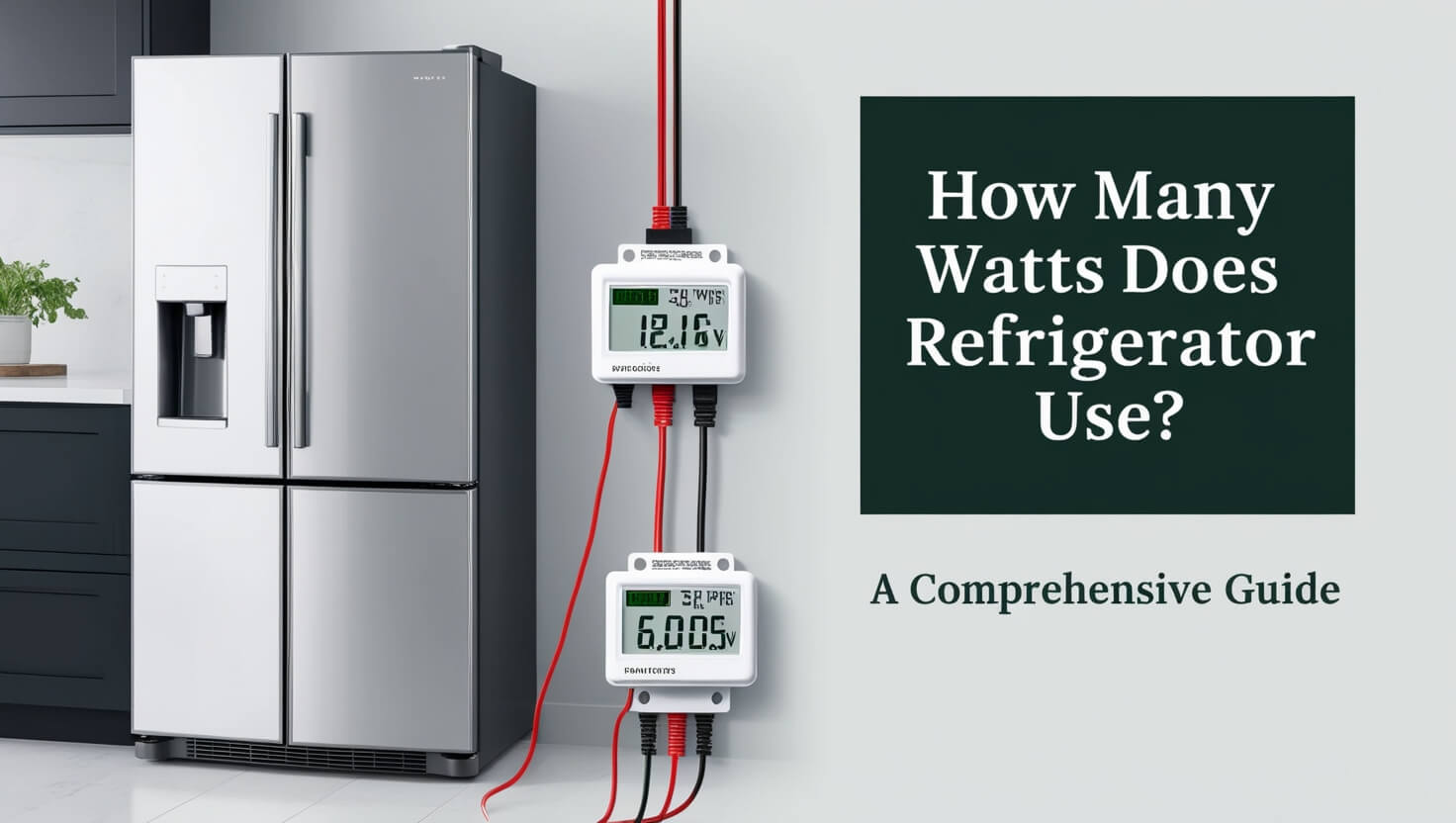
- Use a Watt Meter: You can purchase a watt meter online or at most hardware stores. Just plug your fridge into the meter, and it will tell you how many watts it's using. It's like having a tiny energy auditor in your home!
Saving Energy (and Money!) – Fridge-Friendly Tips
Now that you know how much power your fridge uses, here are some simple ways to save energy and keep your electricity bill down:
- Keep it Full (But Not Too Full): A full fridge stays colder more easily because the items inside help retain the temperature. But don't cram it so full that air can't circulate!
- Check the Door Seals: Make sure the door seals are tight. You can test them by closing the door on a dollar bill. If you can easily pull the bill out, the seal needs replacing.
- Defrost Regularly: If you have an older fridge, manual defrosting can improve efficiency. That layer of ice is like insulation – the wrong kind of insulation!
- Don't Put Hot Food in the Fridge: Let food cool down before putting it in the refrigerator. You don't want to make your fridge work overtime!
- Consider an Upgrade: If you have a really old fridge, consider upgrading to a new, energy-efficient model. It's an investment that will pay off in the long run!
So there you have it! Everything you ever wanted to know (and probably more) about refrigerator wattage. Hopefully, this clears up any confusion and empowers you to make informed decisions about your energy consumption.
Remember, even small changes can make a big difference. By being mindful of your fridge's energy usage, you can save money, help the environment, and maybe even justify that extra scoop of ice cream! Go forth and conquer your kitchen… responsibly!