
How Many Watts Does A Lamp Use

Ever found yourself staring at a light bulb, maybe one of those old-school ones, and pondering something like, "Huh, how much electricity does this thing actually eat?" Or perhaps you’re marveling at a tiny LED lamp and wondering if it sips power like a hummingbird or gulps it down? It’s a totally valid question, and honestly, the answer is a lot more interesting and less intimidating than you might think!
Let's dive into the cozy, glowing world of watts and lamps, because understanding this little tidbit can actually save you some cash and make you feel a bit more in control of your home's energy story. Plus, it’s just plain cool science in action!
So, What Exactly IS a Watt, Anyway?
You see the word "watt" everywhere – on light bulbs, microwaves, hair dryers. But what does it truly mean? In super simple terms, a watt (named after the brilliant Scottish inventor, James Watt) is a unit of power. Think of it like this: if electricity were water flowing through a pipe, the voltage would be the water pressure, the current would be the amount of water flowing, and the watts would be the actual power the water delivers, like how much force it could use to spin a tiny water wheel.
Must Read
For our lamps, watts tell us how much electrical energy the bulb consumes to produce light (and sometimes heat!). More watts generally meant more power consumption. Easy peasy, right?
The Good Ol' Days: Incandescent Lamps and the Watt-Brightness Dance
For decades, figuring out how bright a lamp would be was delightfully straightforward. You wanted more light? You bought a bulb with more watts. A 100-watt incandescent bulb was brighter than a 60-watt one, which was brighter than a 40-watt one. It was a simple, intuitive relationship that almost felt like magic. You knew that a 100W bulb was going to give you that bright, room-filling glow, while a 40W bulb was perfect for a cozy reading nook.

But here’s the kicker: those old incandescent bulbs were a bit like tiny, inefficient heaters that also happened to emit light. A huge chunk of the energy they consumed (we're talking over 90%!) was wasted as heat, not light. So, when you felt the warmth emanating from a traditional bulb, you were literally feeling your money evaporate into thin air. A bit like filling your car's gas tank, only for most of the fuel to turn into exhaust fumes before it even hits the engine!
The Plot Twist: LEDs and the Energy Revolution!
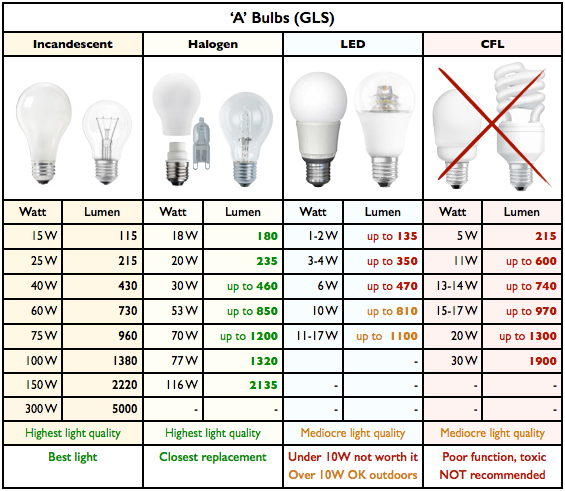
Then came the game-changers: CFLs (Compact Fluorescent Lamps) and, more recently and impressively, LEDs (Light Emitting Diodes). These modern marvels completely flipped the script on the watt-brightness connection. Suddenly, a tiny 9-watt LED bulb could produce the same amount of light as an old 60-watt incandescent!

Wait, what? How does that even work? It’s because LEDs are incredibly efficient. They are like the super-athletes of the lighting world, doing the same job with a fraction of the effort (and energy). Instead of wasting most of their energy as heat, they convert almost all of it into pure, glorious light. This is why an LED bulb feels barely warm to the touch, even when it’s blazing bright.
Enter Lumens: The True Brightness Hero
Because watts no longer tell the full story of brightness, we need a new hero, a new measurement that focuses purely on the light output. Say hello to lumens!
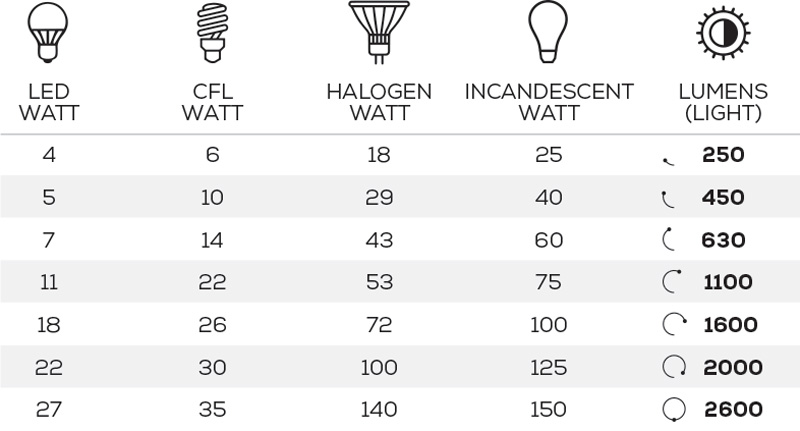
Think of lumens as the actual "brightness score" of a bulb, regardless of how much energy it consumes. When you're buying a new lamp or bulb today, instead of looking for "60 watts," you should really be looking for "800 lumens" (which is roughly equivalent to a traditional 60-watt incandescent). Want something super bright? Look for more lumens! Prefer a softer, moodier light? Opt for fewer lumens.
This is where it gets really cool: a lamp might only use 5-15 watts if it's an LED, but it could still be pumping out hundreds of lumens, making your room feel wonderfully lit. It's like having a tiny, efficient personal assistant who does the work of three people but only asks for one person's paycheck!
Why This Watt-Knowledge Is Awesome (and Saves You Money!)
Understanding watts and lumens empowers you. When you see that an LED lamp only uses, say, 7 watts compared to a traditional bulb's 60 watts, you immediately grasp the monumental energy savings. Over time, multiplied across all the lamps in your home, that adds up to significant savings on your electricity bill.
Beyond your wallet, it’s also a win for the planet! Less energy consumed means less demand on power plants, which often translates to fewer greenhouse gas emissions. You’re literally lighting up your life more sustainably, one efficient bulb at a time.
So, the next time you glance at a lamp, remember it's not just about the watts anymore. It's about the ingenious engineering behind it, turning a tiny trickle of power into a cascade of beautiful light, all thanks to a shift from old-school energy guzzlers to the sleek, efficient marvels of today. Who knew a little number on a bulb could hold so much fascinating information?