
How Many Watts Does A Frigidaire Refrigerator Use

Okay, let's talk refrigerators. Specifically, Frigidaire refrigerators. And even MORE specifically, how much power these icy giants suck down. Prepare for a deep dive... or maybe just a toe dip.
The Wattage Mystery: It's Complicated!
Finding the exact wattage of your Frigidaire fridge? It's like trying to find a matching sock in the laundry abyss. Seriously.
It's not a one-size-fits-all answer. So many factors are at play. Think size, age, features...even how often you raid it for midnight snacks. But we'll crack the code!
Must Read
General Wattage Ranges: A Starting Point
As a general rule, newer Frigidaire fridges tend to be more energy-efficient. Good news for your wallet and the planet! They're typically in the 100-200 watt range while actively running.
Older models? Hold onto your hats. They could easily be guzzling 300-500 watts. Time for an upgrade, maybe?
Remember, that's just when the compressor is actually running. Which, thankfully, isn't all the time.
Decoding the Yellow Energy Guide Sticker
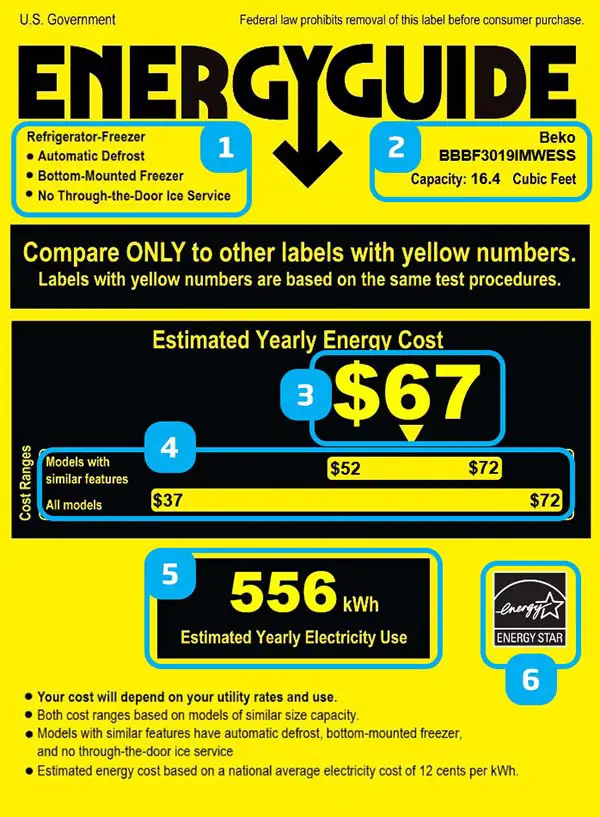
Your fridge probably has a yellow EnergyGuide sticker. This is your best friend in this quest. Look closely at the estimated yearly energy consumption in kilowatt-hours (kWh).
Divide that number by 365 (days in a year) and then by 24 (hours in a day). That gives you the average kWh used per hour. Multiply that by 1000 to get the average wattage.
For example, if it says 500 kWh per year: (500 / 365 / 24) * 1000 = Roughly 57 watts. This is an AVERAGE, not the running wattage.
The Unsung Heroes: Amps and Volts
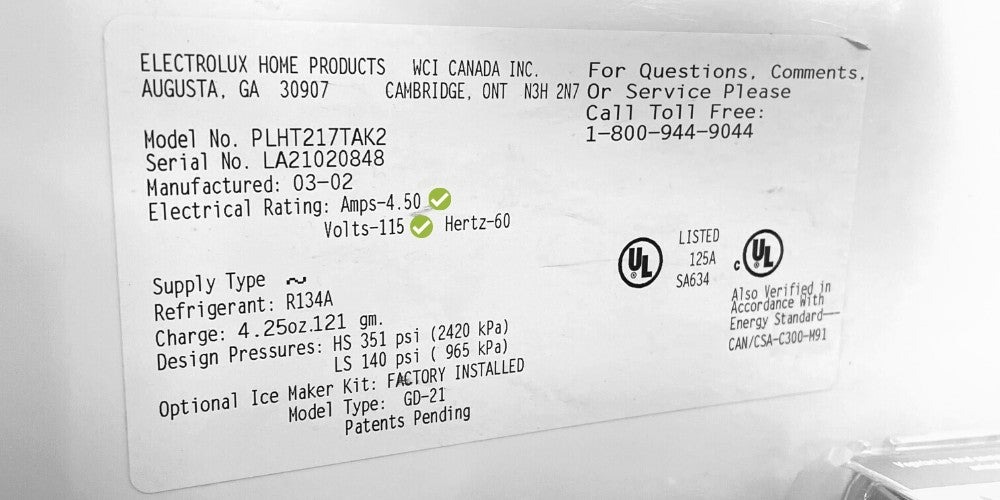
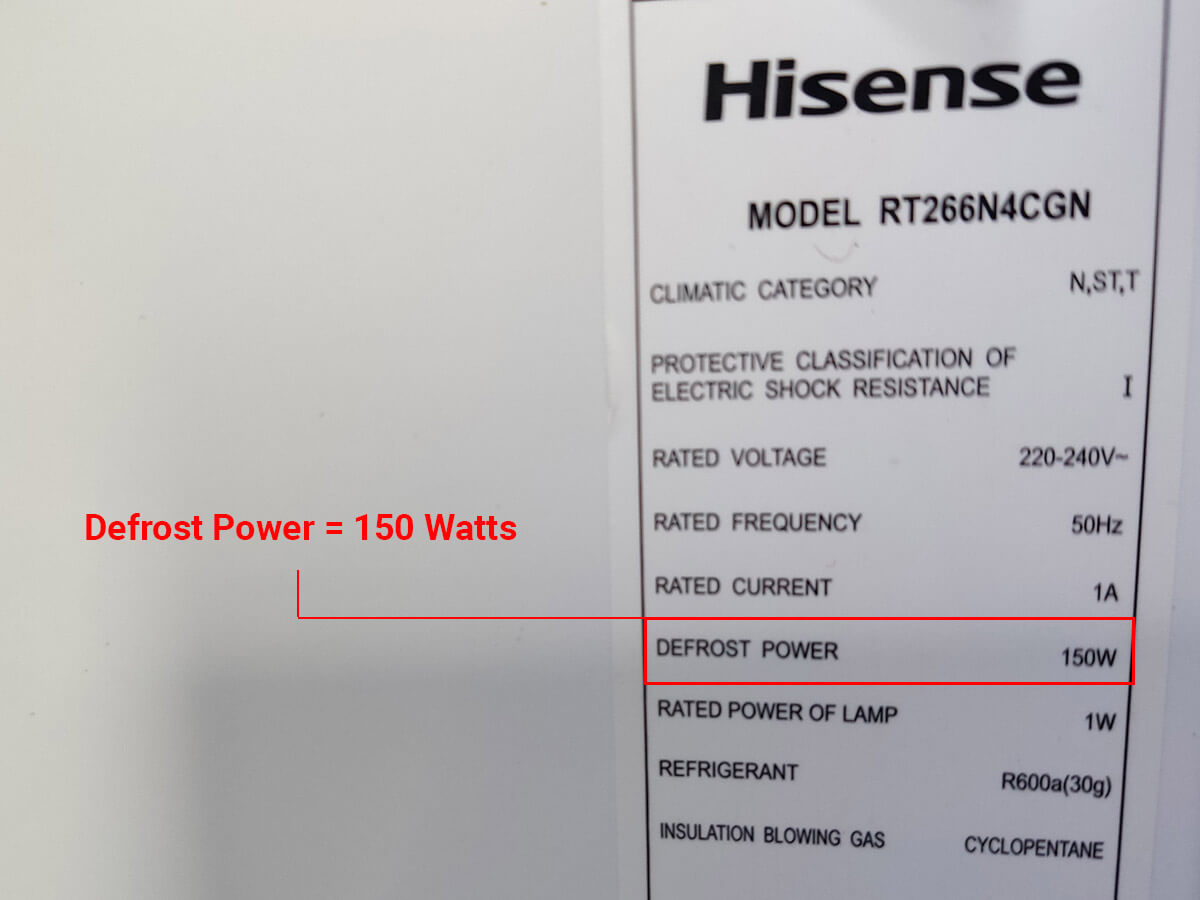
Another way to estimate? Check the nameplate, usually inside the fridge or on the back. It will list the amps (A) and volts (V).
Multiply those two numbers together. That gives you the wattage! For example, 5 amps x 120 volts = 600 watts. Remember, this is likely the maximum wattage it will draw.
Don't electrocute yourself trying to find it. Safety first!
Standby Mode: The Silent Energy Vampire
Here's the thing. Your fridge isn't always running at its peak wattage. There's something called "standby mode."
Even when the compressor isn't humming, it's still using a little bit of electricity. Keeping the lights on, running the display... tiny things that add up over time.
It's like that one friend who's always subtly draining your energy. You know who I'm talking about.
Factors That Impact Fridge Wattage: It's a Wild Ride
So, we've covered the basics. Now, let's dive into the factors that make your fridge's wattage unique. This is where things get interesting.
Size Matters: The Bigger, the Thirstier
A massive, side-by-side refrigerator will almost always use more energy than a compact, dorm-room model. Seems obvious, right?
Think of it like a car. A Hummer guzzles gas. A Prius sips it. Same principle.
So, if you're looking to save energy, downsize your fridge. Unless you REALLY need all that space for... leftovers.
Age: The Older, the Greedier
Old refrigerators are energy hogs. Plain and simple. Technology has come a long way.
Newer models have better insulation, more efficient compressors, and other energy-saving features. It's like comparing a flip phone to a smartphone. One is definitely stuck in the past.
If your fridge is older than your teenager, it's probably time for a replacement. Just saying.
Features: Bells and Whistles, Energy Bills
Ice makers, water dispensers, fancy displays... they all add to the energy consumption. All those fancy features come with a price!
Do you REALLY need ice on demand? Or are you just being lazy? Unpopular opinion: ice trays are perfectly acceptable.
Sometimes, simple is better. For your wallet, at least.
Ambient Temperature: The Fridge's Nemesis
If your garage is hotter than a sauna, your fridge has to work harder to stay cool. Makes sense, right?
Keep your fridge in a cool, well-ventilated area. Avoid direct sunlight and heat sources.
Think of it like this: your fridge is happiest in its natural habitat... a moderately cool kitchen.
Door Habits: Stop Letting All the Cold Air Out!
Every time you open the door, you let out cold air. Your fridge has to work overtime to replace it. It's like inviting the summer heat inside.
Minimize door openings. Don't stand there staring blankly into the abyss. Decide what you want BEFORE you open the door.
And for the love of all that is frozen, don't leave the door ajar! I'm looking at you, kids.
Maintenance: Keep It Running Smoothly
A dirty fridge is an inefficient fridge. Dust and debris can clog the coils, making the compressor work harder.
Clean the coils regularly. It's a simple task that can make a big difference. Think of it as giving your fridge a spa day.
And make sure the door seals are tight. If they're cracked or damaged, cold air will leak out.
Unpopular Opinion: Embrace the Occasional Thaw
Okay, here's where I might lose some of you. But hear me out.
Sometimes, unplugging your fridge for a short period (like a few hours) can actually save energy. Especially if it's an older model. It gives the compressor a break.
Obviously, don't do this if you have a ton of perishable food. And definitely don't do it during a heatwave. But a little thaw now and then might not be a bad thing.
You can also use it as an opportunity to give it a good cleaning! Two birds, one stone.
So, How Many Watts Does a Frigidaire Refrigerator REALLY Use?
The answer? It depends! It is not an exact science! It is not always a nice and simple number.
But hopefully, this article has given you a better understanding of the factors involved. And maybe even made you smile a little.
Now, go forth and conquer your energy bills! Or at least understand them a little better.
Final Thoughts: Fridge Wisdom for the Ages
Treat your fridge with respect. Keep it clean, keep it cool, and don't abuse its door-opening privileges.
And remember, a little bit of knowledge can go a long way in saving energy and money. Even when it comes to something as seemingly simple as a refrigerator.
Now, if you'll excuse me, I'm going to go raid my own fridge for a midnight snack. Hopefully, it's not costing me too much!