
How Many Watts Does A 12000 Btu Mini Split Use
Okay, so you're thinking about getting a mini-split, huh? Smart move! They're like the ninjas of the HVAC world – quiet, efficient, and they can cool or heat just one room, so you don't have to crank up the whole darn house. But before you dive in, you're probably wondering about the electricity bill. Let's talk about those watts, specifically how many a 12,000 BTU mini split sucks down.
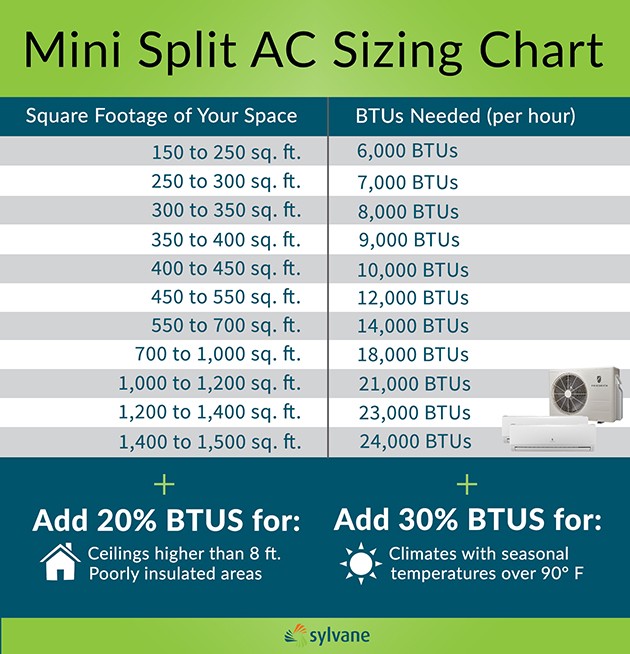
Think of BTUs (British Thermal Units) like tiny ice cubes of cooling power. 12,000 BTUs is like having a whole bunch of those ice cubes working hard to keep your space comfortable. A 12,000 BTU mini split is generally good for a room around 400-600 square feet, depending on how well insulated it is (and if you have a giant sunny window that acts like a magnifying glass on your furniture).
The Wattage Breakdown: Not as Scary as it Sounds
Now, to the burning question: How many watts are we talking? Well, it's not a single, simple answer. It's more like asking how many cookies are in the jar... it depends! It depends on the model, the manufacturer, and, most importantly, what mode it's in.
Must Read
Here’s the scoop:
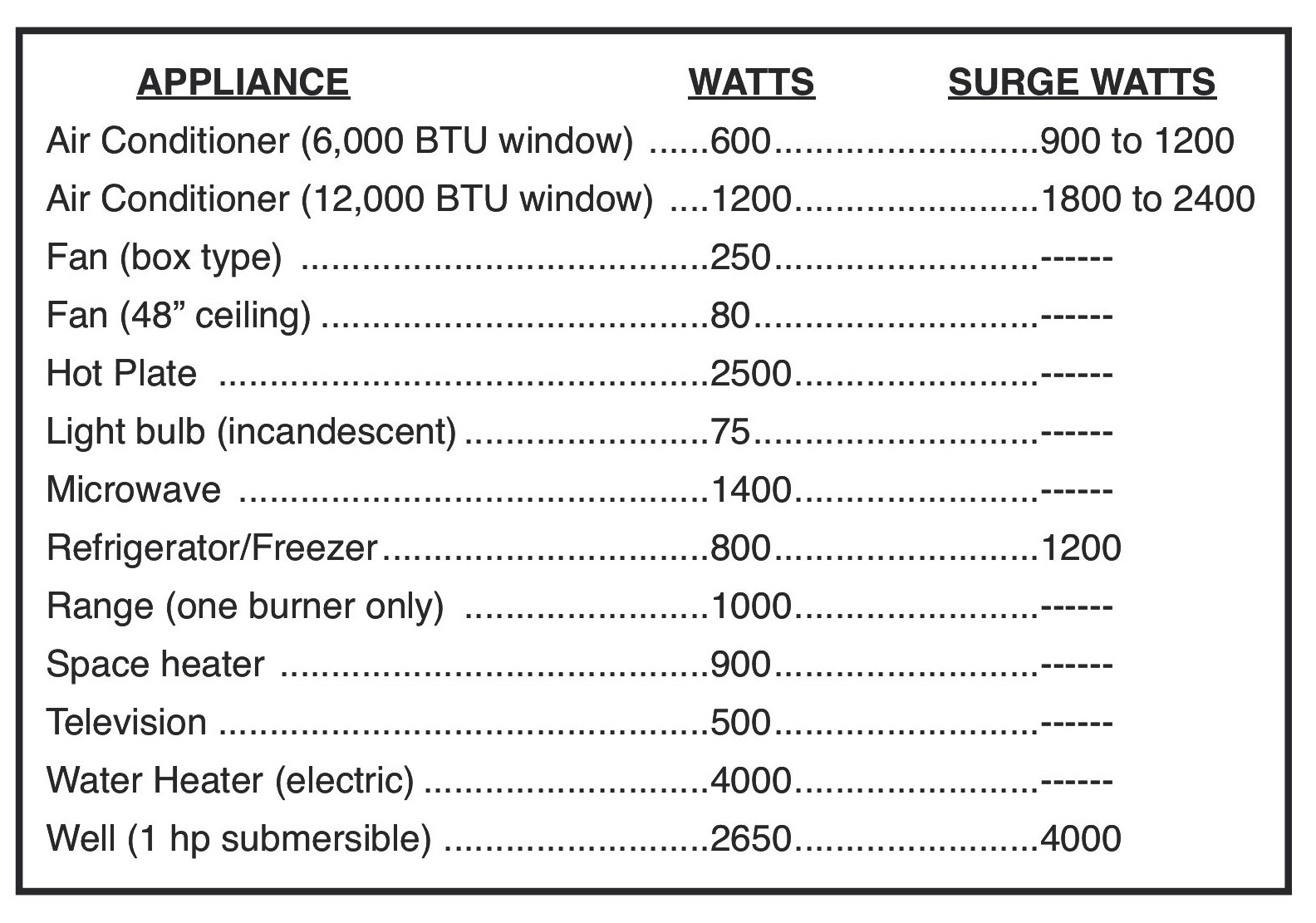
- Starting Watts (The Power Surge): This is like when you first turn on your car. It needs a little extra juice to get going. A 12,000 BTU mini split might need a surge of 1500-2000 watts for just a split second. Don't freak out; it's only temporary.
- Running Watts (The Steady Sip): This is the wattage it uses once it's up and running, keeping things cool (or warm). This is where the real information is. This number usually hovers around 800-1200 watts. It is the number that will truly influence your electricity bill.
- SEER Rating (The Efficiency Secret): This is a big one! SEER stands for Seasonal Energy Efficiency Ratio. The higher the SEER rating, the more efficiently the unit uses energy. Think of it like miles per gallon for your car. A higher SEER rating means fewer watts used for the same amount of cooling. Look for a SEER of 16 or higher for good efficiency.
Think of it this way: a 1200 watt hairdryer uses about 1200 watts constantly. Your mini-split uses peak watts at startup but then sips power, potentially using less energy than that hairdryer over time if it’s a efficient model!
Why Does Wattage Matter, Anyway?
Besides the obvious (saving money!), knowing the wattage helps you avoid tripping breakers. Imagine you're running your mini split, your TV, your computer, and your microwave all on the same circuit. If the total wattage exceeds the circuit's capacity, BAM! Lights out! Nobody wants that.
Here's a little anecdote: I once tried to run a space heater, a hair dryer, and a waffle maker simultaneously. Let's just say I learned a valuable lesson about circuit breakers that day. My waffles were cold, my hair was damp, and I spent 10 minutes fumbling in the dark looking for the breaker box. Don't be like me!
How to Find the Wattage of Your Mini Split
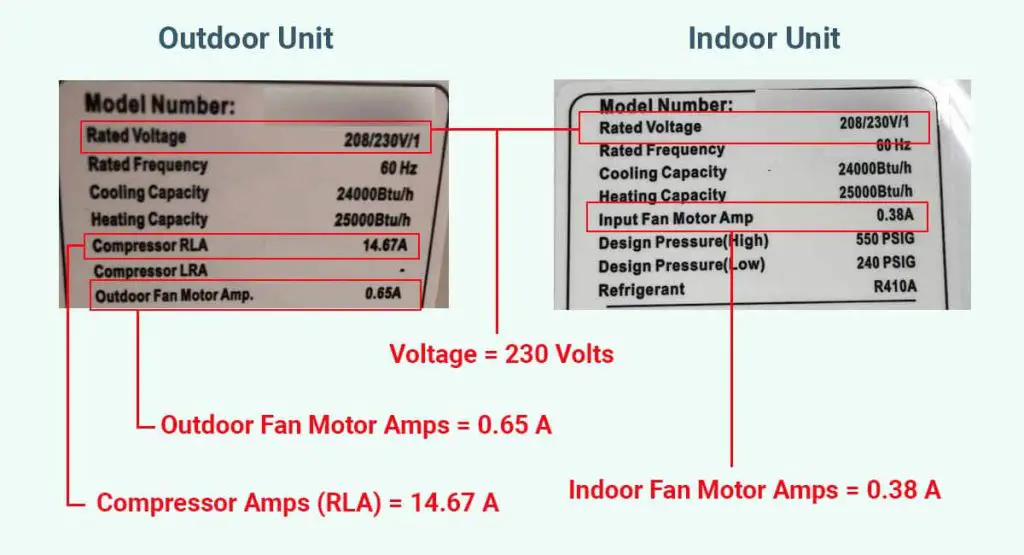
Don't just rely on general estimates. The best way to know for sure is to check the unit itself. Look for a sticker on the side or back of the unit. It should list the wattage (or amperage, which you can convert to wattage by multiplying by the voltage – usually 120V in the US). You can also find this information in the owner's manual or on the manufacturer's website.
Pro Tip: Many modern mini splits have inverter technology. This means they can adjust their cooling/heating output and, therefore, their wattage consumption based on the room's temperature. They ramp up or down, saving you energy compared to older, less sophisticated units that are either full-blast or off.
The Bottom Line: Do Your Homework!
Choosing a mini-split is an investment in your comfort and your energy bill. Before you buy, take the time to research different models and compare their SEER ratings and wattage. A little bit of research upfront can save you a lot of money (and prevent waffle-related disasters) down the road. And remember, a slightly more expensive, but more efficient, mini-split will often pay for itself over time.

