
How Many Watts Does 5 Ton Air Conditioner Use

Let's talk about your air conditioner, that humming, icy-breath-blowing superhero that saves you from summer meltdowns. Specifically, let's tackle the power-hungry beast known as a 5-ton AC unit. You're probably wondering, "Just how many watts are we talking about here?"
Now, before you start picturing a nuclear power plant dedicated solely to keeping your living room comfortably chilled, let's break it down. We're not diving into a physics lecture, promise! Think of it like this: your AC is like a really strong, athletic friend who needs a good meal (electricity) to keep performing at their best. But just how big a meal are we talking?
A 5-ton AC, generally speaking, will gulp down somewhere between 3,500 and 5,000 watts while it's running. It's a range, because, well, appliances are like people – they have their quirks. Some are more efficient than others. Consider it the difference between your friend who can run a marathon on a handful of almonds and the one who needs a whole pizza beforehand.
Must Read
The "Watt" Does It All Mean?
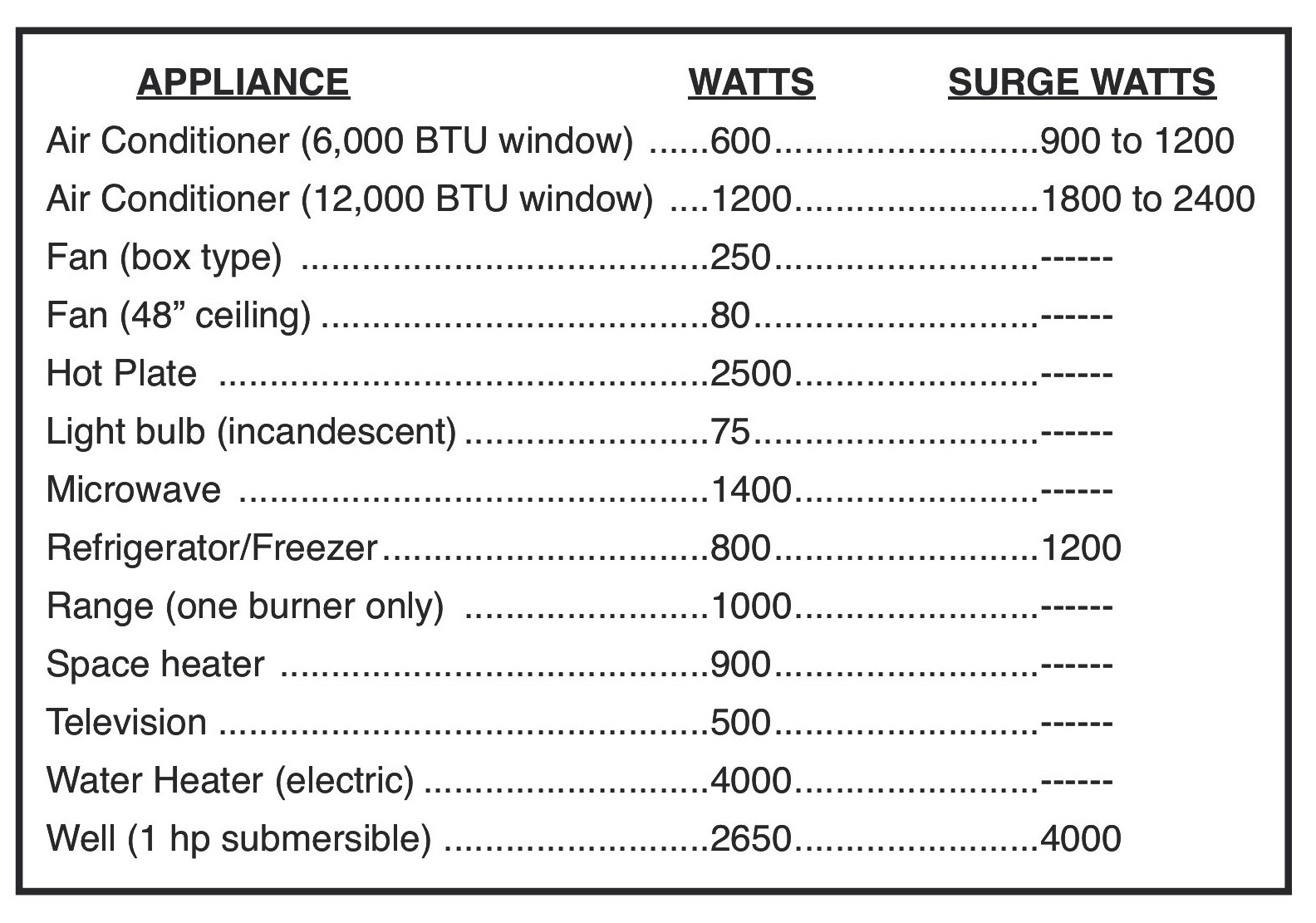
Okay, so you've got a number. Big deal, right? But imagine this scenario: it's a sweltering summer day, and you're hosting a barbecue. The AC is blasting, the fridge is humming, the blender is churning out margaritas, and the sound system is pumping out tunes. Suddenly, the lights flicker, and everything grinds to a halt. You've overloaded the circuit! Understanding the wattage of your AC (and other appliances) helps you avoid this disastrous party foul.
Think of it like this: your electrical panel is like the designated driver for your house's electricity. It can only handle so much "power juice" before things get messy. Knowing your 5-ton AC needs a hefty serving helps you plan accordingly.

The Efficiency Factor: Not All Tons Are Created Equal
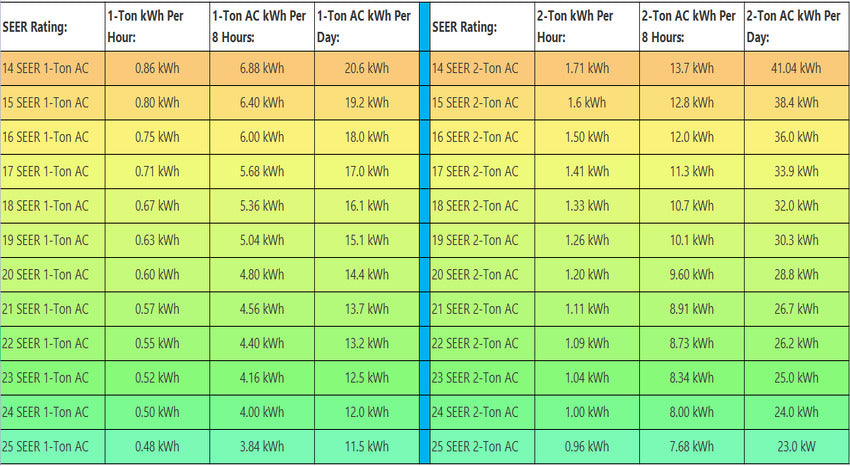
Here's where things get a little more interesting. Remember that range of 3,500 to 5,000 watts? That difference is largely due to something called SEER rating (Seasonal Energy Efficiency Ratio). Think of SEER as the AC's "miles per gallon." A higher SEER rating means your AC is more efficient and will use less electricity to cool your home.
It's like comparing a gas-guzzling truck to a sleek hybrid. Both can get you where you need to go, but one will cost you significantly more in the long run. Investing in a higher SEER AC might mean a bigger upfront cost, but you'll save money on your electricity bill in the long run. Your wallet (and the planet) will thank you.
Beyond the Watts: The Quirks of AC Life
It's not just about the wattage, though. The real-world performance of your 5-ton AC is influenced by a bunch of factors. Is your house well-insulated? Are your windows drafty? Are you constantly opening and closing doors, letting all that cool air escape like a mischievous genie?
Think of your house as a leaky bucket. No matter how much water (cool air) you pour in, it'll keep draining out. Sealing up those leaks (insulating, weather stripping) will make your AC's job much easier and lower your energy consumption. You're basically giving your hardworking AC a break!
“Don’t underestimate the power of a well-maintained AC unit,” says Bob, a local HVAC technician. “Regular servicing can significantly improve efficiency and extend the life of your system.”
And speaking of maintenance, don't forget to change your air filters regularly. A clogged filter forces your AC to work harder, consuming more energy and potentially leading to breakdowns. It's like trying to breathe through a sock – not fun, and definitely not efficient.
The Bottom Line: Knowledge is Power (and Saves You Money!)
So, how many watts does a 5-ton AC use? Somewhere between 3,500 and 5,000, give or take. But more importantly, understanding the factors that influence energy consumption – SEER rating, insulation, maintenance – empowers you to make informed decisions and save money. You're not just cooling your home; you're becoming a savvy energy manager. And who knows, maybe you can use those savings for that backyard barbecue you've been dreaming of – just be sure to check your circuit breaker first!
