
How Many Watts Are In A Kw
Okay, picture this: I'd just moved into my first "proper" adult apartment, you know, the kind where you actually have to pay all the bills yourself instead of just handing over rent to a landlord. I was feeling pretty proud, checking out all my new (to me) appliances. I picked up my trusty old hairdryer, squinted at the tiny print on the label, and saw something like "1800W."
My brain, bless its cotton socks, immediately went: "1800... W? Is that... a lot? Is that bad? Will my hairdryer single-handedly bankrupt me this month?" Then, I remembered seeing numbers like "kW" on electric car chargers or power stations, and "kWh" on my actual electricity bill. I felt like I was staring at three different languages, all trying to tell me the same thing, but in the most confusing way possible. Sound familiar?
It turns out, the universe wasn't conspiring to make me feel dumb about electricity. It's actually a super straightforward concept once you pull back the curtain on the jargon. And today, my curious friend, we're going to pull that curtain right back to answer the age-old question that probably popped into my head that day: How many watts are in a kilowatt?
Must Read
The Mighty Watt: Your Basic Power Unit
Let's start with the OG: the Watt, often abbreviated as W. Think of a Watt as the basic unit of electrical power. It's named after James Watt, a Scottish inventor who made huge improvements to the steam engine. Basically, a Watt tells you how much energy an electrical device is using at any given moment.
Imagine it like the speed of a car. A car traveling at 60 mph is using power to go that fast. An appliance rated at 100W is using 100 units of electrical power per second to do its thing. Simple enough, right? Your phone charger might use around 5-10W, while a bright LED light bulb could be 10-15W.
Enter the Kilowatt: When Watts Get Too Big
Now, sometimes, Watts just aren't enough. When you're talking about bigger appliances, or the total power consumption of an entire house, or even a city, those Watt numbers start to get huge. Like, ridiculously huge. And no one wants to say or write "one million eight hundred thousand Watts" every time they talk about a large power output.

This is where the Kilowatt (kW) swoops in to save the day!
You know the prefix "kilo," right? Think about kilograms (1000 grams) or kilometers (1000 meters). The "kilo" prefix literally means one thousand. It's a universal scientific multiplier that just makes big numbers more manageable.
So, drumroll please, here's the big reveal:

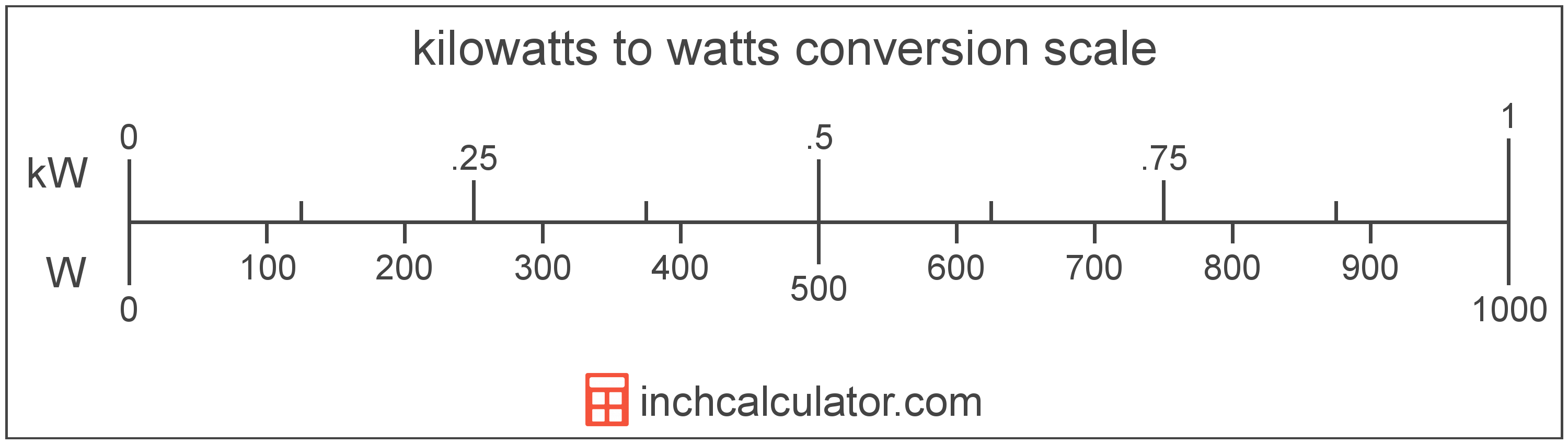
1 Kilowatt (kW) = 1000 Watts (W)
Boom! Mind blown, right? Or maybe just mildly informed? Either way, you're smarter now.
Putting it into Practice: Conversions and Examples
Let's go back to my hairdryer. If it was 1800W, to convert that to kilowatts, I just divide by 1000:
1800W / 1000 = 1.8 kW
Suddenly, "1.8 kW" sounds a lot less intimidating than "1800 Watts" (even though they mean the exact same thing). It's just a neater, more concise way to express the power. See? Your brain didn't short-circuit for nothing!
Here are a few more common examples to help you visualize:

- A powerful microwave might be 1000W. That's exactly 1 kW.
- A space heater could easily be 1500W. That's 1.5 kW.
- Your gaming PC, running full tilt, might pull around 500W. That's 0.5 kW.
- Even a small electric kettle, heating water for your tea, can be 2000W or more! That's 2 kW.
Notice how easy it is to switch between the two? It's literally just moving the decimal point three places. Like converting cents to dollars (100 cents = 1 dollar). It's that simple.
Why Does it Even Matter, You Ask?
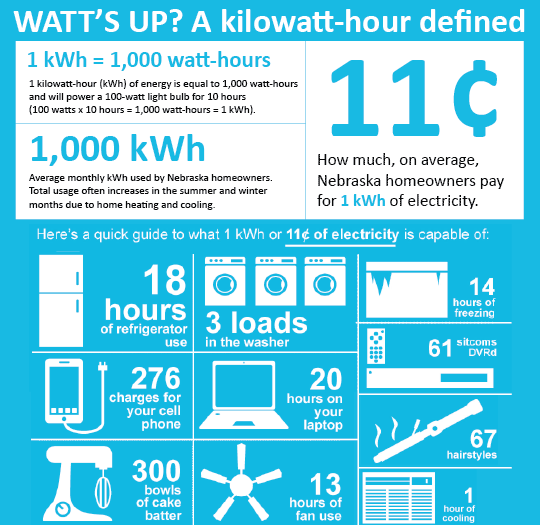
Good question! While the actual power rating (W or kW) tells you how much electricity an appliance uses at any moment, what you usually pay for on your electricity bill is kilowatt-hours (kWh). This is your power (kW) multiplied by the time you use it (hours). So, understanding kilowatts is the first step to understanding your bill and how much energy you're actually consuming.
Knowing this conversion empowers you to:
- Compare appliances: Quickly see which device is a bigger energy hog.
- Estimate costs: If you know your electricity rate per kWh, you can start to roughly calculate how much that 2 kW space heater is costing you if you run it for an hour.
- Sound smart: Next time someone talks about a "megawatt" (that's a thousand kilowatts, or a million watts, just FYI!), you'll be able to nod sagely.
So there you have it! The great mystery of Watts and Kilowatts, demystified. It's not some arcane secret held by electricians; it's just a basic unit conversion. You've got this. Go forth and confidently read those appliance labels!