
How Many Watts Are In 9 Volts
Ah, the trusty 9-volt battery. It’s a quiet hero in countless homes, lurking in the back of drawers or diligently standing guard in our smoke detectors.
You see its distinctive rectangular shape, those two little snaps at the top, and right there on its label, the magic number: 9 volts. It feels substantial, doesn’t it?
When we think about electricity, we often think of "volts" as the main player, the big boss. So, it's natural to wonder: "How many watts are in 9 volts?"
Must Read
It sounds like a straightforward question, a simple conversion, right? Like asking how many minutes are in an hour, or how many pennies are in a dollar.
But here’s where our story takes a delightful, slightly surprising turn. The answer isn't a single, fixed number. It’s a bit like asking, "How many smiles are in a person?"
A person can offer a tiny, polite smile, or a giant, booming laugh-filled grin. The "person" is the same, but the "smile energy" can be wildly different.
The Great Electrical Mystery: Volts Are Only Half the Story
We often think of volts as the ultimate measure of electrical muscle. More volts, more power, right?
In many ways, volts do represent a kind of electrical "push" or "pressure." Imagine it as the force behind every tiny electron, eager to get moving.
A 9-volt battery gives its electrons a steady, firm shove, urging them to get moving through whatever device they’re connected to. It’s a consistent, underlying drive.
It's like a consistent breeze, always there, ready to inflate a sail. But the breeze alone doesn't tell you how fast the boat will go, or how much actual work the wind is doing.
You could have a mighty wind pushing a tiny paper boat, barely catching the air, or the exact same mighty wind pushing a giant cargo ship with massive sails. The inherent force is similar, but the results are wildly different based on what's being pushed.
This is the initial puzzle, the charming twist in our electrical tale. Just knowing the voltage provides only half of the picture, setting the stage but not defining the play.
Introducing the Unsung Hero: Amps, the Electrical Flow
This is where our second star of the show enters the stage: Amps (short for Amperes). If volts are the electrical "push" or "pressure," then amps are the volume of that push.
They represent the sheer quantity of electrical current flowing through a circuit. It's the "oomph," the "muscle," the number of electrons actually moving past a point every second, doing the heavy lifting.
Let's use a beloved analogy: water. Think of a garden hose. The volts are like the water pressure in your pipes, the strength with which the water wants to push out of any opening.
But when you open the tap, you decide the amps – the actual amount of water flowing out. A tiny drip for watering a delicate plant, or a gushing torrent to quickly fill a bucket for washing the car.
The water pressure (volts) from your house is relatively constant, but the flow (amps) changes dramatically depending on how wide you open the tap, or what nozzle you attach to the hose.
Similarly, a 9-volt battery provides the potential for a certain electrical push. But it's the device it's connected to that decides how many amps it will pull, like the tap controlling the flow.
A small, frugal device will only "open its tap" a tiny bit, drawing very few amps, just a trickle. A power-hungry device will fling its tap wide open, gulping down many amps, eager for energy.
Watts: The Grand Total of Electrical Work Done
Now, let's bring it all together. Watts are the measurement of total electrical power being used. They tell us how much actual work is being done, how much energy is truly being spent each moment.
It's the ultimate combination of both the electrical "push" (volts) and the electrical "flow" (amps). Think of it as the ultimate punch, or the total energy output and effort being exerted.

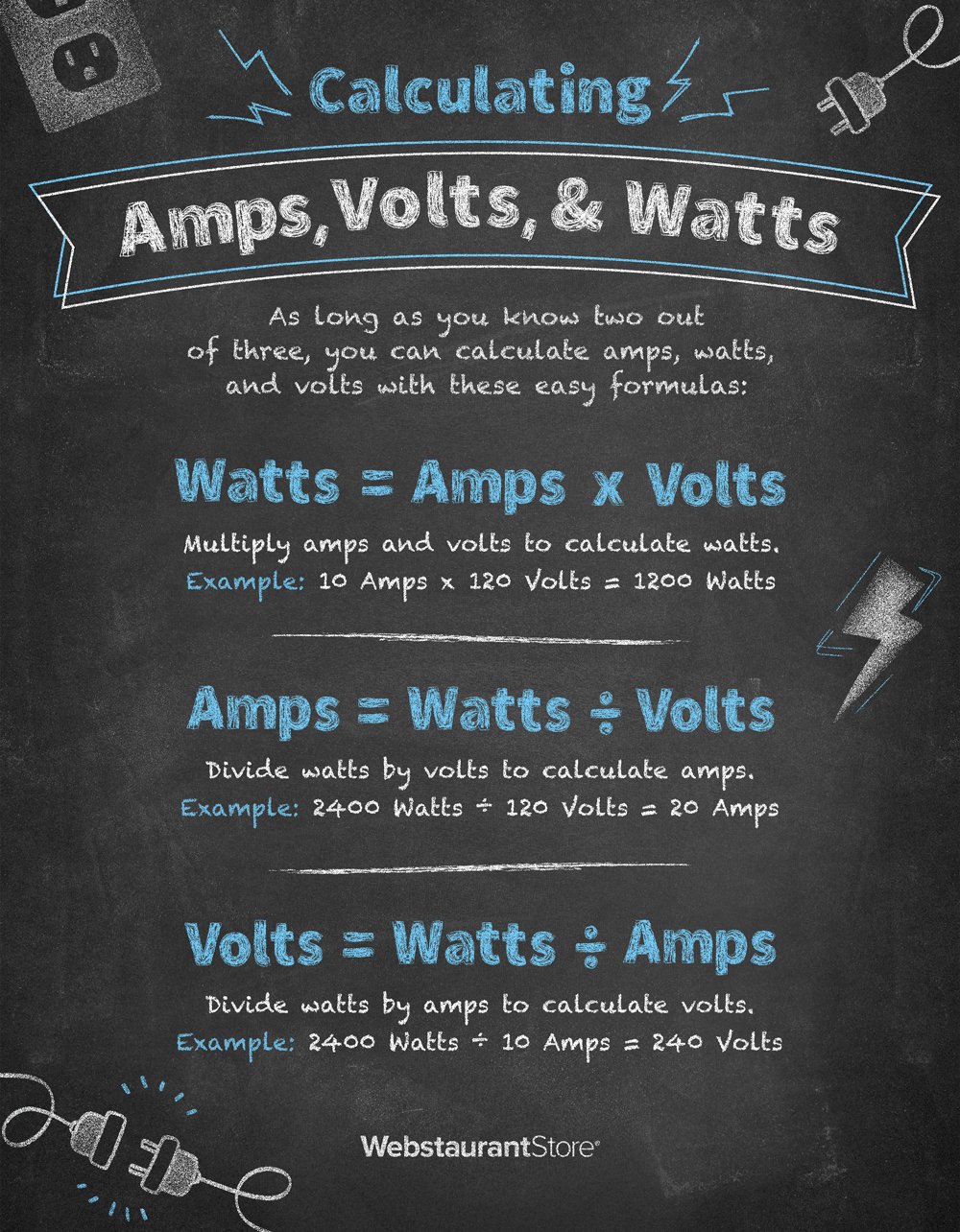
The simple, elegant formula that unlocks this mystery, making sense of our everyday electrical interactions, is:
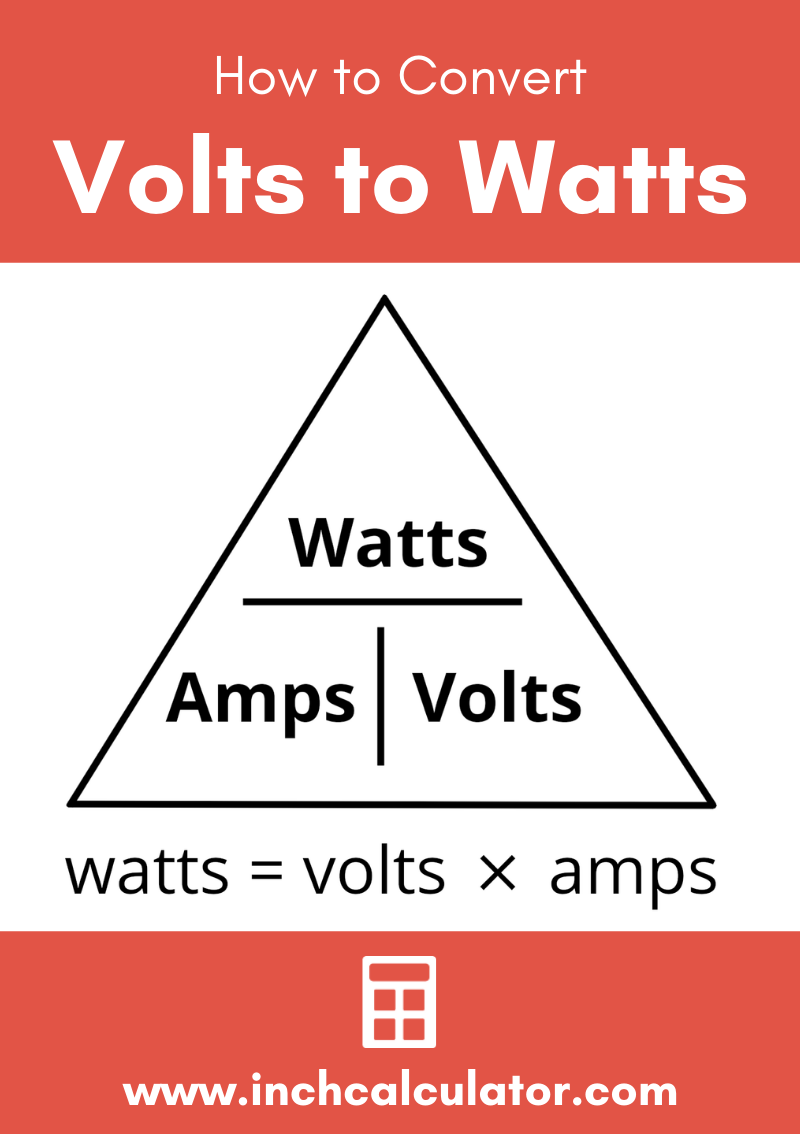
Watts = Volts x Amps
So, to truly answer our initial question, "How many watts are in 9 volts?" we first need to ask that crucial follow-up: "How many amps is that 9-volt system going to use?"
Without knowing the amps, it's like knowing the speed limit but having no idea how many cars are on the highway, or whether it’s rush hour or midnight. We're missing a vital piece of the puzzle to understand the true impact.
The Tale of Two 9-Volt Devices: A Study in Electrical Appetites
Let's consider two very different items that might both happily run on a 9-volt battery. First, our ever-reliable smoke detector.
This little guardian is a champion of efficiency, designed to be a marathon runner, sipping power ever so gently. It’s on standby, waiting patiently for a signal, conserving every drop of energy.
It might only draw a tiny fraction of an amp, perhaps 0.001 amps (which we often call 1 milliamp). It’s like a tiny, almost imperceptible drip from our water tap, just enough to keep things running.
Let's do the simple math for our patient sentinel: 9 volts x 0.001 amps = 0.009 watts. That's an incredibly small amount of power, barely a whisper of electrical energy!
This ultra-low wattage explains precisely why its 9-volt battery can last for what feels like an eternity, quietly doing its vital job for years on end, often outliving our memory of when we installed it.
Now, picture a beloved, high-speed remote-control toy car. While many popular models use larger battery packs, let's imagine one powered by our familiar 9-volt friend for its whirring motor.

This little speed demon needs a serious burst of juice to zoom around, perform stunts, and make those delightful engine noises. It’s a true power-guzzler, hungry for immediate action.
When its motor is roaring and tires are spinning, it might easily draw a whole 0.5 amps, or even more! That’s 500 times more current than our cautious smoke detector!
Crunch the numbers for this energetic toy: 9 volts x 0.5 amps = 4.5 watts. Suddenly, our seemingly modest 9-volt battery is delivering a massive punch, working incredibly hard!
That's a profound difference in wattage, all from the same 9-volt potential. No wonder that toy car battery often dies so quickly after just one exhilarating play session, needing a recharge or replacement!
It’s a heartwarming story of two devices, both using the same electrical "pressure," yet with vastly different "appetites" for current, resulting in wildly different power outputs and battery lives.
A New Appreciation for the Unseen Electrical Dance
This isn't just a technicality; it's a fascinating insight into the hidden world of electricity that surrounds us every day. It changes how we look at our gadgets and appliances.
It's why a small LED night light can glow for what seems like forever on a tiny coin cell, while a powerful gaming laptop demands a heavy-duty charger plugged into the wall, consuming significant power.
Both operate on certain voltages, but their hunger for amps – and thus their total wattage – is worlds apart, dictated by their function and design.
This understanding helps brilliant engineers design devices that are either super-efficient (like our smoke detector) or incredibly powerful (like a hairdryer or a blender), perfectly suiting their purpose.

Think about your phone charger: a "standard" one might output 5 volts and 1 amp, providing 5 watts. But a "fast charger" might still output 5 volts but deliver 3 amps, creating 15 watts of power.
It's the increased amps that allow for that much quicker charge, packing more energy into your phone in less time. Same voltage, more flow, more power! This tiny detail makes a huge difference in convenience.
This principle extends far beyond small batteries. From the gentle flicker of a string of holiday lights to the mighty roar of an electric car motor, this delicate balance of volts and amps is constantly at play, orchestrating our modern world.
It’s the difference between a quiet whisper (low amps) from a person (volts) expressing a thought, and a booming shout (high amps) conveying urgent news, both coming from the same individual with the same vocal potential.
The Heartwarming Simplicity of Understanding
There's something rather charming and truly enlightening about this electrical partnership. The volts set the stage, providing the push, the potential, the inherent character of the electrical energy.
The amps then fill that stage with action, the actual flow, the doing, the sheer volume of effort and energy being put to work. And together, they create the grand performance of watts – the total power at play, the ultimate result.
So, the next time you hold a 9-volt battery, don't just see the number 9. See the incredible potential for a long, quiet vigil in a smoke detector, or a burst of joyous energy in a child's toy, ready to spring into action.
It's not just "9 volts." It’s "9 volts of steady electrical potential, ready to deliver precisely as many amps as the connected device demands, to create the perfect amount of watts for its specific task."
This little insight reminds us that the world is full of hidden details, and sometimes, the most profound answers aren't simple numbers but delightful, interconnected relationships that unveil a deeper understanding of how things truly work.
It's about understanding the whole story, not just a single chapter or a lone number on a label. And that, in itself, is a powerful spark of knowledge, making the everyday a little more magical and comprehensible.