
How Many Types Of Renewable Energy Are There
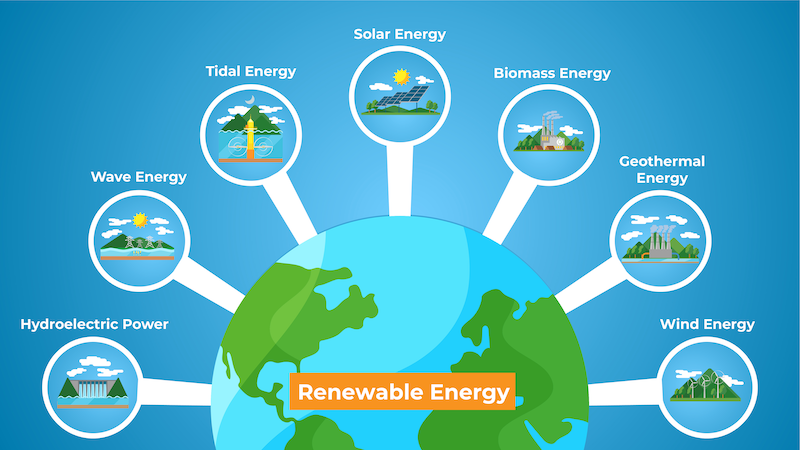
Okay, so picture this: I'm at a party, trying to be all eco-conscious and impress this really cute environmental science student. I confidently declare, "Yeah, I'm super into renewable energy, like, solar and wind and stuff!" He gives me this knowing smile and goes, "Oh, you mean just those two? There's a whole universe of clean energy out there, my friend." Cue me internally face-palming. Lesson learned: "and stuff" just doesn't cut it. So, how many types of renewable energy are really out there? Let's dive in, shall we?
The short answer? It's more than you think. We're not just talking about the solar panels you see on rooftops or the wind turbines dotting the landscape. While those are definitely heavy hitters, the world of renewable energy is a whole lot more diverse. Prepare to have your eco-mind blown!
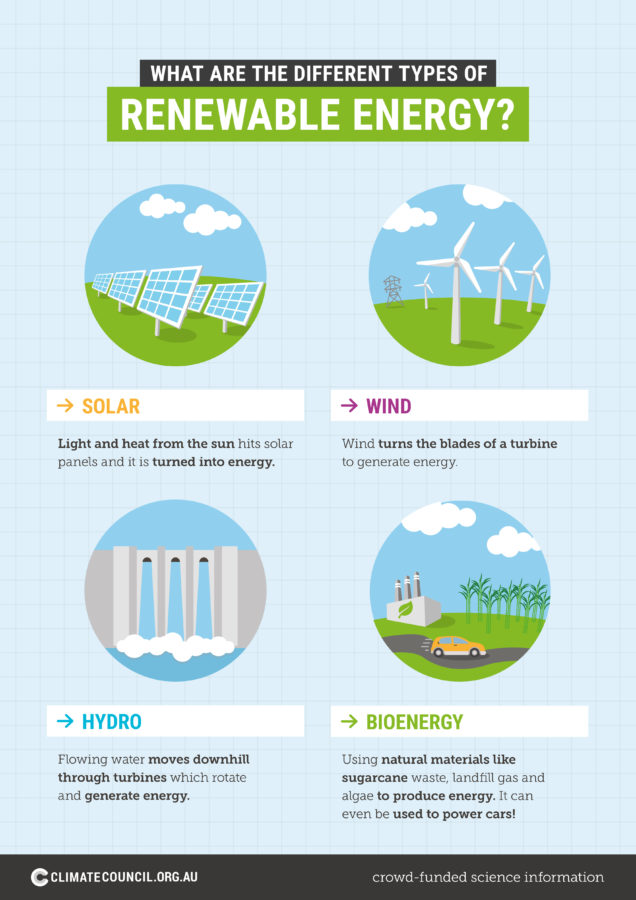
Solar Power: More Than Just Panels
Let's start with the obvious one: solar power. Everyone knows about solar panels, right? But did you know there are different types of solar tech? You've got:
Must Read
- Photovoltaic (PV) panels: These are the classic ones we think of, converting sunlight directly into electricity. (Psst… they're getting more efficient all the time!)
- Concentrated Solar Power (CSP): Think giant mirrors focusing sunlight to heat fluids and generate steam, which then drives turbines. It's like a super-powered magnifying glass for energy!
- Solar Thermal: This uses the sun's heat for, well, heating! Think of it for heating water for your home or even powering industrial processes.
So, solar is a broader category than just slapping some panels on your roof. Good to know, right?
Wind Power: Not Just for Turbines
Next up, we have wind power. We're all familiar with those majestic wind turbines, gracefully (or sometimes not so gracefully, depending on the wind) converting wind energy into electricity. But that's not all there is to wind power!

There are two main types of wind power:
- Onshore Wind: These are the turbines you see on land. Cheaper and easier to maintain, but sometimes face NIMBY-ism (Not In My Backyard!).
- Offshore Wind: These are located in the ocean, where the wind is typically stronger and more consistent. They're more expensive, but generate a lot more power. (Think of them as the rockstars of the wind world!)
Hydropower: Oldie But a Goodie
Hydropower, or hydroelectric power, is one of the oldest forms of renewable energy. It harnesses the power of moving water to generate electricity. Think of those big dams you've seen in movies.

But it's not just about massive dams. There are other forms of hydropower, like:
- Large Hydropower: Big dams that create large reservoirs. They can be controversial due to their environmental impact on rivers and ecosystems.
- Small Hydropower: Smaller-scale projects that have a lower environmental impact. They can be a good option for local energy generation.
- Pumped Storage Hydropower: This is like a giant battery. Water is pumped uphill to a reservoir during off-peak hours and then released to generate electricity when demand is high.
Geothermal Energy: Straight From the Earth
Geothermal energy taps into the Earth's internal heat. Seriously! The Earth's core is like a giant, never-ending furnace, and we can use that heat to generate electricity or heat buildings. Pretty cool, huh?
There are a few ways to harness geothermal energy:
- Geothermal Power Plants: These use steam from underground reservoirs to turn turbines and generate electricity.
- Geothermal Heat Pumps: These use the Earth's stable temperature to heat and cool buildings. It's like having a built-in thermostat!
Biomass Energy: Burning with a Purpose?
Biomass energy is derived from organic matter, like wood, crops, and even waste. It can be burned to generate heat or electricity, or converted into biofuels.

However, biomass energy is a bit controversial. While it's technically renewable, it can have negative environmental impacts if not managed properly. It depends on what's being burned. Burning forests is bad, while burning agricultural waste might be a better option. The main types are:
- Burning Wood: The most traditional one.
- Biofuels (Ethanol, Biodiesel): Produced from crops like corn or soybeans.
- Waste-to-Energy: Burning municipal solid waste to generate electricity. (Because who doesn't want to power their homes with trash? Okay, maybe that's a bit of a stretch...)
Ocean Energy: Untapped Potential
Finally, we have ocean energy. The ocean is a massive source of energy, with tides, waves, and temperature gradients that can be harnessed. But this one is still kind of a Wild West area, still in its development phase. Different methods are:
- Tidal Energy: Capturing the energy of tides to generate electricity.
- Wave Energy: Using the motion of waves to generate electricity.
- Ocean Thermal Energy Conversion (OTEC): Using the temperature difference between surface water and deep ocean water to generate electricity.
So, there you have it! A whole bunch of renewable energy sources. Next time someone asks you about renewable energy, you can confidently rattle off solar, wind, hydro, geothermal, biomass, and ocean power. And maybe even impress that cute environmental science student. Good luck!