
How Many Ton Ac For 1700 Sq Ft

Okay, so picture this: it's the dead of summer, the kind where the air conditioner is basically your best friend, therapist, and only reason to keep going. I remember helping a buddy move into his new-to-him, charmingly vintage 1700 sq ft house. The first thing he asked, after admiring the questionable avocado-green kitchen, was, "Do you think this window unit is going to cut it?" We both looked at the tiny, rattling box in the corner, then back at the sprawling, sun-soaked living room. We burst out laughing. It was obviously a no-go. That little scene perfectly sums up the glorious, often perplexing, quest to figure out the right amount of AC for your space.
And if you're staring down your 1700 sq ft abode, probably wondering, "How many tons of AC do I even need for this place?" – you, my friend, are in excellent company. It's a question that sounds simple but, like trying to assemble IKEA furniture, quickly reveals hidden complexities. Let's dig in, shall we?
What's a "Ton" Anyway? (And No, It's Not About Weight)
First things first: when we talk about AC "tons," we're not talking about how heavy the unit is. Nope! A ton of cooling capacity refers to the amount of heat energy required to melt one ton (2,000 pounds) of ice in 24 hours. In HVAC speak, it translates to 12,000 BTUs (British Thermal Units) per hour. So, a 3-ton AC unit can remove 36,000 BTUs of heat per hour from your home. Got it? Good.
Must Read
Now, for a super rough, back-of-the-napkin estimate, a common rule of thumb is that you need about 20 BTUs per square foot. Some go as high as 25 BTUs, some as low as 15. Let's stick with 20 BTUs for a starting point because, well, we're being curious here.
So, for 1700 sq ft:
1700 sq ft * 20 BTUs/sq ft = 34,000 BTUs.
Since 1 ton = 12,000 BTUs, you'd divide 34,000 by 12,000:

34,000 BTUs / 12,000 BTUs/ton = approximately 2.83 tons.
See? Already we're getting into decimals. You generally can't buy a 2.83-ton unit, so you're likely looking at a 2.5-ton or a 3-ton system based on this very basic math. But, and this is a huge but, relying solely on square footage is like trying to guess the weather by looking at one cloud. There are so many other factors at play!
Why It's Not Just Math: The Plot Thickens!
This is where things get interesting, and why an actual HVAC professional is worth their weight in, well, actual tons of AC. Your home is unique, like a snowflake... a sometimes drafty, sun-baked snowflake. Here are the big hitters that influence your AC needs:
Climate & Sunshine: Are you baking in Phoenix or chilling in Seattle? The sunnier and hotter your location, the more cooling power you'll need. Think about how many windows face the sun throughout the day. That's free heat you have to fight!
Insulation & Windows: A well-insulated house with modern, double-pane windows will retain cool air much better than an older home with thin walls and single-pane glass. Seriously, good insulation is an unsung hero of home comfort.
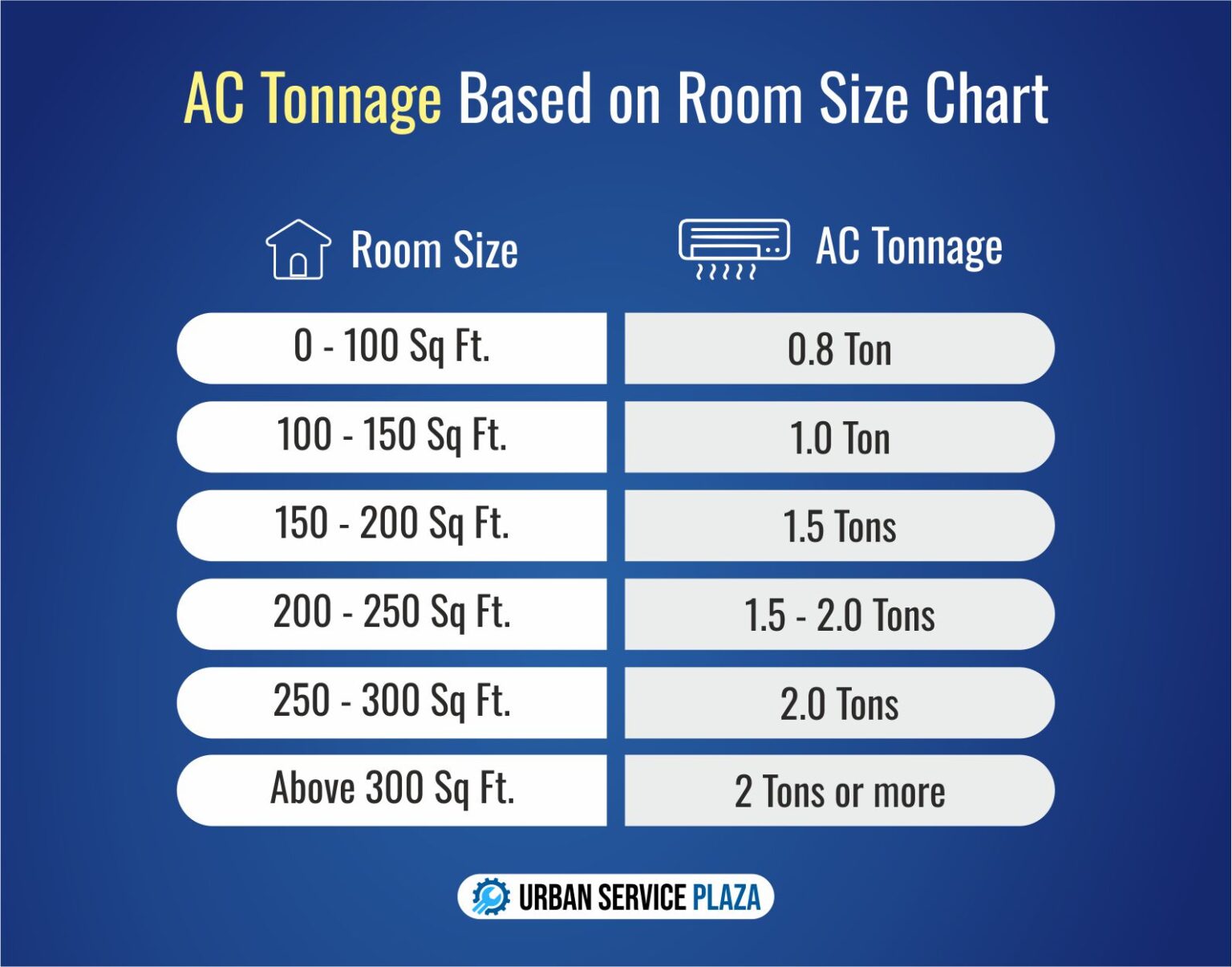
How To Choose The Right AC Capacity Based On Your Room Size? - Urban Ceiling Height & Occupants: A 1700 sq ft house with 8-foot ceilings has less air volume to cool than one with 10-foot ceilings. And how many people live there? Each person generates body heat. Plus, if you've got a bustling household, that adds to the load.
Appliances & Shade: Do you have a lot of heat-generating appliances (think computers, large TVs, an oven running constantly)? Does your house have good natural shade from trees or other buildings? These things can make a bigger difference than you might think.
So, considering these factors, that 2.83-ton estimate could easily creep up to 3 tons, or even 3.5 or 4 tons, especially if your home is older, poorly insulated, or in a scorching climate. Conversely, a super-efficient, well-shaded new build might get away with slightly less.
The Goldilocks Zone: Why Size Matters (A Lot!)
You might be thinking, "Eh, I'll just get a bigger one to be safe!" Hold your horses there, cowboy. Both oversizing and undersizing your AC unit come with a host of problems:

Too Big: The Short-Cycling Nightmare: An oversized unit will cool your house too quickly, then shut off. It won't run long enough to properly dehumidify the air, leaving you feeling clammy and uncomfortable even when it's "cold." Plus, all that starting and stopping wastes energy and puts more wear and tear on the system. It's like driving your car only a block at a time – inefficient and bad for the engine.
Too Small: The Marathon Runner: An undersized unit will run constantly, struggling to reach your desired temperature. This means higher energy bills, poor cooling performance, and ultimately, a shortened lifespan for the unit because it's always working overtime. You'll be hot, frustrated, and broke.
You want that "just right" fit. A system that runs long enough to pull out humidity, cycles efficiently, and keeps you comfortable without breaking the bank or breaking down.
So, What's the Real Answer for Your 1700 Sq Ft?
Alright, time for the truth bomb: For your 1700 sq ft, while our rough math points to somewhere around 2.83 tons, you're likely looking at a 3-ton or potentially a 3.5-ton unit, depending heavily on the factors we just discussed. In some extreme conditions (very poor insulation, huge windows, super hot climate), you might even touch 4 tons, but that's less common for that square footage.
But here's my strongest piece of advice: Do not guess. Do not just go with the cheapest option. Call in a qualified HVAC technician. They'll perform a "load calculation" (often called a Manual J calculation), which takes into account all those specific details of your home: insulation, windows, ceiling height, climate, orientation, and more.

This isn't a sales pitch; it's genuinely the best way to ensure you get a system that's perfectly matched to your house, saves you money on energy bills, and keeps you wonderfully cool and comfortable for years to come. Trust me, paying a little now for an accurate assessment saves you a lot of headache and money later.
So, go forth, arm yourself with knowledge, and find that perfect AC system. Your future self (the one relaxing in blissful, perfectly cooled comfort) will thank you!