
How Many Strings Of Incandescent Christmas Lights
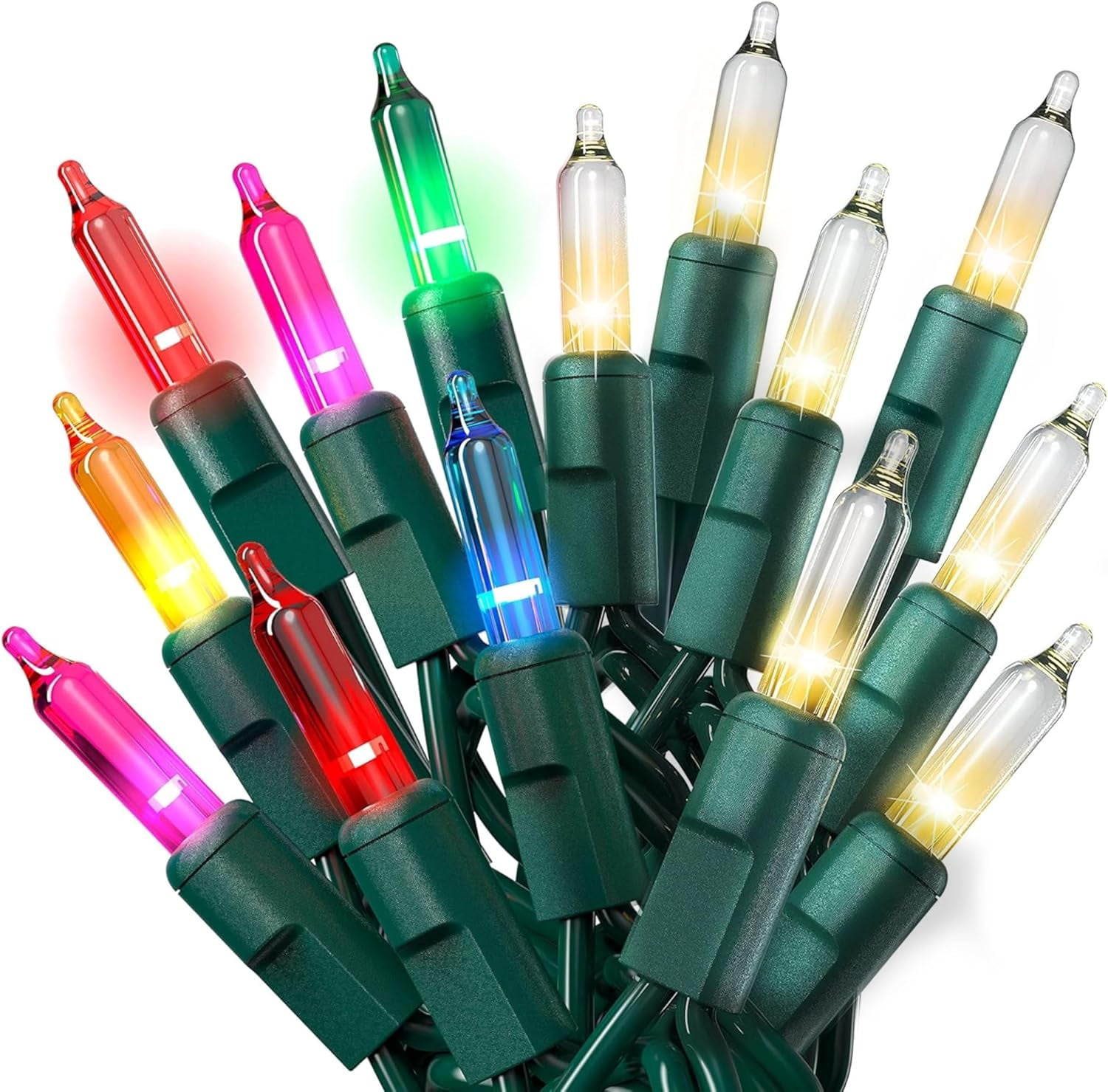
Alright, holiday enthusiasts and twinkle-light aficionados, let's dive into a question that plagues us all (well, maybe just me, but indulge me!): How many strings of incandescent Christmas lights can you actually connect end-to-end?
Before you start mentally decorating your entire house with a single extension cord, let’s get real. We all know the thrill of stringing up those classic, warm-glowing incandescent bulbs. They just have that je ne sais quoi, don't they? That certain nostalgic charm. But before you go full Clark Griswold, there are a few crucial things to consider. Seriously, safety first! No one wants a Christmas tree fire (unless you're deliberately burning a dud of a tree... but that's another story).
Understanding the Limitations: It's All About Amps!
So, what's the big deal? Why can't we just daisy-chain a million strands together and bathe our homes in glorious, vintage-y light? The answer, my friends, lies in amps (short for amperes). Think of amps like the current flowing through an electrical wire. Every string of lights draws a certain amount of amps. And your electrical circuits? Well, they have a maximum amp rating.
Must Read
Most standard household circuits are rated for 15 or 20 amps. Check your breaker box to be sure! (Please do this safely and when you are sure you can easily access the circuit.) If you overload a circuit – i.e., draw more amps than it can handle – the breaker will trip, cutting off the power. Annoying, right? Or worse, you could overheat the wires and create a fire hazard. Seriously, don't mess with electricity unless you know what you're doing!
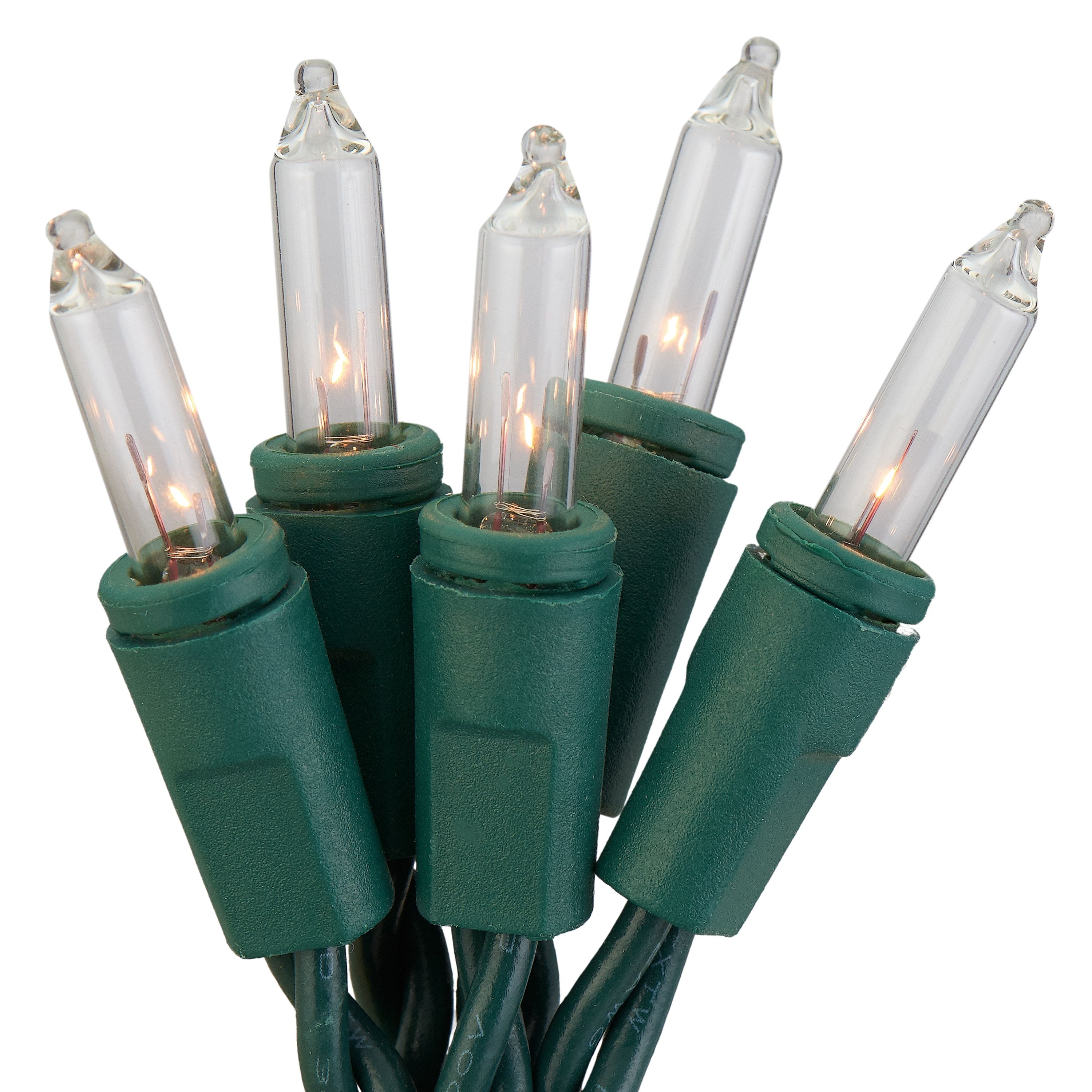
Now, here's the fun part (well, the math-ish part). Look at the box your incandescent lights came in (assuming you still have the box, you packrat!). Somewhere on there, it should tell you how many amps each string draws. It might be something like 0.34 amps, 0.5 amps, or even higher for larger bulbs.
Doing the Math (Don't Panic!)
Okay, deep breaths. It's not scary, I promise! Let's say your lights draw 0.5 amps per string and your circuit is a 15-amp circuit. To figure out how many strings you can safely connect, you just divide the circuit's amp rating by the amps per string.
So, 15 amps / 0.5 amps/string = 30 strings! Woohoo! But hold on a minute... There's a catch (isn't there always?).
It's always a good idea to leave a safety margin. Electrical codes often recommend using only 80% of a circuit's capacity. This helps prevent overheating and reduces the risk of tripping the breaker unexpectedly. So, let’s recalculate.
80% of 15 amps is 12 amps (15 x 0.8 = 12). Now, divide that by the amps per string: 12 amps / 0.5 amps/string = 24 strings. Much safer!
Remember: This is just an example. The actual number of strings you can connect will depend on the amp rating of your lights and the amp rating of your circuit. Always double-check the labels and do the math!
Other Important Considerations: Because Details Matter
Besides amps, here are a few other things to keep in mind:
- The Age of Your Lights: Older lights might draw more power than newer ones. Incandescent bulbs aren't exactly known for their energy efficiency.
- Extension Cords: Using long, thin extension cords can reduce the voltage reaching your lights, making them dimmer and potentially overheating the cord. Use heavy-duty extension cords designed for outdoor use.
- Indoor vs. Outdoor Use: Make sure your lights are rated for the environment you're using them in. Outdoor lights are designed to withstand the elements.
Don't overload outlets! Even if your lights are within the amp limit for the circuit, plugging too many things into a single outlet can cause problems. Use a power strip with a surge protector if needed.
Inspect your lights! Before you even think about stringing them up, check for frayed wires, cracked sockets, or any other signs of damage. If you see anything suspicious, discard the lights. It's not worth the risk!
The Bottom Line: Be Safe and Have Fun!
So, how many strings of incandescent Christmas lights can you connect? It depends! Do your homework, understand the amp ratings, leave a safety margin, and be mindful of other electrical considerations. With a little bit of knowledge and caution, you can create a dazzling display without blowing a fuse (or, you know, causing a fire).
Now, go forth and spread some holiday cheer... responsibly, of course!
Feeling inspired to learn more about home electrical safety? There are tons of great resources online and at your local library. Understanding the basics of electricity can empower you to make safe and informed decisions around your home, not just during the holidays. So, dive in and become a home electrical safety whiz! You'll be glad you did! Happy illuminating!