
How Many Plugs On 20 Amp Breaker
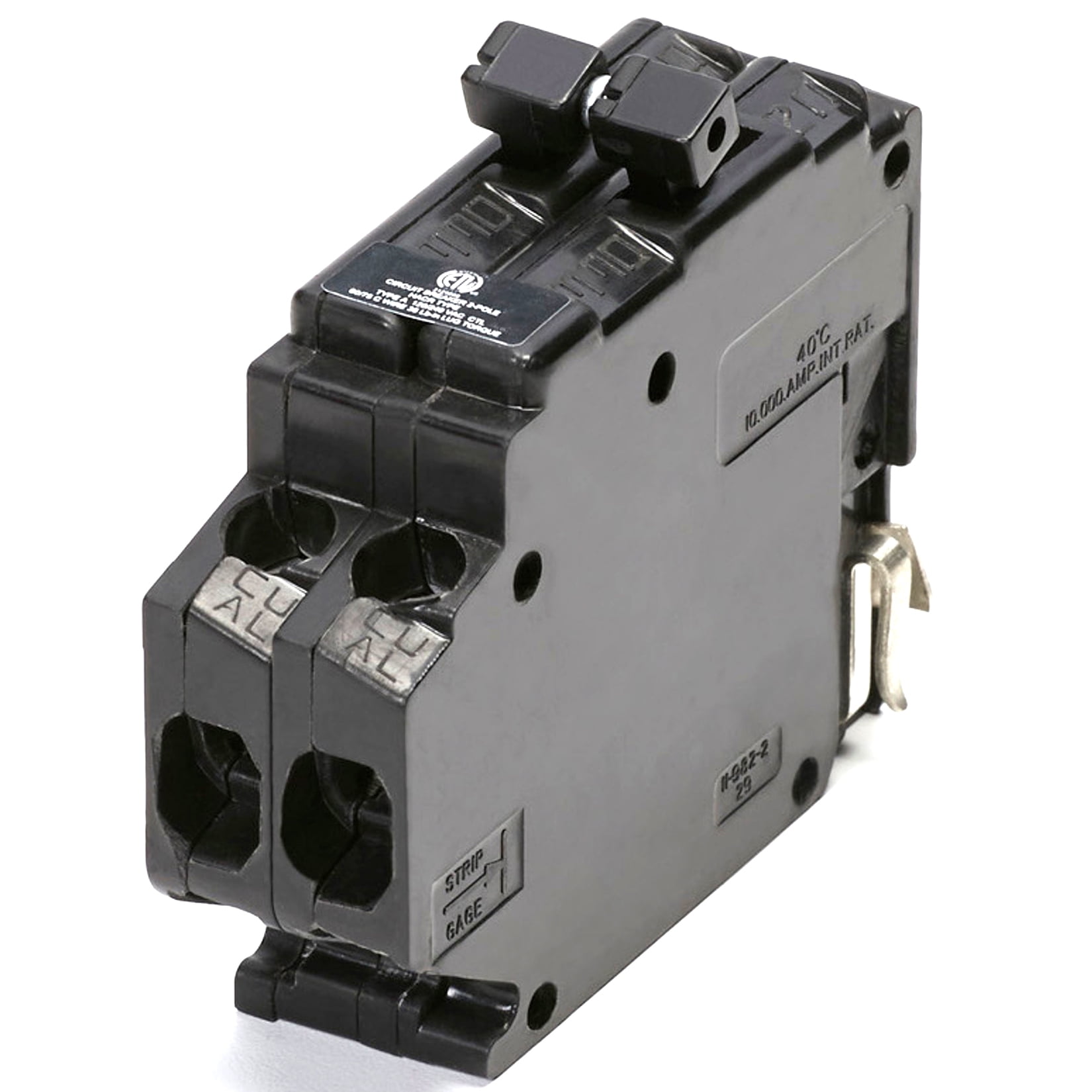
You know that moment, right? That perfectly peaceful Saturday morning. The coffee is brewing, the toaster is toasting, maybe your phone is charging, and you're just about to settle in for some glorious quiet time. Then, BAM! Darkness. Silence. And that all-too-familiar, dreaded "click" sound from the breaker panel. Your carefully orchestrated morning ritual has been unceremoniously unplugged from reality.
You sigh, trek to the basement (or utility closet, if you're fancy), flip the switch, and everything hums back to life. But as you walk away, a little voice in your head, perhaps a slightly singed one, wonders: "How many plugs can this thing even handle? And what in the world is a '20-amp breaker' anyway?"
Well, my friend, you've come to the right place. Let's pull back the curtain on this electrical mystery, shall we? Because understanding your home's circuits isn't just about avoiding a mid-toast blackout; it's about keeping your place safe and your gadgets happy. And nobody wants to be the person who tripped the breaker during movie night, am I right?
Must Read
The Nitty-Gritty: Amps, Volts, and Watts (Oh My!)
Before we talk about "plugs," we need to understand the basic language of electricity. Think of it like this:
- Amps (A): This is the flow or quantity of electricity. Your breaker is rated in amps (e.g., 15A, 20A).
- Volts (V): This is the pressure or force pushing the electricity. In most North American homes, standard outlets run on 120 volts.
- Watts (W): This is the power or the amount of work the electricity is doing. It's what really tells you how much juice an appliance is sucking up.
The magic formula that connects them all is pretty simple: Watts = Volts x Amps. Keep that in your back pocket, because it's key to figuring out your circuit's capacity.
Now, here's the kicker, and it's a super important one: For safety, electrical codes recommend that you only continuously load a circuit to 80% of its total capacity. This "80% rule" is your best friend. It prevents overheating, premature wear on your wiring, and generally keeps things from getting too hot under the collar (literally).
Quick Math for a 20-Amp Breaker:
So, a 20-amp breaker on a 120-volt circuit can technically handle:

20 Amps x 120 Volts = 2400 Watts
But remember the 80% rule? So, the safe, continuous usable wattage is:
2400 Watts x 0.80 = 1920 Watts
That 1920 watts is your golden number. That's the total amount of power you should ideally be drawing from that circuit at any given time.
So, How Many Actual "Plugs" Are We Talking About?
This is where it gets a little nuanced. When we talk about "plugs," we're usually thinking about the physical receptacles on your wall. A standard outlet (called a duplex receptacle) has two places to plug things in. But for circuit calculation purposes, it's not about the number of holes; it's about the total wattage of the devices plugged into that circuit.
There isn't a hard and fast rule like "a 20-amp breaker can handle X number of outlets." Instead, an electrician will design a circuit with a certain number of outlets based on the expected load for that room. A bedroom might have 5-6 duplex outlets on a 15-amp circuit, while a kitchen (which has heavier appliances) might have several 20-amp circuits, each serving only a few outlets.
The critical takeaway: Don't count the outlets; count the watts of the stuff you're plugging in!
The Usual Suspects: What Sucks Up Power?
To help you visualize, let's look at some common household items and their typical wattage. (These are rough estimates; always check your appliance's label!)
- Coffee Maker: 800 - 1200W
- Toaster: 800 - 1500W
- Microwave (small): 600 - 1200W
- Hair Dryer: 1200 - 1875W (a notorious breaker-tripper!)
- Gaming PC (high-end) & Monitor: 400 - 800W
- Vacuum Cleaner: 800 - 1500W
- TV (large LED): 100 - 200W
- Laptop Charger: 50 - 100W
See how quickly that adds up? Plug in a coffee maker (1000W) and a toaster (1200W) at the same time on a single 20-amp circuit, and you've already hit 2200W. That's well over your safe 1920W limit, and likely headed for a trip!
Even if you're "only" plugging in a gaming PC (500W), two monitors (150W each), a desk lamp (60W), and charging your laptop (80W), you're at 940W. That leaves plenty of headroom on a 20-amp circuit. But if you then add a space heater (1500W) to the mix? BAM! There goes your game.
When "Just One More" Is A Bad Idea: Dedicated Circuits
Some heavy-duty appliances are real power hogs and, by code, often require their own dedicated circuit. This means nothing else should be plugged into that circuit. We're talking about things like:
- Refrigerators
- Dishwashers
- Microwaves (especially larger ones)
- Washing Machines and Dryers (often 240V, but still dedicated)
- Central Air Conditioning units
- Electric ranges
If you try to put your fridge on a general-purpose circuit with your toaster and coffee maker, you're just asking for trouble (and warm milk).

The Bottom Line & When to Call for Backup
So, the answer to "how many plugs on a 20-amp breaker?" isn't a simple number of receptacles. It's about the total wattage load you're putting on that circuit. A 20-amp breaker can safely handle about 1920 watts of continuous use.
Your best bet is to be mindful of what you're plugging in. If a breaker is tripping frequently, it's not just annoying; it's a sign that the circuit is being overloaded, or there might be an underlying issue. Don't just reset it and hope for the best! Repeated overloads can degrade wiring and increase fire risk.
If you find yourself constantly battling tripped breakers, need to add more outlets, or want to run power-hungry tools in your garage, it's time to call a qualified electrician. They can assess your current setup, tell you what your circuits are actually rated for, and safely add capacity if needed. Trust me, messing with electricity is not a DIY project for the faint of heart, or for anyone without proper training!
Stay curious, stay informed, and stay safely powered, my friends!