
How Many Mm Is 16 Gauge Wire

Alright, friend, let's untangle one of life's great mysteries, or at least, one that pops up every time you’re staring at a spool of wire, scratching your head. You're probably thinking, "What in the electrical engineering world does '16 gauge' even mean, and more importantly, how many millimeters is that in plain English?"
And guess what? You're not alone! Wire gauges can be as confusing as trying to assemble IKEA furniture with just the pictures. But fear not, your friendly neighborhood wire decoder is here to help, no electrical engineering degree required! We're talking about the American Wire Gauge (AWG) system, which is super common here in the US, but then there's the rest of the world that often uses good old millimeters. It's like having two different languages for the same thing!
So, What's the Deal with "Gauge" Anyway?
First off, let’s quickly demystify the "gauge" part. In the AWG system, the rule is pretty straightforward (once you know it!): the smaller the gauge number, the thicker the wire. Yep, it’s counter-intuitive, I know! It’s like saying a size 4 dress is bigger than a size 14... wait, no, that's not right at all. More like, the smaller the gauge number, the more copper there is to carry the current.
Must Read
Think of it like water pipes: a smaller gauge (say, 10 gauge) is a fatter pipe that can handle more water flow than a higher gauge (like 20 gauge). So, a 16 gauge wire is thicker than, say, an 18 gauge wire, but thinner than a 14 gauge wire. See? Easy peasy, lemon squeezy!
The Big Reveal: 16 Gauge Wire in Millimeters!
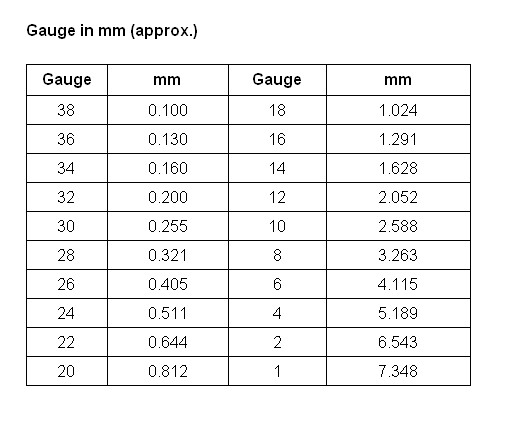
Drumroll please! After all that build-up, you're ready for the main event. When you convert 16 gauge AWG wire to its metric equivalent, you're generally looking at a diameter of about 1.29 mm.

Yep, that's it! Roughly 1.29 millimeters. Not too scary, right? Sometimes you might see it rounded a bit, or expressed as a cross-sectional area (which is a whole other rabbit hole we don't need to go down right now!), but for practical purposes, 1.29 mm is your magic number for the diameter of the conductor itself.
Why Does This Even Matter?
Good question! Why bother with conversions when you could just stick to one system? Well, maybe you’re following a DIY project from a European friend, or you bought a cool new gadget from overseas, and the instructions are all in metric. Or perhaps you're just a curious cat who likes to know how things work! Knowing that 16 gauge is roughly 1.29 mm helps you compare wires, choose the right connectors, or simply sound super smart when chatting with fellow DIY enthusiasts. It's like having a universal translator for your workshop!
It's all about making sure your electrical connections are safe and sound. Using a wire that's too thin for the job (i.e., too high a gauge number for the current) can lead to overheating – and nobody wants spicy wires, trust me!

Where Might You Meet a 16 Gauge Wire?
So, where might this 1.29 mm (or 16 gauge) friend show up in your life? It's pretty versatile! You'll often find 16 gauge wire used for things like:
- Low-voltage lighting: Think outdoor landscape lights or under-cabinet lighting.
- Car audio: For connecting speakers to an amplifier in your car.
- Speaker wire: For connecting home stereo speakers, especially if they're not super high-power or far from the amp.
- General electronics projects: Many common DIY circuits can use 16 gauge wire for power distribution.
It's a good middle-of-the-road wire, not too thick, not too thin, like the Goldilocks of wires – just right for a lot of everyday applications!
A Little Tip Before We Go...
If you're ever in doubt about wire sizes for a specific project, it's always a good idea to check the manufacturer's recommendations or consult an expert. Better safe than sorry when dealing with electricity, right? But for general knowledge, knowing that 16 AWG is approximately 1.29 mm in diameter is a great little nugget to tuck away in your brain.
And there you have it! What started as a potentially bewildering question about wires has been decoded, demystified, and hopefully, made a little fun. You've just leveled up your practical knowledge, and that's something to smile about! So the next time you're at the hardware store or browsing online, you'll know exactly what you're looking at when you spot that '16 AWG' label. No more head-scratching!
So go forth, confident in your newfound wire wisdom! Whether you’re wiring up a new speaker, tinkering with a gadget, or just impressing your friends (or your cat) with your knowledge of wire diameters, remember that every little bit of understanding makes the world of DIY a brighter, easier, and more enjoyable place. Keep those creative sparks flying, and stay curious, because there's always something new and fascinating to learn in the wonderful world of making!
