How Many Metalloids Are On The Periodic Table
Okay, buckle up, science adventurers! We're diving headfirst into the slightly mysterious, totally fascinating world of…metalloids! You might be thinking, "Meta-whaaat?" Don't worry, it sounds more complicated than it is. Think of them as the Goldilocks of the periodic table – not quite metals, not quite nonmetals, but just right for certain jobs.
So, How Many of These "Just Right" Elements Are There?
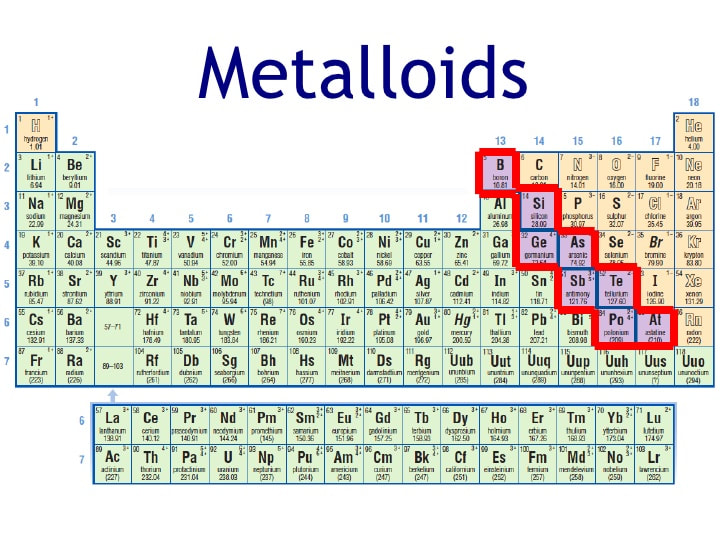
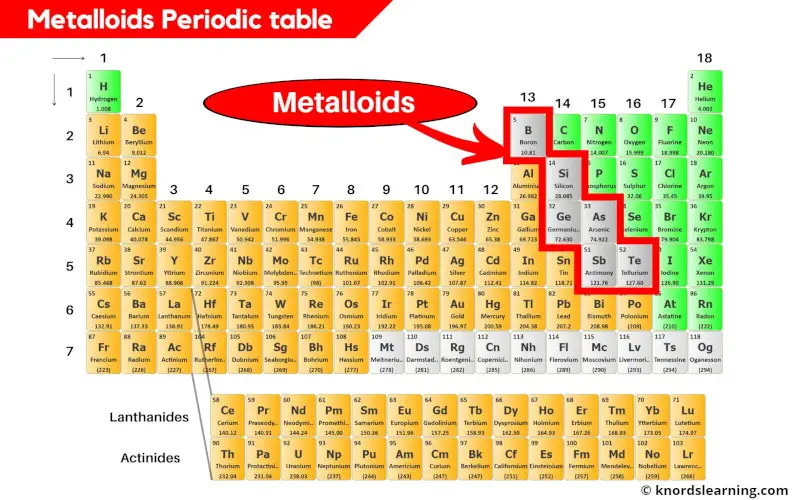
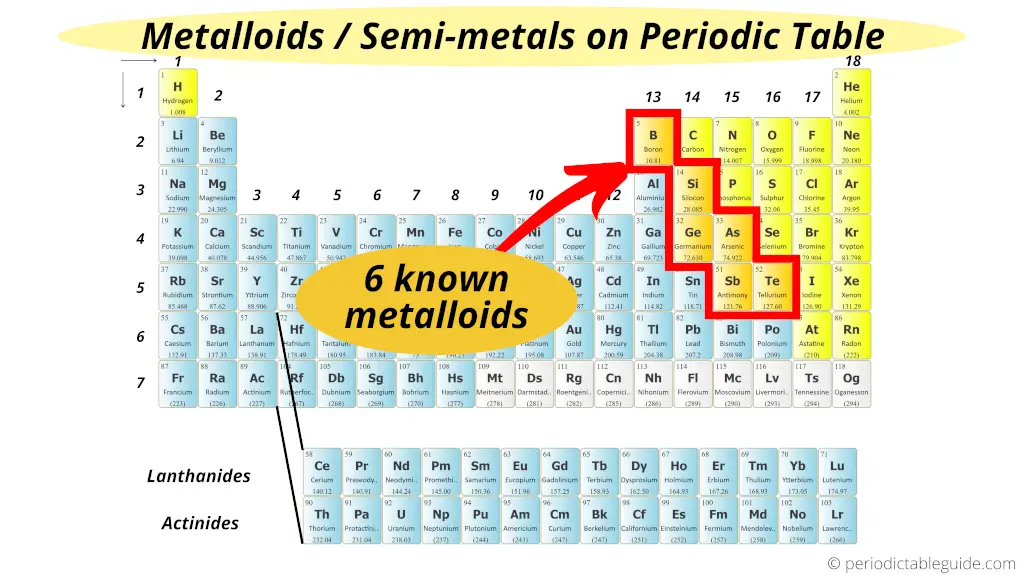
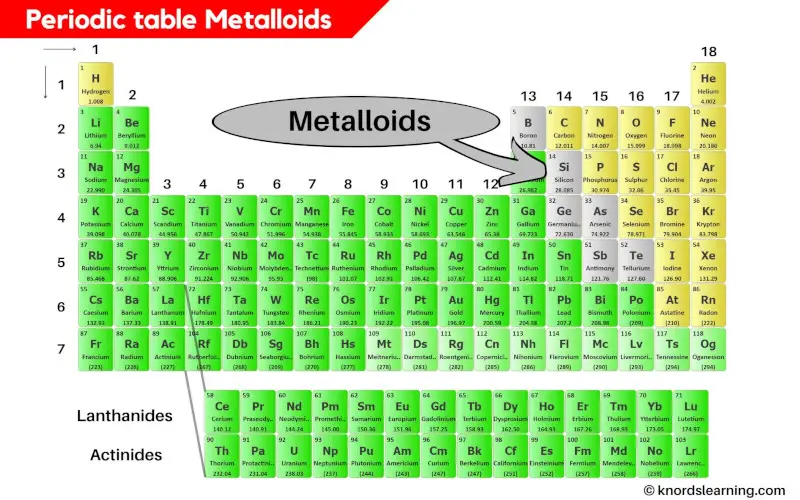
Here's the million-dollar question (okay, maybe more like a five-dollar question, but still!). Drumroll, please… There are generally considered to be six metalloids. That's right, six! Not a huge crowd, but they definitely pack a punch. Imagine them as the six superheroes of the element world, each with unique abilities.
Meet the Metalloid Squad!
Let's introduce our star players:
Must Read
- Boron (B): The hard-working one. It's like the construction worker of the group, making super strong materials. Think of Boron filaments, tougher than your average rope!
- Silicon (Si): The brains of the operation. Ever heard of Silicon Valley? This is why! Silicon is the backbone of computers and pretty much every electronic device you own. You're reading this because of Silicon!
- Germanium (Ge): Silicon's slightly less famous cousin. Germanium also plays a crucial role in electronics, especially in older devices and specialized applications. You could say it is a classic element!
- Arsenic (As): The one with a bit of a bad reputation (thanks to old movies!), but actually has some pretty cool uses. From wood preservatives to some semiconductors, Arsenic has its place. But always handle with care – like that eccentric aunt who always tells wild stories!
- Antimony (Sb): The fire retardant hero! Antimony compounds are often used to make things less flammable. Think of it as the firefighter of the element world, keeping us safe from accidental blazes.
- Tellurium (Te): The solar power booster! Tellurium is used in solar panels to make them more efficient at converting sunlight into electricity. It's like the cheerleader of the renewable energy team, shouting, "Go, Sun, Go!"
These six elements are usually agreed upon as the official metalloid lineup. But, and this is a big BUT, sometimes you might see other elements like Polonium (Po) and Astatine (At) included in the metalloid club. It's all a matter of interpretation and depends on which chemistry textbook you're reading! Think of it like deciding who gets to be on the all-star team – there's always a bit of friendly debate.
Why Are Metalloids So Special?
Here's the scoop: Metalloids are special because they're like the ultimate multi-taskers. They can act like metals sometimes, conducting electricity and heat, and like nonmetals other times, being brittle and resisting electricity. This "sometimes-yes, sometimes-no" behavior makes them incredibly useful in a wide range of applications. They are truly in betweeners!
Imagine them as the chameleons of the element world, changing their properties to suit the situation. Need something to conduct electricity in one direction only? Call on a metalloid! Need something that's strong and durable but not too heavy? Metalloid to the rescue!
Think of it this way: if metals were all super strong, predictable bodyguards, and nonmetals were all delicate, aloof artists, then metalloids would be the resourceful spies, adapting to any situation and getting the job done with style and finesse.
"Metalloids: Not quite metal, not quite nonmetal, but always awesome!"
So there you have it! The six (give or take a couple of honorary members) magnificent metalloids of the periodic table. Next time you're using your phone, basking in the sun with the help of solar panels, or admiring a sturdy wooden structure, take a moment to appreciate these amazing elements and their unique ability to be… well, just right!
Keep exploring the wonders of the periodic table. It's a wild and wonderful place filled with surprises!