
How Many Hours A Day Should Your Pool Pump Run

Okay, let's talk pool pumps. Specifically, how long that noisy beast should be chugging away each day. Figuring this out can feel like trying to decipher ancient hieroglyphics, right? But trust me, it's not as complicated as it seems. Think of your pool pump as the kidneys of your pool – it cleans and filters, keeping everything sparkling and healthy. We need to keep those kidneys working, but not too hard!
Imagine you're making a giant batch of cookies. You need to mix the dough well, but if you mix it for hours on end, you'll end up with something tough and weird. Same with your pool – over-pumping is just wasteful, costing you money and wearing out your equipment for no good reason.
The Golden Number: Finding Your Pool's Happy Place
So, what's the magic number of hours? There's no one-size-fits-all answer, sadly. I know, I know, you wanted a simple "run it for exactly 6.3 hours!" kind of answer. But it depends on a few things:
Must Read
- Your Pool Size: A kiddie pool doesn't need the same filtration as an Olympic-sized one, obviously.
- Your Pump Size: A small pump needs to run longer to move the same amount of water as a big, powerful one.
- The Time of Year: Summer, when everyone's splashing around and sunscreen is turning your pool into a milky soup, requires more pumping than, say, December when your pool's probably covered and lonely.
- Your Filtration System: Different filters have different requirements.
Generally speaking, aim for running your pump for at least once a day, a turn over of all the water.
Now, if you're staring blankly at the wall trying to figure out your pool's gallonage, don't panic! Your pool builder or a quick Google search using your pool's dimensions will get you there. Once you know the volume, you can start doing some (relatively) painless math.
![How to Calculate Pool Pump Run Time [Calculator Included]](https://blogs.aiper.com/content/images/size/w1000/2025/04/calculate-pool-pump-run-time.jpg)
The Turnover Rate: Your Pool's Daily Goal
The turnover rate is how long it takes for your pump to circulate all the water in your pool. Ideally, you want to turn over your pool water once a day. That keeps the water clean and prevents algae from throwing a rave in your backyard oasis.
Let's say your pool holds 20,000 gallons. If your pump moves 5,000 gallons per hour (GPH), you'd need to run it for 4 hours to circulate all the water at least once. Simple, right? Okay, maybe not simple, but manageable! This is more of an idea of how to do it rather than a exact plan. Different pumps can do different amount of gallons per hour.
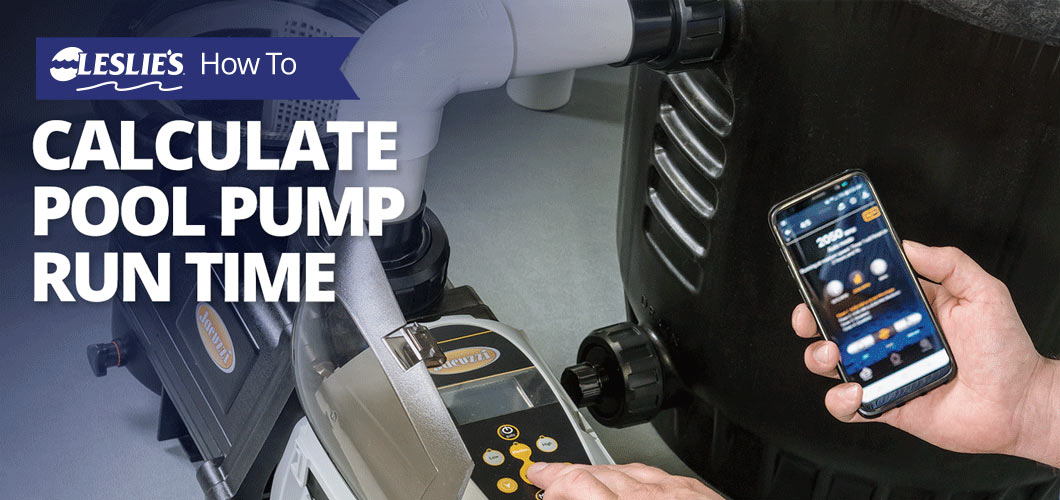
Variable Speed Pumps: The Smart Cookie of Pool Equipment
If you're still using an old, single-speed pump, you're basically driving a gas-guzzling dinosaur. Variable speed pumps are much more efficient. They allow you to run the pump at lower speeds for longer periods. Think of it like this: instead of sprinting for an hour, you're jogging for four. You still get the job done, but you're saving energy (and money!).
With a variable speed pump, you can run it almost continuously at a low speed, which is great for even filtration and chemical distribution. Plus, they're much quieter – no more sounding like a jet engine taking off every time you turn on the pump!

Listen to Your Pool (and Your Wallet!)
Ultimately, the best way to determine how long to run your pool pump is to observe your pool. Is the water clear and sparkling? Are your chemical levels stable? If so, you're probably doing something right! If your water is cloudy, or algae is starting to make an unwelcome appearance, you might need to increase your pump run time.
And, of course, keep an eye on your electricity bill. If it suddenly spikes, your pump could be running longer than necessary. Remember, finding the sweet spot between clean water and reasonable energy consumption is the goal. It's a balancing act, but with a little observation and some basic math, you can conquer the pool pump conundrum!
So, go forth and pump (responsibly!). Your pool (and your wallet) will thank you for it.
