How Many Gallons Of Water Per Minute In Shower
Okay, so picture this: I'm belting out my best (read: worst) rendition of "Bohemian Rhapsody" in the shower, completely lost in the moment. Then, BAM! The water pressure drops. It goes from a glorious waterfall to a pathetic trickle. Ruined my entire performance! (Seriously, though, the shower is my stage.) That got me thinking... what exactly is going on with my water pressure? And more importantly, how much water should be coming out of my showerhead in the first place?
Turns out, there's a whole world of showerhead regulations and water usage rates that I never even knew existed. And it all boils down to one key question: how many gallons of water per minute (GPM) are we talking about in your average shower?
The GPM Game: Understanding Shower Flow Rates
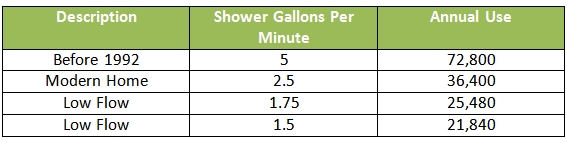
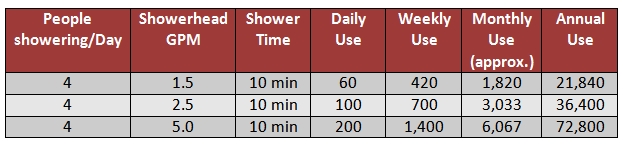
The standard showerhead, the one most of us grew up with, typically pumps out around 2.5 GPM. Think of it as a steady, reliable flow. It's enough to rinse the shampoo out of your hair (most of the time) and create a decent, cleansing experience. But (and this is a big but) that 2.5 GPM is the maximum allowed by federal regulations.
Must Read
Yeah, you read that right. There's a limit! Because, you know, water conservation and all that jazz. (Which, let's be honest, is a good thing. Even if it does occasionally interrupt my shower concerts.)
But wait! It gets more interesting. Depending on where you live and the age of your showerhead, you might be getting something different entirely. Older showerheads, pre-regulation, could be guzzling down 3, 4, or even 5 GPM! Talk about a water hog!
Conversely, you can now find low-flow showerheads designed to use significantly less water. We're talking 1.5 GPM, or even lower! These are the superheroes of water conservation, saving gallons of water (and potentially money on your water bill) with every shower.
Why Does GPM Matter Anyway?
Besides the whole water conservation thing (which is, you know, kind of a big deal), GPM also affects your overall shower experience. A higher GPM usually translates to stronger water pressure and a more invigorating shower. Think of it as the difference between a gentle rainfall and a power wash. (Okay, maybe not that extreme, but you get the idea.)
A lower GPM, on the other hand, can feel a bit… underwhelming. It might take longer to rinse off, and you might not get that same "clean" feeling. However, low-flow showerheads have come a long way, and many now use clever technologies to create a satisfying shower experience even with less water. They aerate the water, creating larger droplets that feel more powerful.
How to Figure Out Your Showerhead's GPM
Okay, so you're probably wondering, "How do I know what my showerhead's GPM is?" Here's the lowdown:

- Check the Showerhead Itself: Most showerheads have the GPM stamped somewhere on the fixture, often near the base or on the showerhead itself. Look closely!
- The Bucket Test: Grab a bucket (one you know the gallon capacity of), a stopwatch, and your shower. Turn on the shower at its normal pressure. Time how long it takes to fill the bucket. Then, do some simple math. If it takes 30 seconds to fill a 1-gallon bucket, you're looking at about 2 GPM. (Math! Don't worry, it's not too scary.)
- Consult the Manufacturer: If all else fails, try searching online for your showerhead model. The manufacturer's website should provide the GPM information.
Choosing the Right GPM for You
Ultimately, the best GPM for your shower depends on your personal preferences and priorities. If you value water conservation above all else, a low-flow showerhead is the way to go. If you crave a powerful, invigorating shower, you might prefer a higher GPM (within legal limits, of course!).
And, of course, consider your water pressure! If your home already has low water pressure, even a 2.5 GPM showerhead might feel weak. (This is where I'm at right now, sadly.) In that case, you might need to investigate other solutions, like a water pressure booster.
So, there you have it! Everything you ever wanted to know (and probably more) about showerhead GPM. Now go forth, measure your showerhead, and make informed decisions about your water usage! And maybe, just maybe, you’ll have a better shower singing experience than me.