
How Many Categories Of Hurricanes Are There
Hey friend! Ever wondered just how strong those whirling dervishes of wind and rain – aka, hurricanes – can actually get? Well, grab a cup of something cozy, because we're diving into the wild world of hurricane categories. Don't worry, it's not as scary as it sounds (unless you're, you know, in a hurricane!).
The Saffir-Simpson Hurricane Wind Scale: Your Hurricane Decoder Ring
Basically, we use something called the Saffir-Simpson Hurricane Wind Scale. Sounds fancy, right? It's not a medieval weapon, I promise! It’s simply a scale that helps us understand the potential for damage based on a hurricane’s sustained wind speeds. Sustained wind speeds are basically the average wind speed measured over a one-minute period. Think of it like your average running speed on a treadmill, not just a quick sprint!
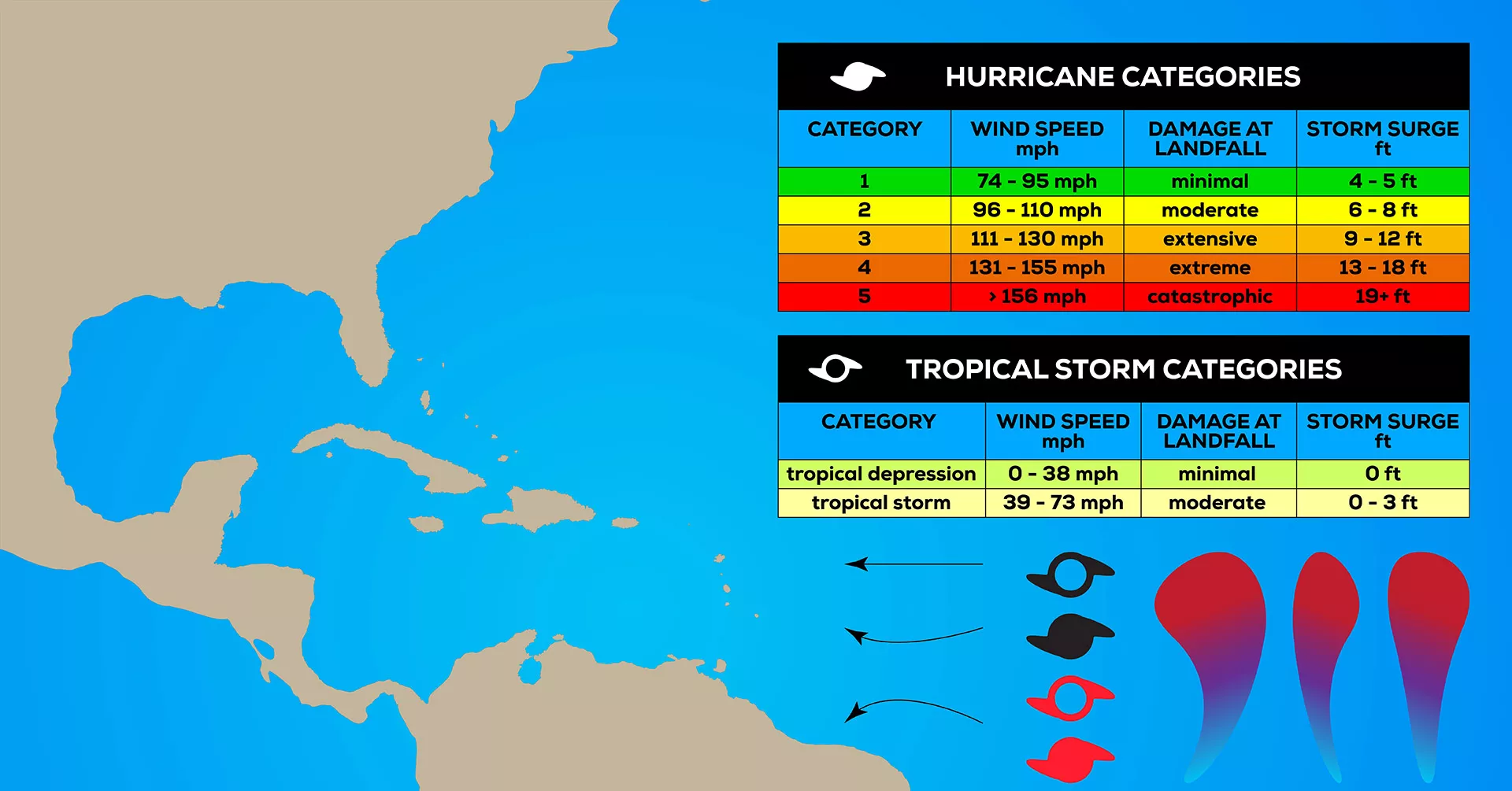
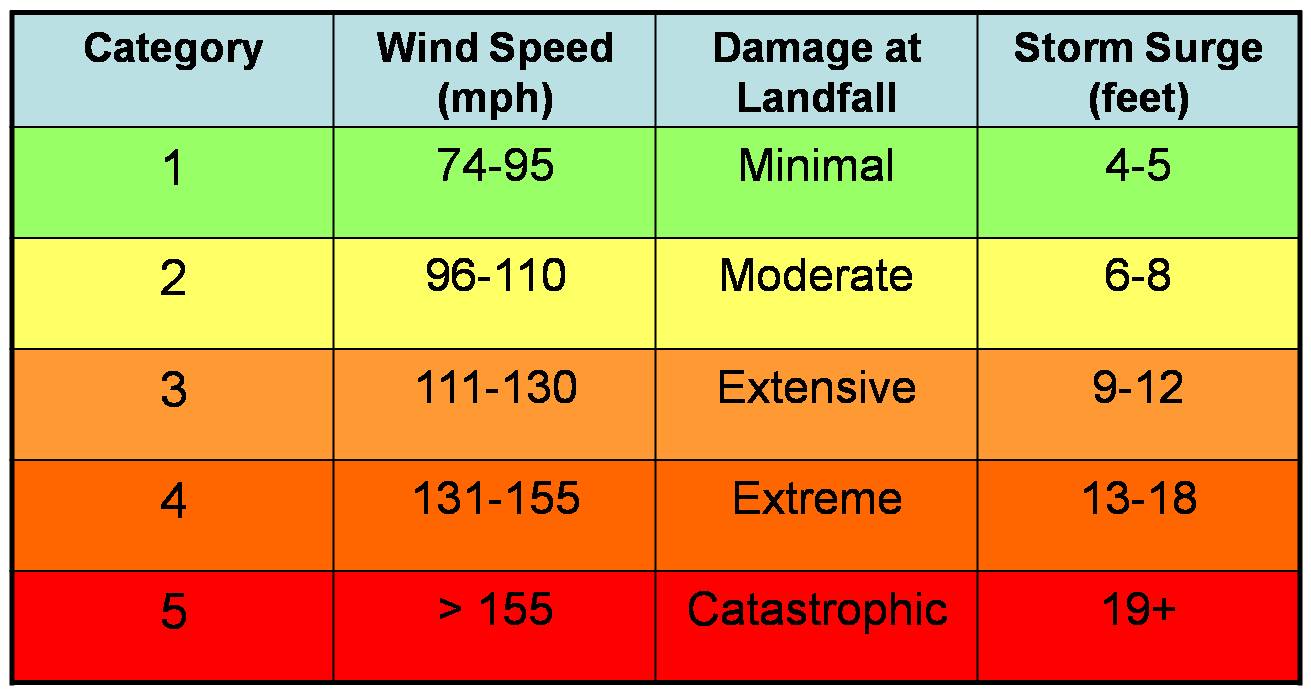
This scale breaks hurricanes down into five categories. Easy peasy! We're talking levels 1 through 5. The higher the number, the stronger the winds, and the more "oh my goodness, please protect my patio furniture!" damage you can expect. And your neighbor's patio furniture. And maybe your whole house. Just kidding... mostly!
Must Read
Hurricane Category Breakdown: Let's Get Specific!
Alright, let's get down to brass tacks and talk about each category individually. Imagine each category as a different level in a video game. The higher the level, the harder the boss (the hurricane!).
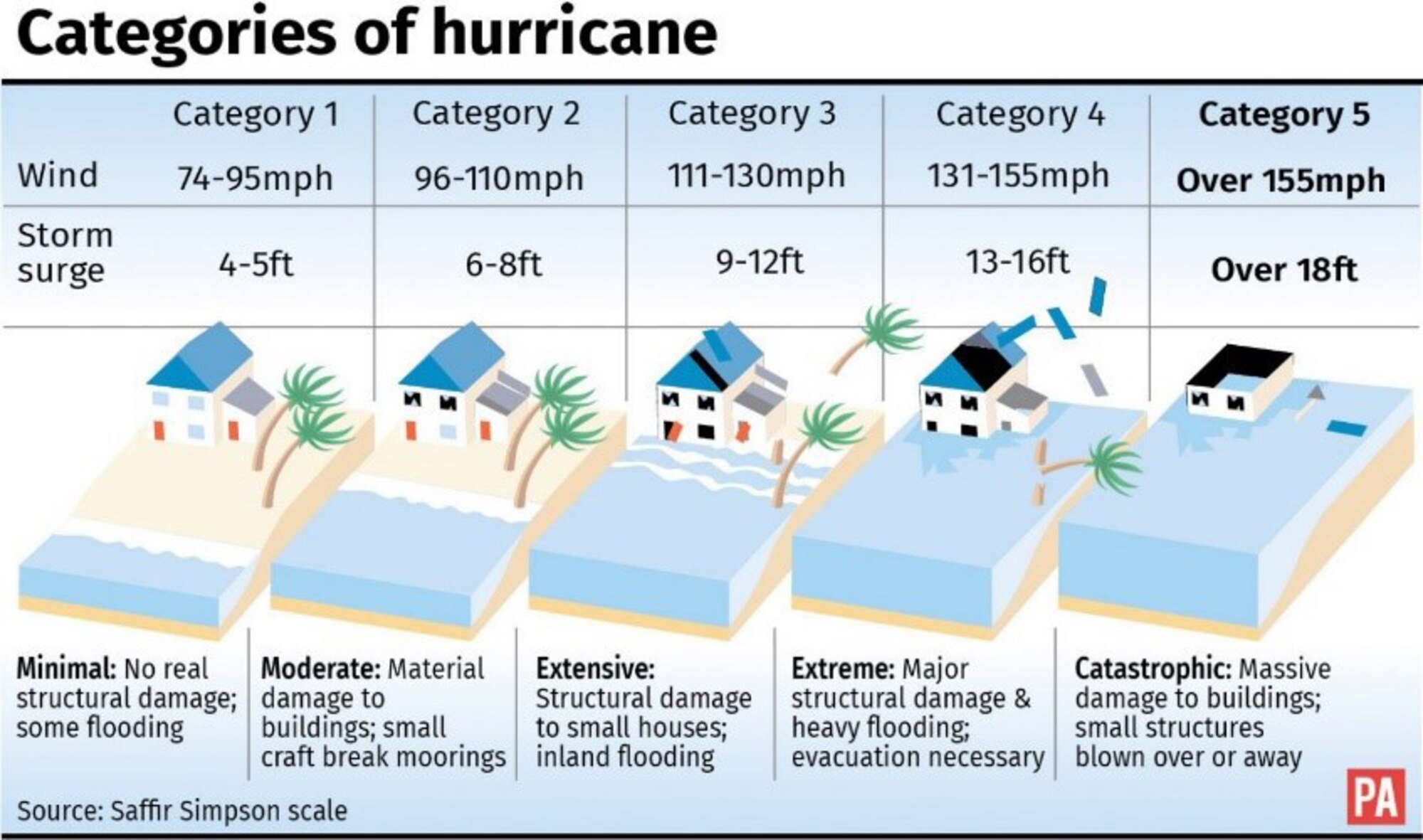
Category 1: (74-95 mph) This is the "beginner level" hurricane. Expect some damage to things like trees, unanchored mobile homes (yikes!), and maybe some signs. Power outages are possible. It's like that slightly annoying houseguest - you can deal with it, but you'd rather they weren't there.
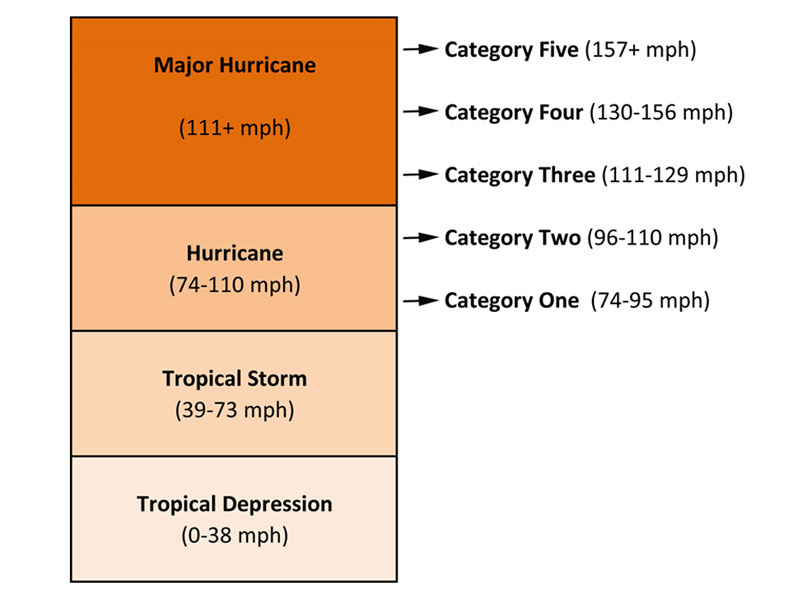
Category 2: (96-110 mph) Now we're talking! Expect considerable damage. Trees are getting snapped, roofs are getting damaged, and power outages are becoming more widespread. It's like that houseguest who starts rearranging your furniture without asking.
Category 3: (111-129 mph) Uh oh! We've officially entered "major hurricane" territory. This is where things get serious. Expect devastating damage. Trees are uprooted, roofs are gone, and widespread power outages are the norm. It's like that houseguest who accidentally sets your kitchen on fire... with kindness, of course!

Category 4: (130-156 mph) Devastating damage is now widespread and severe. Expect catastrophic damage. Homes are destroyed, trees are flattened, and power outages can last for weeks. You really, REALLY wish that houseguest had stayed home.
Category 5: (157 mph or higher) The highest, most terrifying level. Catastrophic damage. Homes are completely destroyed, trees are completely gone, and the landscape is utterly unrecognizable. It's like... okay, I'm running out of houseguest analogies. Let's just say it's REALLY bad! This is when you seriously need to find shelter!
Important Tidbits to Remember: It's Not Just Wind!
Now, here's a super important point: the Saffir-Simpson scale only considers wind speed. But hurricanes are much more than just wind! They also bring with them:
- Storm Surge: That's a massive wall of water pushed ashore by the hurricane. It's incredibly dangerous!
- Flooding: All that rain has to go somewhere, and it often ends up in your living room.
- Tornadoes: Yes, hurricanes can spawn tornadoes! It's like a disaster movie come to life.
So, while the category gives you a good idea of the wind damage, you need to be aware of all the other hazards, too!
Beyond Category 5: The "Unofficial" Category 6
You might sometimes hear people talking about a "Category 6" hurricane. Technically, it doesn't exist on the official scale. But, when a hurricane blows past the Category 5 mark (like seriously, REALLY blows past it), some people feel like it deserves its own, extra-terrifying category. Think of it as the "final boss" with cheat codes!
Stay Safe and Smiling!
Okay, I know we just talked about some pretty intense stuff. But the main takeaway is this: be prepared! Know your risk, have a plan, and listen to local authorities. With a little preparation and a lot of common sense, you can weather any storm (pun intended!).
And remember, even after the storm passes, the sun will always come out again. So keep your chin up, help your neighbors, and maybe invest in some hurricane-proof patio furniture. You got this!