
How Many C9 Bulbs On One Outlet
.jpg)
Ah, the festive season! That magical time of year when our inner decorator awakens, armed with boxes of lights, tangled cords, and a boundless optimism that often bumps up against the harsh realities of home electricity. We've all been there, standing proud amidst a twinkling wonderland, only to hear that tell-tale thunk as the breaker trips, plunging half the house into darkness. It's like a tiny, electrical grinch just stole your Christmas spirit, one overloaded circuit at a time.
And nowhere is this more true than with our beloved C9 bulbs. Those classic, cheerful, undeniably chunky lights that just scream "holiday nostalgia." But how many of these little power-guzzlers (or not-so-much-guzzlers, depending on the type) can you actually plug into one outlet before you're fumbling for the flashlight and muttering about the ghost of circuits past?
The Great Outlet Buffet: Why It Matters
Think of your electrical outlet like a buffet line. Each item you plug in is a plate, and the outlet only has so much food to give out. Try to pile on too many plates, and eventually, the whole table groans, maybe even collapses! In electrical terms, that "groaning" is your lights dimming, and the "collapse" is your circuit breaker doing its job to prevent overheating or, heaven forbid, an electrical fire. Safety first, friends, even when striving for maximum sparkle!
Must Read
The key to understanding your C9 capacity comes down to one fundamental difference: incandescent versus LED. This, my friends, is the game-changer, the plot twist, the difference between a gentle glow and a potential light-show spectacular that doesn't involve a fire truck.
Old School Cool: Incandescent C9s
Let's talk about the OG C9s – those beautiful, heat-generating bulbs that warm your fingers (and your wallet, let's be real) as you string them up. Each traditional incandescent C9 bulb is typically a 7-watt bulb. Seven watts might not sound like much, but they add up faster than cookies on Santa's plate.
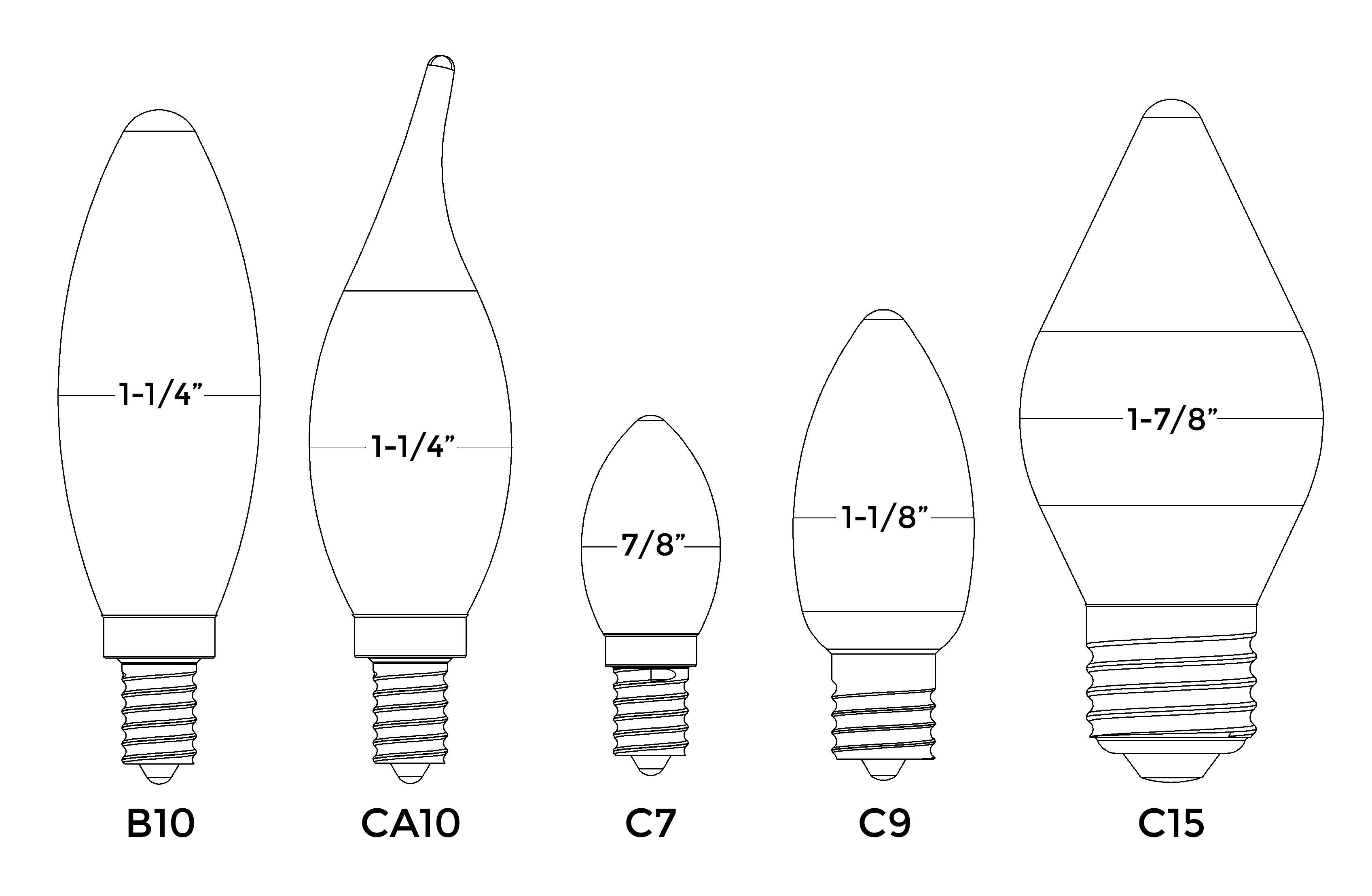
Most standard household circuits are 15 amps, which can safely handle about 1800 watts. However, the golden rule of thumb for continuous loads (like Christmas lights that are on for hours) is to only use about 80% of that capacity for safety. So, we're looking at a safe sweet spot of around 1440 watts per circuit.
Now, for the math! If each incandescent C9 is 7 watts, you can safely string about 1440 watts / 7 watts/bulb = approximately 205 C9 incandescent bulbs onto a single, dedicated 15-amp circuit. Notice I said "circuit," not just "outlet." If other things are plugged into the same circuit (your TV, lamps, Aunt Mildred's electric blanket), that number drops faster than a snowball in July.
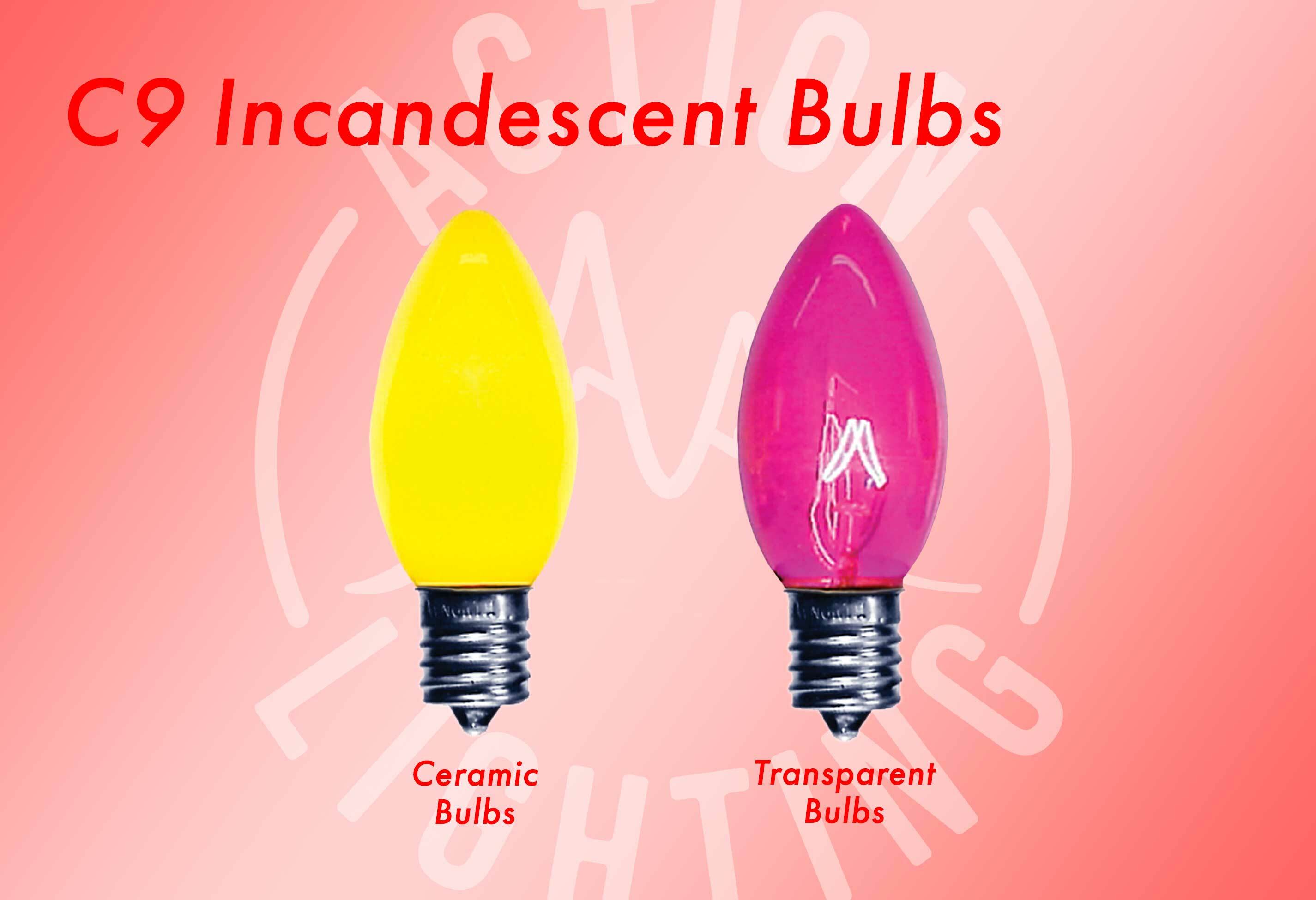
Real-world scenario: Most incandescent C9 strings come in lengths of 25 or 50 bulbs. So, you're likely limited to 2-3 strings max per outlet, maybe 4 if you're lucky and nothing else is running on that circuit. I remember one year, trying to connect all the C9s to one outdoor outlet. My house blinked off and on like a giant Christmas ornament, and my spouse gave me "the look." Lesson learned!
The Modern Marvel: LED C9s
Enter the hero of our story: the LED C9 bulb! These guys are the efficiency champions, the energy-sipping superstars. A typical LED C9 bulb uses a minuscule amount of power, often around 0.8 to 1 watt per bulb. See that difference? It's like comparing a Hummer to a hybrid scooter.
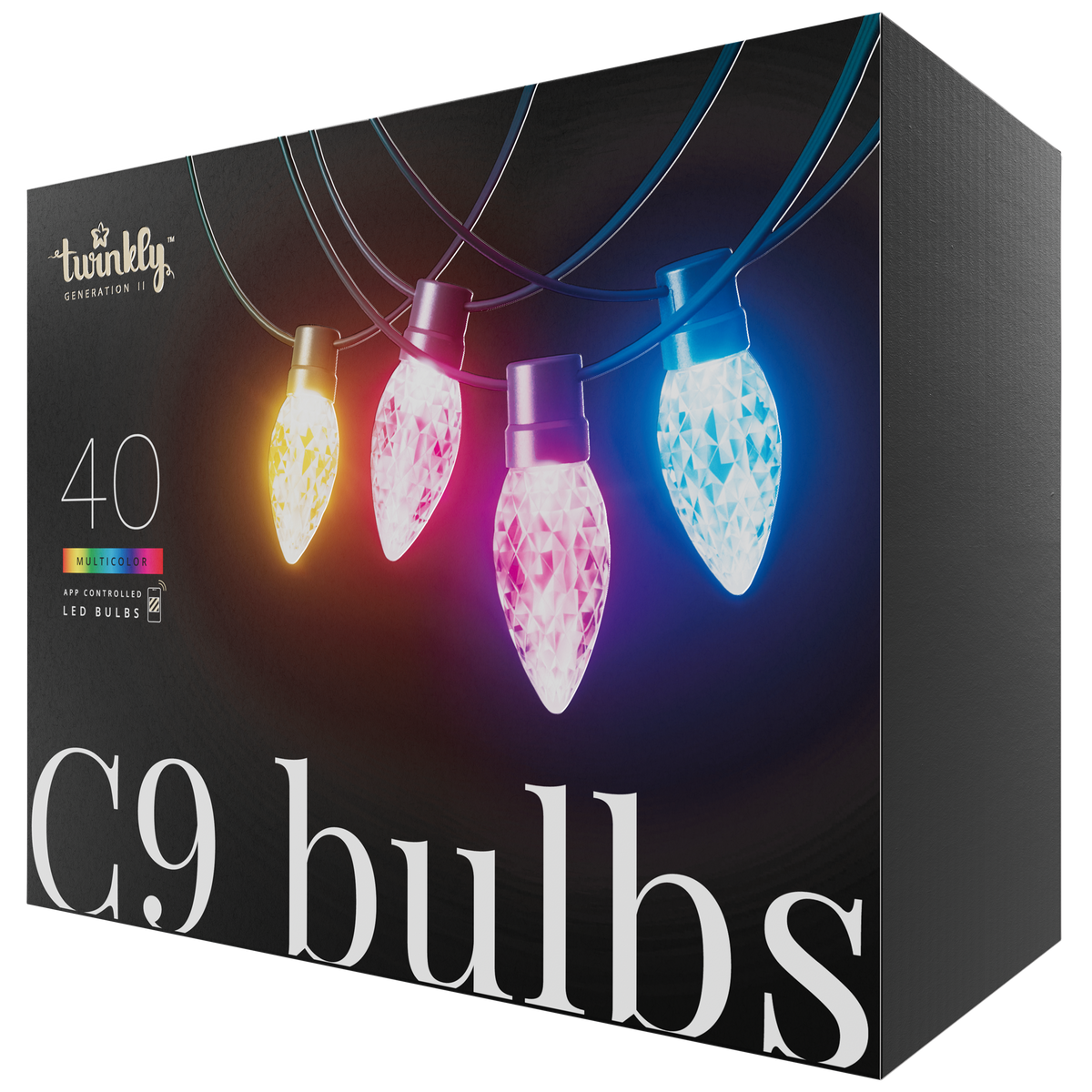
Let's do the math again with our safe 1440-watt capacity: 1440 watts / 1 watt/bulb = a mind-boggling 1440 LED C9 bulbs!
Yes, you read that right. You could theoretically plug in well over a thousand LED C9 bulbs onto a single circuit before you even start to break a sweat. In practice, you'll run out of physical string length or desire to string more lights long before you overload the outlet itself. The modern LED C9 strings are often designed to be connected end-to-end for dozens of strings, with the actual string itself being the limiting factor, not your home's wiring. This is why you can daisy-chain what feels like miles of LED lights without a single flicker of concern. It's truly a decorating dream come true!
The Takeaway for Twinkling Triumph
- Check the Label: Always, always, always look at the wattage or amperage listed on your light strings and extension cords. It's your electrical bible.
- Spread the Love: If you're using incandescent lights, try to distribute them across different outlets and, ideally, different circuits.
- Go LED: If you haven't made the switch, seriously consider LED C9s. They're brighter, last longer, use way less power, and dramatically reduce the stress of outlet arithmetic.
- Don't Be a Daisy-Chain Disaster: Even with LEDs, don't create a Frankenstein monster of extension cords. Use appropriate outdoor-rated cords and keep connections dry and secure.
So, whether you're a purist clinging to the warm glow of incandescent bulbs or a modern marvel embracing the energy efficiency of LEDs, understanding your C9 limits is key to a festive season free of tripped breakers and electrical woes. Go forth and decorate, my friends, and may your lights be merry and brightly powered!
