
How Many Amps To Start A Car

Alright, let's talk about that moment. You know the one. You hop in your car, fresh cup of coffee in hand, ready to conquer the day. You turn the key, and instead of that satisfying rumble, you get… click-click-click. Or worse, absolutely nothing. Just the deafening silence of a thousand unstarted dreams.
Yep, your battery decided to take an unscheduled vacation. And that, my friends, is when the mysterious world of "amps" suddenly becomes very, very real. It's like realizing you actually do need to know how much sugar goes into a cake, not just "some."
What Even ARE Amps, Anyway?
Think of electricity like water. Voltage is the pressure – how hard the water is pushing. Amps? Those are the volume. How much water is actually flowing. When your car tries to start, it doesn't just need a gentle trickle; it needs a freaking firehose of electricity to kick everything into gear.
Must Read
Imagine trying to wake up a slumbering grizzly bear with a feather. That's your battery with low amps trying to start your engine. Now imagine hitting it with a bucket of ice water and a bullhorn. That's what high amps feel like to your engine.
The Big Ask: How Much Muscle Does it Need?
Starting a car, especially when the engine is cold, is one of the most demanding tasks your battery performs. It's like asking someone to deadlift a small car immediately after waking up. It takes a serious burst of energy.
For most regular passenger cars, you're looking at a requirement of anywhere from 200 to 600 amps to get that engine cranking over. Yes, you read that right. Hundreds! Not tens, not singles. Hundreds of amps!
This massive surge is needed to power the starter motor, which is essentially a small, incredibly powerful electric motor designed to physically turn the crankshaft and get the pistons moving for the first few revolutions. It's the equivalent of a mighty shove to get a giant flywheel spinning.

Why So Many Amps? Blame the Cold!
Ever notice your car is more likely to give up the ghost on a frosty morning? There's a good reason for that. Cold weather is the enemy of easy starts. Why?
- Thicker Oil: Engine oil gets thicker and more viscous when it's cold, like molasses in January. This means the starter motor has to work much harder to push those pistons through the gooey oil. More work = more amps needed.
- Reduced Battery Capacity: Batteries themselves are less efficient in the cold. Their internal chemical reactions slow down, meaning they can't deliver as many amps as they could on a warm, sunny day. It's like trying to run a marathon after a really bad night's sleep.
This is why you'll often hear about "Cold Cranking Amps" or CCA when buying a battery. CCA is literally a rating of how many amps a fully charged battery can deliver for 30 seconds at 0°F (-18°C) while maintaining a minimum voltage. Higher CCA means your battery is a champion at fighting off the winter blues!

Jump Starting: Borrowing a Punch
So, when your car is giving you that sad "click," and you pull out those trusty jumper cables, what are you actually doing? You're essentially borrowing amps from another car's battery. You're connecting your car's pathetic feather to another car's firehose.
This is why good quality jumper cables matter. Those flimsy, thin ones? They're like trying to put out a bonfire with a squirt gun. You need thick cables with good clamps to allow that huge volume of amps to flow efficiently from the donor car to your struggling battery and starter motor.
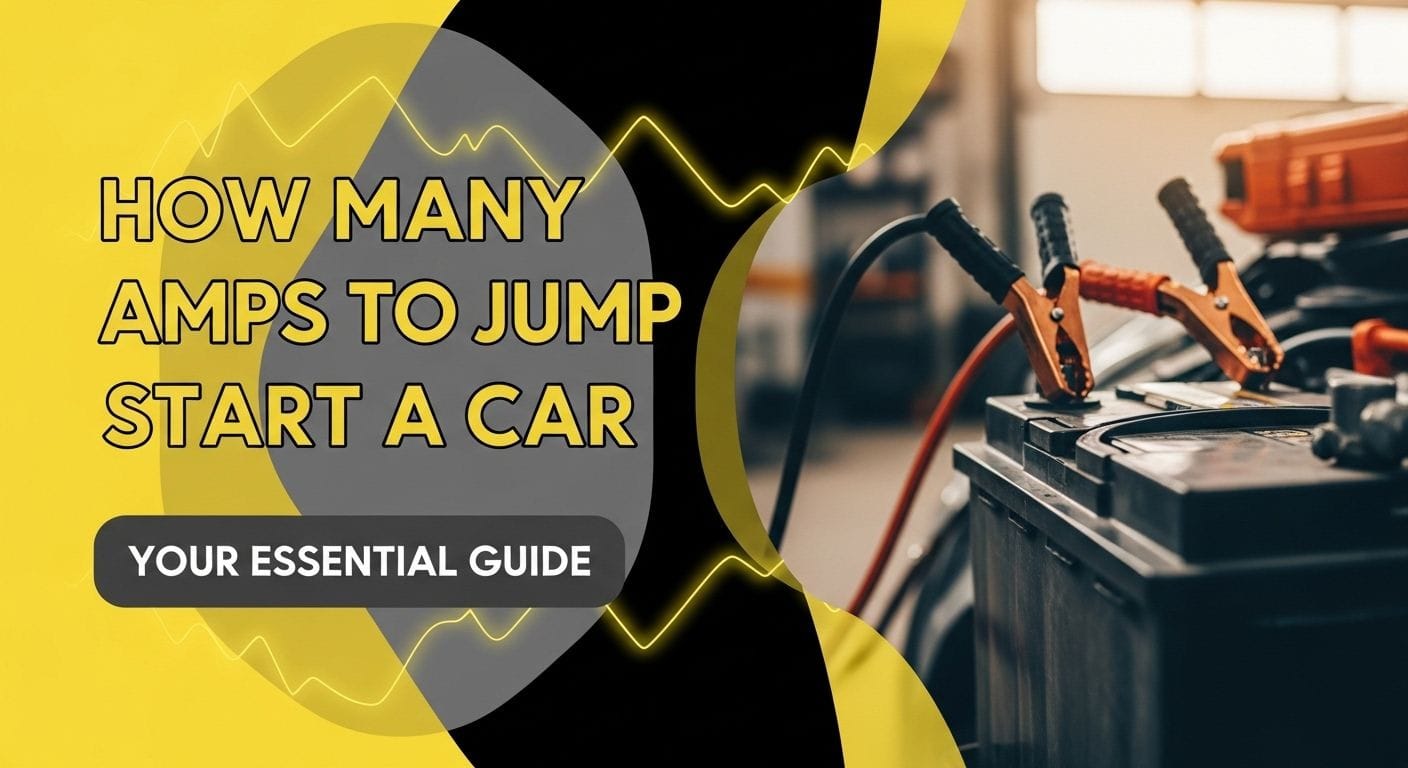
A good jump start works because the donor car's alternator (which generates power when the engine is running) and battery are providing that necessary 200-600 amp kick to your starter, bypassing your dead battery for that critical initial push.
The "Aha!" Moment
So, the next time your car grumbles or refuses to start, you'll know it's not just "dead." It's suffering from an amp deficit. It needs a serious injection of electrical muscle to get its internal combustion party started.
Understanding that it takes hundreds of amps to kick-start your ride might just make you appreciate that little black box under the hood a bit more. It's doing some heavy lifting every single time you turn that key. And knowing this might just help you choose the right replacement battery, or at least understand why those jumper cables are so darn important. Keep those amps flowing, my friends!