
How Many Amps For 12 Gauge Wire

Alright, picture this: It's a chilly Saturday morning, and you're finally tackling that ambitious waffle-making project. You’ve got the fancy new waffle maker, the stand mixer for your artisanal batter, the coffee machine humming along, and maybe, just maybe, you decided that since the toaster oven was already out, it might as well get in on the action. You plug everything into one sad, over-extended extension cord, a chorus of happy breakfast appliance hums fills the air, and then… pop! Silence. Darkness. And that distinct smell of regret. Been there? Yeah, me too. And in that moment, staring at the lifeless kitchen, you might have wondered, "What just happened?! And how could I have avoided this electrical drama?"
Well, my friend, what happened was a classic case of too much demand on too little capacity. And that capacity, more often than not, comes down to the unsung hero of your electrical system: the wire. Specifically, how much juice, or amps, a particular wire gauge can safely handle.
What's the Deal with Wire Gauge Anyway?
Before we dive into the nitty-gritty of 12 gauge, let's have a quick chat about what "wire gauge" even means. Think of it like a hose. A bigger hose (smaller gauge number, confusingly enough – like 10 gauge) can carry more water than a smaller hose (larger gauge number, like 14 gauge). Same principle with electrical wire: a smaller gauge number means a thicker wire, and a thicker wire can carry more electrical current (amps) without overheating and turning your house into a giant fire hazard. Got it? Good. It's counter-intuitive, I know, but that's just how the American Wire Gauge (AWG) system rolls.
Must Read
So, we're talking about 12 gauge wire today. It's a pretty common workhorse in residential wiring, sitting comfortably between the lighter-duty 14 gauge and the heavier-duty 10 gauge. It's like the Goldilocks of household wiring – not too thin, not too thick, but often just right for many applications.
So, How Many Amps For 12 Gauge Wire, Really?
Alright, cut to the chase, right? If you're looking for the quick, no-nonsense answer that usually gets thrown around, here it is:

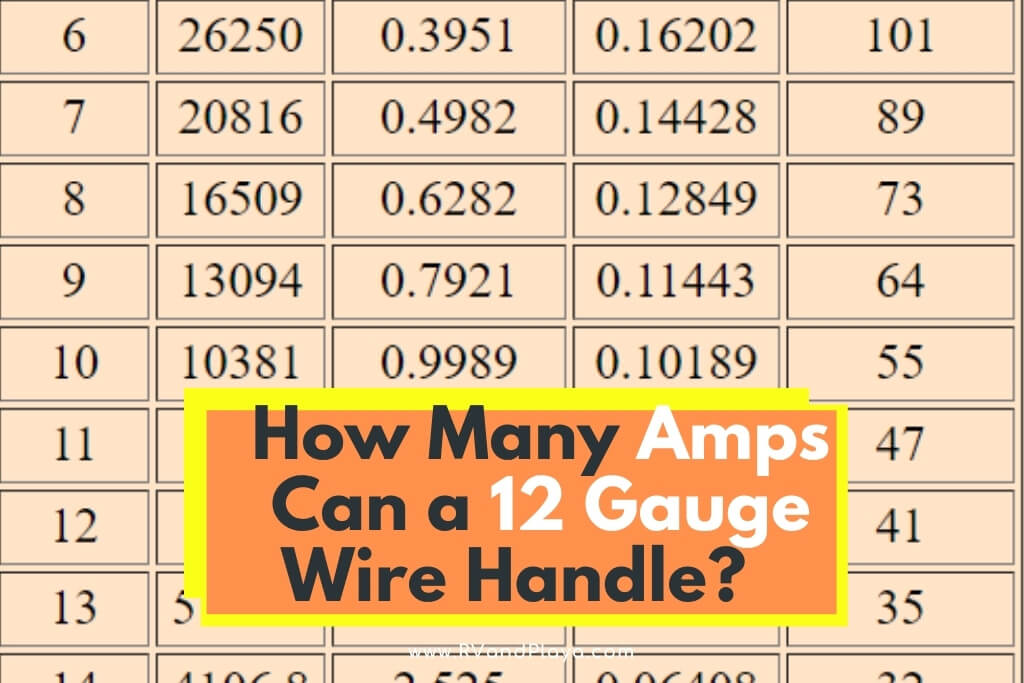
A 12 gauge copper wire is generally rated for 20 amps.
There you go! That's the standard, go-to number you'll find in the National Electrical Code (NEC) for most common residential wiring scenarios. This is why you'll often see 12 gauge wire connected to a 20-amp circuit breaker in your electrical panel. The breaker is there as a safety net, tripping (popping!) if the current exceeds 20 amps, thus protecting the wire (and your house) from overheating.
But here's where it gets a little blog-like and a tad more interesting, because like most things in life, it's not always a simple, one-size-fits-all answer. There are nuances, darling, nuances!

The Nitty-Gritty: Factors That Mess With Ampacity
That 20-amp rating is a great baseline, but several factors can influence how much current a 12 gauge wire can actually handle safely. Ignoring these can lead back to that regrettable waffle-maker incident (or worse!).
1. Temperature is a Hot Topic (Literally)
Wires get hotter when current flows through them. If the ambient temperature around the wire is already high (think scorching hot attic or a poorly ventilated wall cavity), the wire has less capacity to dissipate that heat. This means its effective ampacity (the maximum current it can carry) can be derated, or reduced, to prevent overheating. Always consider your environment!
2. Insulation Type: Not All Jackets Are Created Equal
The plastic coating, or insulation, around the copper wire plays a huge role in its temperature rating. Different types of insulation can withstand different maximum temperatures. For instance, common types like NM-B (Non-Metallic Sheathed Cable, often called Romex) or individual wires like THHN/THWN-2 in conduit have different ratings. Generally, residential applications lean on the 60°C or 75°C temperature columns in ampacity tables. While 12 gauge THHN wire could theoretically handle more amps at higher temperatures, for most residential uses, the 20-amp rule-of-thumb still applies because of the terminals on your outlets and breakers.
3. Conductor Material: Copper vs. Aluminum
While 12 gauge copper wire is the standard for 20 amps, aluminum wire of the same gauge has a lower ampacity (around 15 amps). You rarely see 12 gauge aluminum used for residential circuits these days due to its tendency to expand and contract more than copper, which can loosen connections and create fire hazards. Stick with copper for reliability and peace of mind, especially at this gauge.
4. Bundling Wires: The Derating Drama
If you have multiple current-carrying wires bundled together in a conduit, a cable, or even just tightly grouped, they can't dissipate heat as effectively. This means you might need to "derate" their ampacity, meaning each wire in the bundle can carry less current than if it were all by its lonesome. This is where things can get a bit more complex, and if you're stuffing a bunch of wires into a pipe, it's definitely time to consult the NEC or a pro.
Why 20 Amps is Your Go-To Buddy
So, even with all those factors, why does 20 amps remain the golden rule for 12 gauge? Simple: safety and simplicity. The NEC and manufacturers design things with a healthy safety margin. That 20-amp rating, paired with a 20-amp circuit breaker, ensures that under normal (and even some not-so-normal) conditions, your wire won't get hot enough to cause problems. It protects the wire, your devices, and most importantly, your home from electrical fires.
Where Does 12 Gauge Wire Shine?
Knowing its 20-amp capacity, where would you typically find (or want to use) 12 gauge wire? It's perfect for:
- Kitchen and Bathroom Outlets: These areas often see higher-wattage appliances (toasters, blenders, hair dryers), so 20-amp circuits are standard.
- Dedicated Appliance Circuits: Think microwaves, dishwashers, garbage disposals – single appliances that draw significant power often get their own 20-amp circuit.
- Workshop Outlets: Power tools can draw a good amount of juice, making 12 gauge a solid choice.
- Exterior Outlets: Especially where you might plug in power washers, electric grills, or other outdoor equipment.
Don't Play Russian Roulette with Electricity!
Look, I know we all love a good DIY project, and understanding wire gauge is a huge step in the right direction. But electricity is not something to guess at. If you're ever in doubt, or if your project involves anything beyond simple like-for-like swaps, please, for the love of all that is electrically sound, consult a qualified electrician or your local electrical codes. Overloading a circuit, using the wrong wire, or improper installation can have catastrophic consequences.
So, the next time you're wondering how many amps for 12 gauge wire, remember: 20 amps is your standard safe bet for copper wire in most residential settings. But also remember that context is king, and a little extra research (or a call to a pro) can save you a lot of grief – and keep your waffles cooking!