
How Many Amps Does A Welder Use

Ever watched a welder at work? Sparks flying, a blinding flash, and that distinct sizzle. It looks powerful, right? Like something that devours electricity. And then the question pops into your head: "How many amps does a welder use?"
It's a perfectly good question. A natural one, even. You might imagine a neat, tidy number. Maybe 50 amps? 100? Perhaps a whopping 200 amps? You picture a giant meter needle swinging wild.
Well, lean in close. Because I'm here to tell you a truth. A truth that might just be a little bit unpopular. But trust me, you'll nod your head and smile by the end of it.
Must Read
The Unpopular Truth: It's Complicated (But Fun!)
My unpopular opinion? Asking "How many amps does a welder use?" is like asking, "How many sprinkles does a doughnut need?" The answer is, well, it depends! And usually, it's more than you think, but also less than you might guess for everyday tasks.
There isn't a single, magical number. Shocking, I know! But that's where the fun begins. We're not talking about your kitchen toaster here. We're talking about a machine that literally melts metal.
"Forget the one-size-fits-all answer. Welding is a beautiful, sparks-flying dance of variables."
Think of it like this: your car uses gas. But does it use the same amount idling in traffic as it does zooming down the highway? Nope! A welder is even more dramatic.

The Grand Amperage Menu: What's on the Plate?
So, what makes the amperage dial spin? Let's break it down, super simply.
First up, material thickness. This is a big one. Are you joining two sheets of thin, flimsy metal? Or are you trying to fuse together thick, beefy structural beams? It's the difference between gently warming a marshmallow and trying to smelt an iron ingot. Thin metal might need only 30-60 amps. Thick stuff? We're talking 150, 200, even 300 amps or more! Each pass a little power surge.
Then there's the type of welding you're doing. It's like choosing your weapon for a culinary battle. Are you doing MIG welding (that's the easy, continuous wire feed)? Or TIG welding (the fancy, precise, artful one)? Or maybe Stick welding (the old-school, robust, grab-a-rod method)?
- MIG welders are often in the 50-250 amp range for common tasks. They're like the reliable family sedan.
- TIG welders can go lower for super fine work (think 10-20 amps), or higher for thick aluminum. They're the precision sports car.
- Stick welders often demand a bit more punch, commonly from 70 to 200+ amps. They're the rugged pickup truck.
See? Already a wild range! No neat little box here.
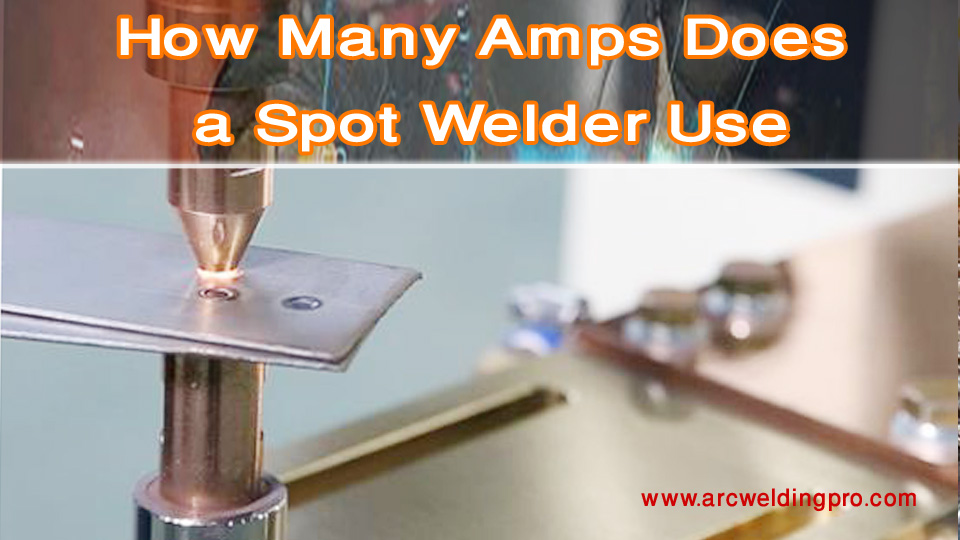
Next on our menu: wire or rod size. Bigger wire or thicker rod needs more power to melt it properly. It's just common sense. You wouldn't use a tiny candle to melt a giant ice sculpture, would you?
Finally, there's the operator's touch. Some welders just like more heat. They might crank it up a bit. Others prefer a cooler, slower weld. It's a personal preference, a bit like how spicy you like your salsa.
The Myth of the Single Spark
So, if someone asks you, "How many amps does a welder use?" you can now confidently (and playfully) respond, "Which welder? Doing what? On what metal? With what rod? And what's for dinner?"
The idea of a single magic number is, frankly, adorable. It’s like hoping there’s one perfect shoe size for everyone on Earth. Impossible! Welding is a craft, a skill, and it requires adaptability.

"There's no 'average' that truly captures the dynamic power needs of a welding machine."
Think of the power meter on a welder not as a fixed dial, but as a volume knob. Sometimes you need to crank it for a heavy metal jam session. Other times, you whisper soft background music for delicate work.
From Hairdryers to Hot Rods
Let's put this into everyday terms. Your average hairdryer might pull 10-15 amps. Your microwave? Maybe 10-12 amps. Your entire kitchen with the oven, fridge, and lights on could be 50-70 amps. Now imagine trying to melt steel!
A small, entry-level welder doing light repairs might hover around 50-100 amps. That's a reasonable draw, maybe less than your oven. But a powerful industrial machine welding thick structural steel could easily surge past 200, 300, or even 400 amps. That's a different beast entirely!
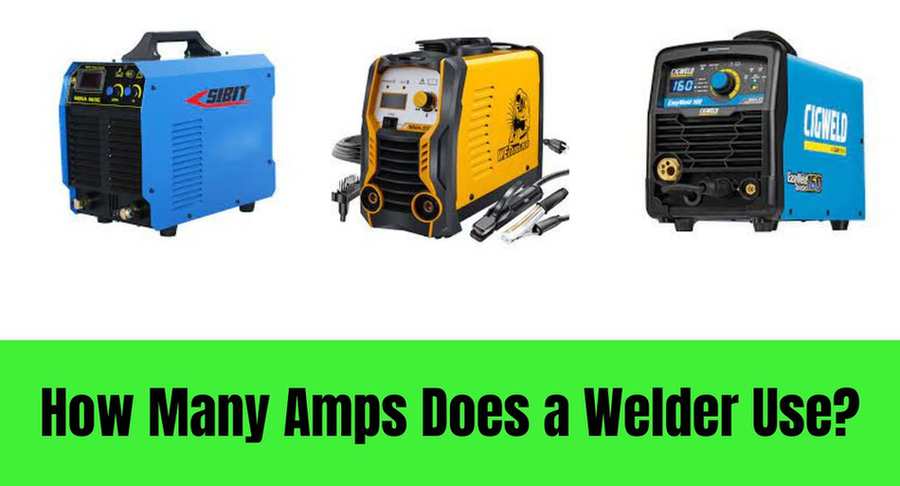
It's not about being 'greedy' with power. It's about getting the job done right. Just like you wouldn't use a toy car to haul a load of bricks, you wouldn't use a low-amp setting to fuse heavy steel. You need the right tool, with the right power, for the right task.
The Grand Finale: Embrace the Mystery (and the Power!)
So, we've come full circle. The answer to "How many amps does a welder use?" is delightfully, wonderfully, and entertainingly: it varies wildly! There's no single number to stamp on it. And that, my friends, is perfectly okay.
It means welding is nuanced. It's about precision and power. It's about understanding the task. So next time someone asks, give them a knowing wink. Tell them it uses "exactly the right amount to melt metal and make cool stuff." Or, if you're feeling particularly mischievous, just say, "Enough to make sparks fly and dreams come true!"
Now go forth, armed with your new, delightfully complicated knowledge. And perhaps, a newfound appreciation for those sparks!