
How Many Amps Does A Dryer Take
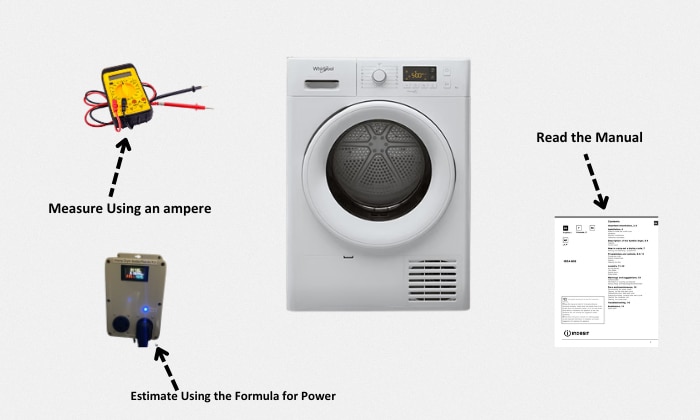
Alright, gather 'round, folks, and pull up a virtual chair. Let's talk about something truly riveting, something that keeps our socks fluffy and our towels toasty: the humble clothes dryer. You know, that magical box that devours wet laundry and spits out warm, wearable garments? Ever wondered what kind of electrical beast is lurking behind that humming behemoth?
Specifically, we're diving into the thrilling world of amps. "How many amps does a dryer take?" you might ask, perhaps while staring quizzically at a tripped breaker, or maybe just out of sheer, unadulterated curiosity. Well, my friend, prepare for a revelation that might just make your hair stand on end – in a good, electrically fascinating way, of course.
The Big Reveal: It's Not What You Think (Unless You Already Knew)
Let's cut straight to the chase, because I know you're on the edge of your seat. Most standard electric dryers, the kind you probably have humming away in your laundry room right now, are absolute power hogs. They typically demand a robust, no-nonsense 30 amps. Yes, you heard that right: thirty whole amps!
Must Read
Now, to put that into perspective, your average lamp might sip on less than an amp. Your phone charger? A fraction of that. Even your mighty refrigerator probably only draws around 3-5 amps. But your dryer? It's like the electrical equivalent of a muscle car, revving its engine for a full spin cycle. It needs that grunt to generate enough heat to turn your soggy jeans into crisp, dry wonders.
Why So Demanding, Mr. Dryer?
This isn't just because your dryer enjoys being high-maintenance, though let's be honest, sometimes it feels that way when it eats a sock. The reason it needs such a hefty electrical diet comes down to one critical factor: heat. Drying clothes isn't just about spinning them around; it's about blasting them with enough warmth to evaporate every last drop of water.

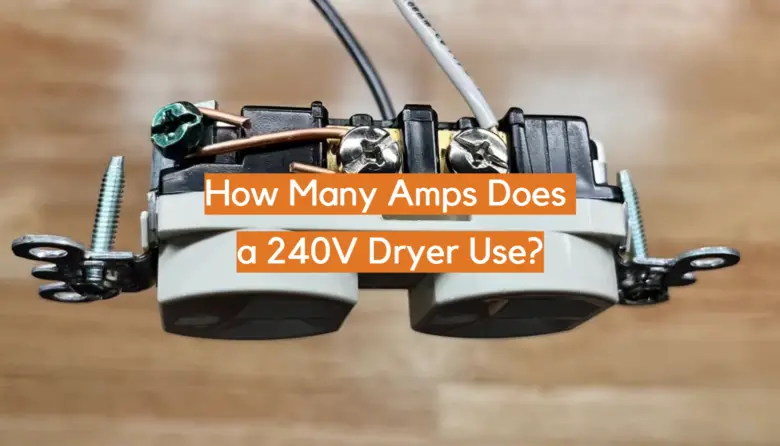
And generating that kind of heat requires serious electrical muscle. This is why dryers operate on a different league of electricity than most of your other home appliances. While your toaster, microwave, and TV are happily chugging along on a standard 120-volt circuit, your dryer demands the big guns: a dedicated 240-volt circuit.
Think of it like this: 120 volts is a garden hose, perfect for watering your petunias. 240 volts is a fire hose, ready to tackle a serious inferno of dampness. This higher voltage allows the dryer to draw more power (watts) with fewer amps than it would on a 120V circuit, making it more efficient for high-power tasks. It’s a bit of electrical magic, really, or as electricians call it, "basic physics."

The Breaker Box: Your Dryer's Personal Bodyguard
Because your dryer is such an energy guzzler, it absolutely needs its own dedicated circuit. You'll typically find a 30-amp breaker specifically labeled for your dryer in your home's electrical panel. This breaker is like a tiny, vigilant superhero, constantly monitoring the electrical flow.
If, for some reason, your dryer tries to draw more than 30 amps (maybe it's feeling extra ambitious, or there's an internal issue), that breaker will heroically "trip," cutting off power to prevent overheating, damage to the appliance, or worse, a nasty electrical fire. It's a safety feature that frankly deserves more applause than it gets.

Imagine trying to run your dryer and your electric car charger on the same circuit – poof! goes the lights. Or perhaps you plug in a super-secret, experimental, sock-folding robot that draws too much power. Again, poof! The breaker's job is to say, "Whoa there, cowboy, that's enough power for one circuit!"
Gas Dryers: The Frugal Cousins
Now, a quick note for those of you with a gas dryer. While they use gas to generate the heat, they still need some electricity to operate their motor, controls, and igniter. But because they don't have to power massive heating elements, their electrical appetite is much smaller. A gas dryer usually only sips on a modest 15 amps or less, and can often run on a standard 120-volt outlet. They're the quiet, unassuming librarian in a room full of electrical bodybuilders.
The Moral of the Amperage Story: Don't Mess With It
So, what's the big takeaway from our electrifying chat? Firstly, your electric dryer is a serious piece of machinery, demanding a robust 30-amp, 240-volt dedicated circuit. Secondly, that breaker in your panel isn't there for decoration; it's a critical safety device designed to protect your home from an overload.
If your dryer breaker is frequently tripping, or if you're installing a new dryer and are unsure about the wiring, please, for the love of all things fluffy, do not try to DIY it unless you are a qualified electrician. Electricity is not a hobby for the faint of heart or the poorly informed. Call in a pro! They’ll make sure your dryer is hooked up safely and correctly, keeping your home warm and your laundry dry, without any unexpected fireworks.
Understanding these amps might not make you the life of every party, but it does give you a newfound appreciation for the powerful, diligent appliance that helps keep your household running smoothly. So next time your dryer hums to life, give it a silent nod of respect. It’s doing some serious heavy lifting, electrically speaking.