
How Many Amps Are In 3000 Watts

Ever wondered about the mysterious dance of electricity powering your home? We hear terms like watts and amps, and sometimes it feels like they're speaking a secret language. But fear not, intrepid energy explorer, because today we're demystifying a big one: How many amps are in 3000 watts?
Imagine 3000 watts as a super-energetic party animal, ready to power up your life. It's a significant chunk of electrical muscle, capable of making some serious magic happen. But how much oomph does that translate to in terms of current, or amps?
Here’s the fun twist, and it's a big one: the answer isn't a single, magic number. It's like asking "how fast can a car go?" Well, it depends on which car! In our electrical world, it depends on the voltage.
Must Read
Think of voltage as the "push" or "pressure" behind the electricity. Different regions and different appliances use different levels of this push. The most common voltages you'll encounter are 120 volts (standard in many North American homes) and 240 volts (for bigger, hungrier appliances).
The 120-Volt Scenario: Powering Your Everyday Adventures!
Let's dive into the world of 120 volts first. This is the friendly voltage that powers most of your everyday gadgets. We're talking lamps, blenders, TVs, and your beloved gaming console.
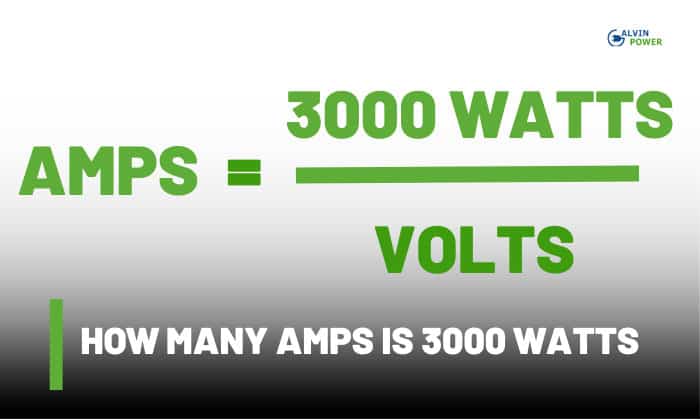
To find our amps, we use a super-simple, superhero-level formula: Amps = Watts / Volts. It’s like a secret decoder ring for electricity! So, for our 3000 watts at 120 volts, what do we get?
3000 watts / 120 volts = 25 amps!
Ta-da! That’s right, 25 glorious amps. In the land of 120 volts, 3000 watts gives you a mighty 25 amps of current. That's a serious amount of flow!
To put 25 amps into perspective, a typical household circuit breaker for your wall outlets is often rated for 15 or 20 amps. This means 3000 watts is quite a powerhouse!
Imagine plugging in a powerful space heater, maybe a high-end hair dryer, and a toaster all on the same regular circuit. You’d probably trip a breaker with 25 amps demanding attention!
This is precisely why understanding amps is so important. It tells you how much "juice" is flowing and whether your home's wiring can safely handle the party. Too much party on one circuit means lights out!

So, when you see an appliance that draws 3000 watts and plugs into a standard wall outlet, know that it's pulling a substantial 25 amps. This often means it might need its own dedicated circuit to avoid any drama.
Think of 25 amps as the electrical equivalent of a small but very enthusiastic team of sprinters. They're fast, they're powerful, and they absolutely demand a clear track. Without it, they might just trip over each other, causing a blackout!
Your toaster might pull around 10 amps, and your microwave 12 amps. A single 3000-watt appliance is roughly the equivalent of two and a half microwaves running simultaneously!
That kind of power is perfect for things that need a quick burst of energy or continuous heat. Think electric kettles boiling water at lightning speed or those super powerful blenders that turn ice into dust.
It's like having a miniature electrical superhero doing a fantastic job, but needing enough space to stretch its super muscles. 25 amps is no joke on a 120-volt system.
So, next time you marvel at a high-power device, remember its 25-amp footprint on your 120-volt household system. It’s a good reminder to be mindful of what else is running on the same circuit.
What can 25 amps at 120V do?
With 25 amps at 120 volts, you could comfortably run a heavy-duty shop vacuum and a powerful air compressor at the same time. This is serious tool power for your garage!
Or imagine the ultimate breakfast bar! You could have a waffle maker, an electric griddle, and a high-speed blender all whirring away, creating culinary masterpieces. But again, probably not all on the same regular circuit!

It’s the kind of power that heats things up quickly, drives motors with gusto, and generally gets things done with a flourish. A single, dedicated 25-amp circuit is a fantastic addition to any power-hungry area.
So, in the 120-volt universe, 3000 watts is a robust 25 amps, a true workhorse of electricity! Keep that number in mind for your smaller, but still mighty, appliances.
The 240-Volt Scenario: Doubling the Power, Halving the Amps!
Now, let’s flip the switch to the high-voltage heroes: 240 volts! This is the mighty voltage often reserved for your biggest energy consumers. Think electric clothes dryers, water heaters, and central air conditioning units.
Why 240 volts for these giants? Because doubling the voltage has a really cool trick up its sleeve. It allows the same amount of power (our 3000 watts) to flow with half the amount of current (amps)!
Let's plug our numbers into the same awesome formula: Amps = Watts / Volts. Here we go for 3000 watts at a glorious 240 volts:
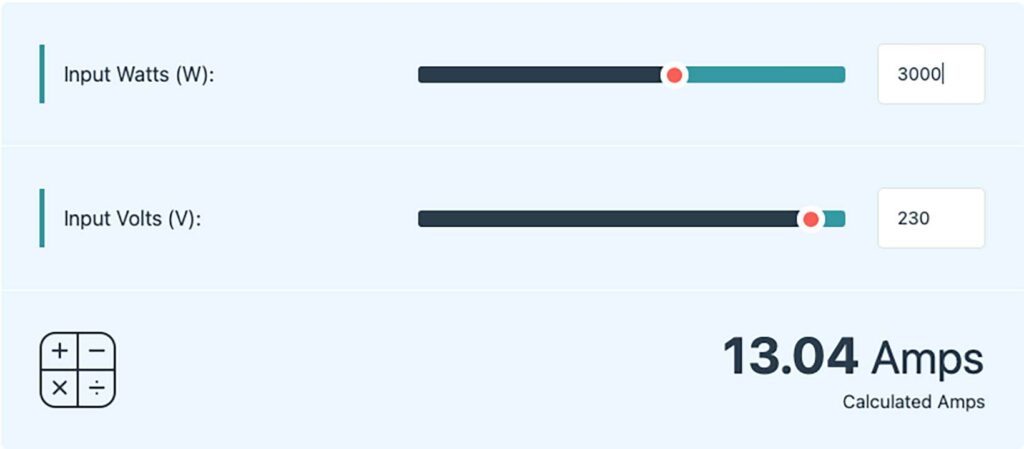
3000 watts / 240 volts = 12.5 amps!
Boom! A much friendlier number! At 240 volts, 3000 watts translates to a neat and tidy 12.5 amps. See how the amps went down dramatically compared to the 120-volt scenario?
This is precisely why bigger appliances use 240 volts. Lower amps mean less heat generated in the wires and the appliance itself. Less heat means greater efficiency and less stress on the electrical system.
Think of it like this: if 120 volts is a garden hose spraying water (amps), then 240 volts is the same amount of water, but pushed through with twice the pressure (voltage). You need less opening (amps) to get the same total volume (watts) through.
A typical 240-volt circuit for an appliance might be rated for 30 amps or even 50 amps. So, 12.5 amps from our 3000-watt appliance is a walk in the park for these heavy-duty circuits!
This means a 3000-watt device designed for 240 volts is much "easier" on your electrical system than its 120-volt counterpart. It's like a gentle giant, powerful but not overwhelming.
Imagine an electric wall oven that draws 3000 watts. At 240 volts, it only needs 12.5 amps. This is why you can have multiple high-power elements in an oven without constantly tripping breakers.
It's the electrical equivalent of a calm, powerful river compared to a rushing, narrower stream. Both move a lot of water, but one does it with less friction and drama.
Many smaller electric water heaters, for instance, might operate around this 3000-watt mark at 240 volts. They efficiently heat water without demanding massive amounts of current.
So, when you see a big appliance requiring a special 240-volt outlet, understand that even if its wattage is high (like our 3000 watts), its current draw (amps) is often surprisingly moderate because of the higher voltage!
What can 12.5 amps at 240V do?
With 12.5 amps at 240 volts, you’re looking at serious sustained power. This could be powering a dedicated heating element in a sauna or a small workshop heater.
You could run a robust pump for a swimming pool or a continuous duty air compressor for heavy-duty pneumatic tools. It's about delivering steady, reliable energy for demanding tasks.
This kind of power at higher voltage is built for endurance, for things that need to run for long periods or deliver consistent high output. It’s efficient, effective, and less prone to causing electrical headaches.
So, our 3000 watts, when hooked up to a 240-volt line, elegantly sips just 12.5 amps. It’s a testament to how voltage cleverly manages the flow of electricity!
The Grand Takeaway: It's All About the Volts!
So, the answer to "How many amps are in 3000 watts?" is a glorious "It depends!" But now you know what it depends on: the voltage!
At standard North American 120 volts, 3000 watts demands a hefty 25 amps. That's a lot of current for your everyday circuits, often requiring special attention.
But when harnessed by the power of 240 volts, those same 3000 watts become a much more manageable 12.5 amps, flowing smoothly and efficiently.
Isn't electricity fascinating? It’s not just a mysterious force; it's a clever balancing act of watts, volts, and amps. Knowing these relationships makes you an instant electrical wizard!
Next time you look at an appliance, you’ll be able to quickly estimate its electrical footprint. You'll be the person everyone asks about power ratings at parties (okay, maybe not, but you’ll be super knowledgeable!).
Keep those circuits happy, respect the power, and enjoy the wonderful world of electricity! Now you're not just a consumer; you're an informed and enthusiastic energy enthusiast!