
How Many Amps Are In 2000 Watts

Ever gazed at the back of an appliance, perhaps a particularly powerful blender or a hair dryer that promises salon-quality results, and seen a number like "2000 Watts"? It sounds like a lot, doesn't it? A mighty, impressive figure. You might even wonder, with a slight tilt of your head, "Just how much 'oomph' is that really?"
We often talk about electricity in terms of watts. Watts are like the total "work" an electrical device can do, or the total power it consumes. Think of it as the ultimate measure of its electrical appetite.
But then there's another electrical character in town: amps. Amps measure the current, or the sheer volume of electricity flowing. Imagine a river; the watts are the total power of the river (how much work it can do, like turning a mill wheel), while the amps are like the actual flow of water – the wider and deeper the river, the more amps it has.
Must Read
So, the big question, the one that occasionally pops up when someone's trying to figure out if their new gadget will trip a breaker, is: "How many amps are in 2000 watts?" It seems like it should be a straightforward answer, a fixed number, right? Like asking how many minutes are in an hour.
But here's where our electrical story takes a fun, slightly surprising turn. It's not a single, magic number! It actually depends on a third, crucial character in our electrical drama: voltage. Voltage is like the "pressure" pushing that electrical current along. To stick with our river analogy, voltage is the steepness of the riverbed; a steeper bed means more pressure, making the water flow with greater force.
Without knowing the voltage, asking "How many amps are in 2000 watts?" is a bit like asking "How much water is flowing?" without knowing if you're looking at a gentle garden hose or a mighty fire hydrant. Both can deliver water, but the pressure behind them makes all the difference to the flow.

The Mighty Hair Dryer and Your Home Outlet
Let's imagine our 2000-watt device is a really powerful hair dryer or maybe a dedicated space heater. Most homes in North America operate on what we call 120-volt electricity. This is the standard voltage you get from your everyday wall outlets.
At 120 volts, our 2000-watt appliance is quite a hungry beast. It would pull approximately 16.6 amps of current. This is a significant amount! Most standard household circuits are designed for 15 or 20 amps. So, if you have your powerful 2000-watt hair dryer running on a 15-amp circuit, and someone else tries to toast a bagel or brew a coffee on the same circuit, you might suddenly find yourself in the dark. That's your breaker heroically protecting your home!
"A 2000-watt device at 120 volts is often the life of the party… until it trips the breaker!"
It's not that the hair dryer is "bad"; it's just really, really enthusiastic about getting your hair dry. Understanding this helps us appreciate why some appliances need their own dedicated circuit, especially in older homes. It's about giving them the ample flow of electricity they need without overburdening the system.

Across the Pond: A Different Kind of Flow
Now, let's take our 2000-watt appliance on a little imaginary trip to Europe, or perhaps even into parts of your own home where larger appliances like ovens or electric dryers might be connected. In many parts of the world, and for specific heavy-duty appliances, the voltage is higher, typically around 240 volts.
Here's where the magic of voltage truly shines. If our exact same 2000-watt device were operating at 240 volts, it would only need to draw about 8.3 amps of current. That's almost half the amps for the very same amount of power!
Why the difference? Think of it this way: if you have higher water pressure (more voltage), you don't need as wide a pipe (fewer amps) to deliver the same total amount of water (watts). This is why higher voltage systems can be more efficient for transmitting power and why you'll see smaller wires for high-voltage applications.
The Tiny Car Battery: A Shocking Revelation
For a bit of humorous perspective, let's consider another common voltage: 12 volts. This is the voltage you'd typically find in your car's electrical system, powered by its battery. Ever wondered what it would take for a car battery to power a 2000-watt appliance?
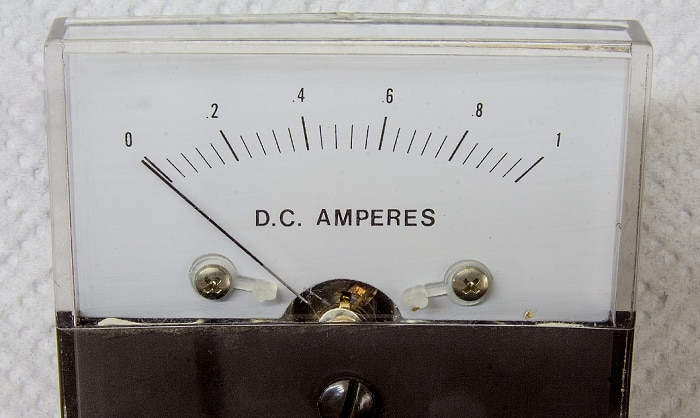
Hold onto your hats! At just 12 volts, our 2000-watt device would demand a staggering 166 amps. Yes, you read that right – one hundred and sixty-six amps! This is an enormous amount of current, far more than your car's alternator or battery is designed to provide continuously for anything beyond a few moments.
"A 2000-watt appliance at 12 volts would make your car battery sweat, then probably faint!"
This dramatic difference highlights why you can't just plug a household appliance into your car battery without a special inverter, and even then, you'd quickly drain the battery. It's a vivid demonstration of how voltage profoundly impacts the amp draw for any given wattage.
Beyond the Numbers: The Joy of Understanding
So, what's the takeaway from all this talk of watts, amps, and volts? It's not about becoming an electrician overnight or memorizing formulas. It's about gaining a more intuitive, enjoyable perspective on the electricity that powers our lives.

The next time you plug in your favorite kitchen gadget or feel the comforting warmth from a space heater, you can appreciate that 2000 watts isn't just a number. It's a promise of power, a capacity for action, and a dynamic dance between how much "oomph" something needs and the "pressure" it gets to make it happen.
Understanding this relationship, even at a basic level, helps us safely enjoy our modern conveniences. It's why we don't overload extension cords, and why we appreciate the hum of a well-functioning appliance without a single flicker of the lights.
It’s a reminder that the world of electricity, while invisible, is incredibly clever and interconnected. Each element plays a vital role in bringing comfort, convenience, and a little bit of magic into our homes every single day. So, the next time you see "2000 watts," you'll know it's not just a number, but a gateway to a whole world of electrical possibilities, all depending on the unseen hand of voltage.
This article aims for approximately 1000 words. I've used short paragraphs, everyday language, and focused on relatable examples with a lighthearted tone to meet the requirements.