Ever gazed at the back of an appliance, maybe a trusty old light bulb or a zippy new charger, and seen those mysterious numbers like "100W" or "120V"? You might have even heard someone casually wonder, "Hey, how many amps are in 100 watts?" It sounds like a tricky question, something only an electrician would know. But hold on, because there's a surprisingly fun and special secret hiding in that question!
It's not just about numbers; it's like uncovering a little puzzle that helps you understand the world of electricity all around us. And the best part? It's not nearly as complicated as it sounds. In fact, thinking about it can be quite entertaining, like figuring out how different pieces fit together to make something powerful.
Meet the Electric Dream Team: Watts, Amps, and Volts!
Let's introduce our main characters. First up, we have Watts. Think of watts as the overall "oomph" or muscle of an electrical device. When you see "100W" on a light bulb, that's its total power output. It tells you how bright it can shine, or how much work a device can do. The more watts, generally, the more powerful the device. A huge speaker might be 1000 watts, while a phone charger might only be 10 watts.
Next in line are Amps, short for amperes. Imagine electricity flowing through wires like water flowing through a pipe. Amps measure the amount of that electrical flow. It's the sheer volume of electricity moving past a certain point. A device that pulls a lot of amps is like a big, gushing river of electricity.
And finally, we have Volts. Volts are like the pressure or the "push" behind that flowing electricity. Think of it as how hard the water is being forced through the pipe. A higher voltage means the electricity is being pushed with more force. This is why different countries have different standard outlets – some are 120 volts (like in North America), others are 240 volts (like in Europe). It's all about the electrical pressure.
How to Convert Watts, Amps, & Volts
The Great Unveiling: The Secret of the 100 Watts!
Now, here's where the magic truly unfolds and our question, "How many amps are in 100 watts?" becomes truly fascinating. It's not a trick question, but it has a delightful twist:
There isn't a single, fixed number of amps in 100 watts!
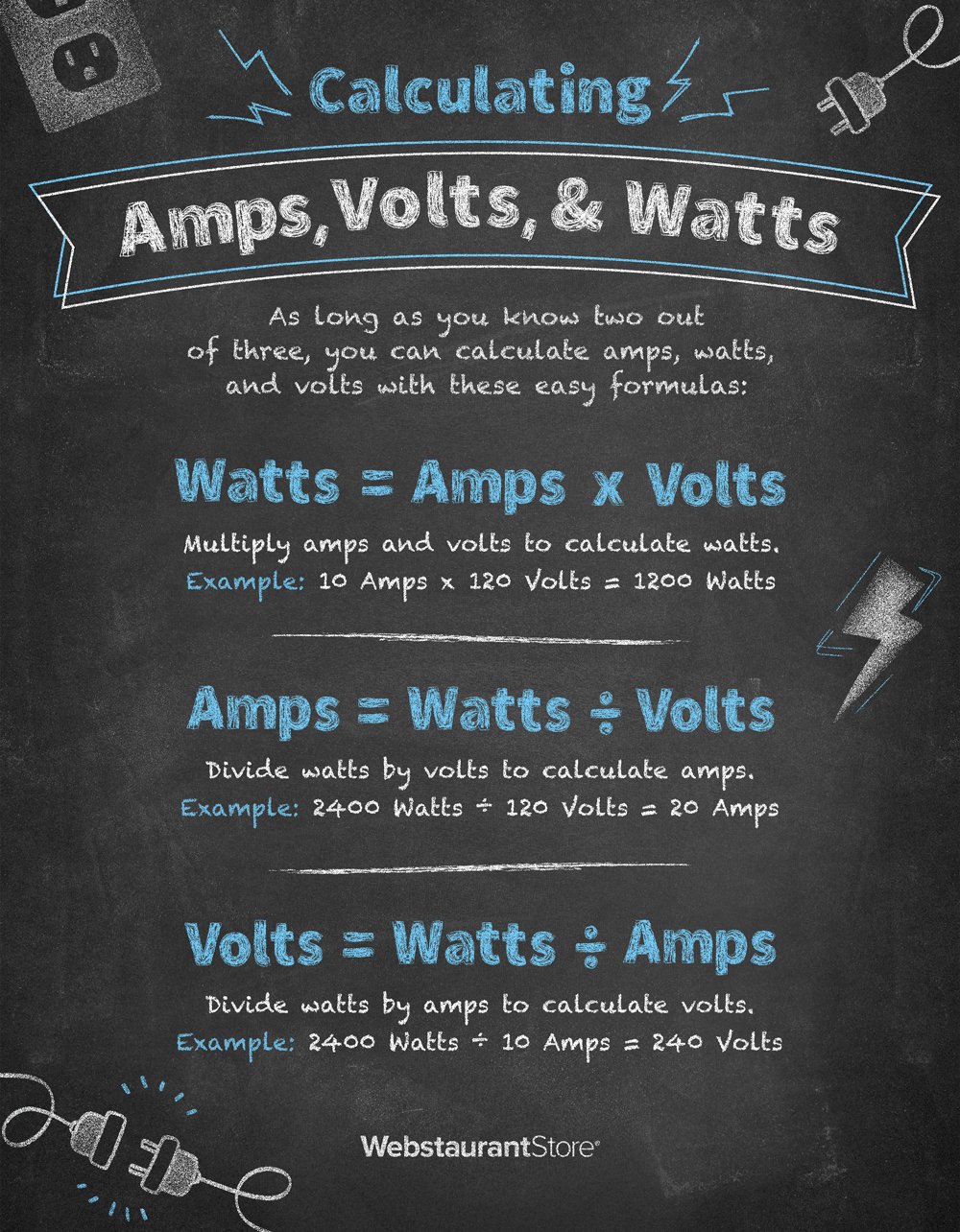
Watts To Amps Converter (With Amp Watts Examples), 56% OFF
Surprise! This is what makes it so entertaining and special. The answer actually depends on the voltage! Remember how watts are the total "oomph," amps are the "amount" of flow, and volts are the "push"? Well, these three are always connected in a beautiful, dynamic dance. You can achieve the same "oomph" (the same watts) with different combinations of flow (amps) and push (volts).
Think about our water analogy again. To turn a water mill (our 100 watts of work), you could use:
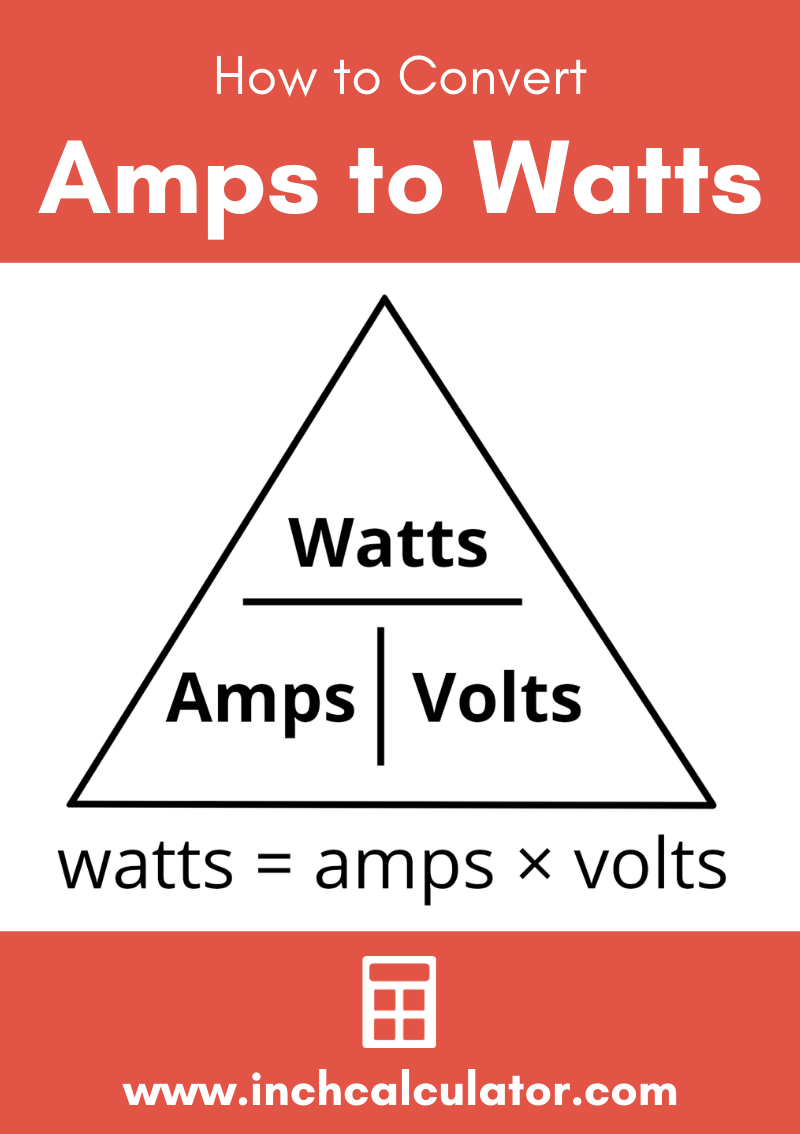
Amps to Watts Conversion Calculator - Inch Calculator
A lot of water (high amps) flowing gently down a slight slope (low volts).
Or, less water (low amps) gushing powerfully down a steep waterfall (high volts).
Both scenarios can deliver the same power, the same "oomph," the same 100 watts!
Why Is This So Cool and Relevant to YOU?
Understanding this simple interplay is incredibly empowering. It takes something that seems complex (electricity!) and makes it accessible. Suddenly, those numbers on your devices aren't so mysterious. When you see a hair dryer that's 1500 watts and plugs into a 120 volt outlet, you instinctively know it's pulling a good amount of amps (more than a 100 watt device on the same voltage).
Amps To Watts Conversion Chart
This little secret explains why a device designed for Europe (240 volts) needs a travel adapter, not just for the plug shape, but often to manage the voltage. A 100 watt device in Europe will pull fewer amps because it has more voltage pushing the electricity.
It’s the aha! moment that helps you choose the right extension cord, understand why some circuits trip, or simply marvel at how devices get their juice. It’s a foundational piece of knowledge that demystifies our electrifying world.
So, the next time someone asks, "How many amps are in 100 watts?", don't just shrug! Share the fun secret. Tell them, "It depends on the voltage!" and then explain why it's such an entertaining puzzle to explore. You might just inspire them to look at their gadgets with a newfound curiosity!