How Long Will A Propane Tank Run A Generator

Ever wondered how long you could keep the lights on during a power outage, or power your campsite deep in the woods? The answer often lies in the humble propane tank and its ability to fuel a generator. Figuring out how long a propane tank will run a generator isn't just some abstract math problem; it’s a practical skill that can provide peace of mind and a surprising amount of independence. Plus, it’s kind of fun to delve into the calculations and understand the energy dynamics at play!
A propane-powered generator, at its core, converts the chemical energy stored in liquid propane into electricity. This electricity can then be used to power anything from your refrigerator and lights during a blackout to your power tools at a remote job site. The benefits are numerous: portability (propane tanks are easily transportable), relatively clean burning compared to gasoline, and a longer shelf life for the fuel itself. Imagine the relief of knowing you have a reliable power source when the grid fails or when you’re miles away from the nearest outlet.
Think about educational settings. Science classes might use a generator to power experiments in locations without readily available electricity. Vocational schools can teach students about alternative energy sources and generator maintenance. In daily life, the applications are even broader. Construction workers use generators to power their tools at building sites. Food trucks rely on them to keep refrigerators running and stoves hot. Campers use them for everything from charging phones to powering small appliances. Even homeowners find them indispensable during emergencies, protecting against food spoilage and keeping essential medical equipment running.
Must Read
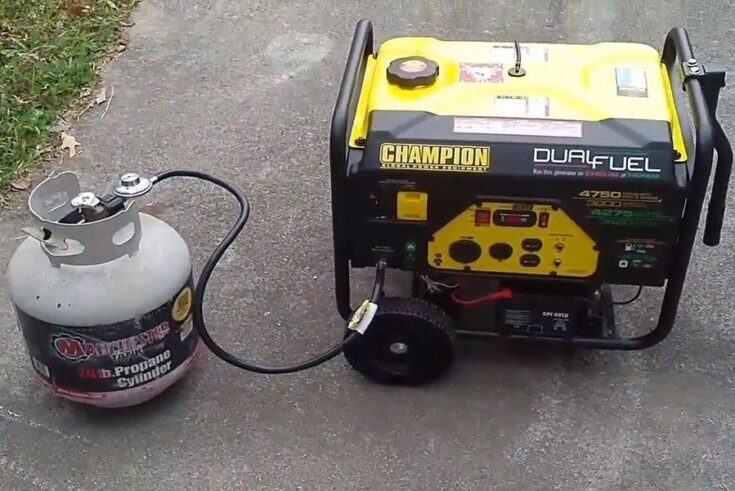
So, how do you actually figure out how long a propane tank will keep your generator humming? There's no magic formula, but it's a combination of understanding your generator's consumption rate and the size of your propane tank. Generators are typically rated in watts, and their fuel consumption is often expressed in gallons per hour (GPH) at different load levels (how much power you're drawing). A standard 20-pound propane tank holds about 4.7 gallons of propane. Therefore, to get an estimate, divide the total gallons of propane by the generator’s GPH. For instance, if your generator uses 0.5 gallons of propane per hour and you have a full 20-pound tank, you can expect it to run for approximately 9.4 hours (4.7 gallons / 0.5 GPH).
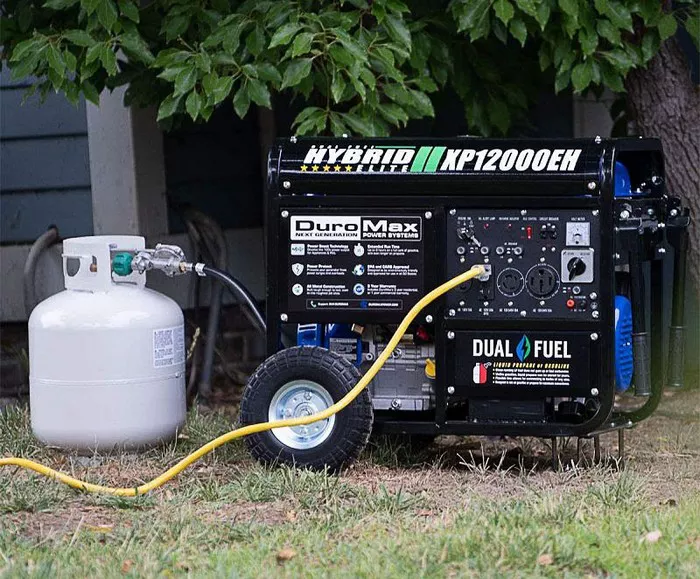
However, keep in mind that this is just an estimate. Several factors can influence the actual run time. The load on the generator (the amount of electricity you're using) is a significant factor. The more appliances you're powering, the faster the propane will be consumed. Environmental conditions, such as temperature, can also affect the generator's efficiency. A colder environment might require the generator to work harder, leading to increased fuel consumption.
Want to explore this further? Start by looking up the fuel consumption rate of your generator in its manual. Then, experiment with different load levels. Try running only the essentials (lights and a refrigerator) and see how long the tank lasts. Next, add some additional appliances and observe the difference. This hands-on experience will give you a much better understanding of your generator's capabilities and how to manage your propane supply effectively. Remember to always prioritize safety when working with generators and propane. Always operate generators outdoors in a well-ventilated area to prevent carbon monoxide poisoning.