How Long To Charge Motorcycle Battery At 2 Amps
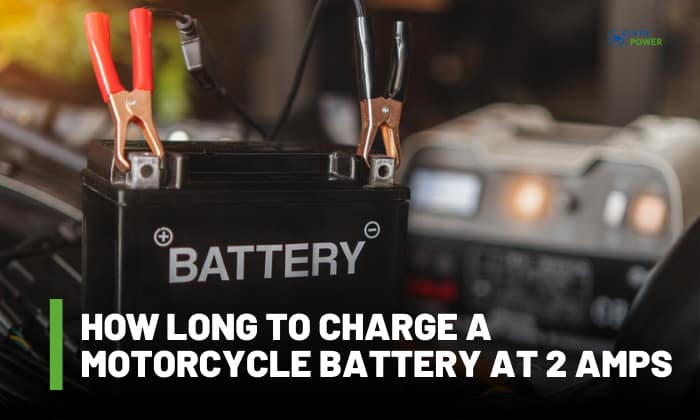
There's a certain freedom that comes with owning a motorcycle. The open road, the wind in your hair (or helmet!), and the thrill of the ride are all part of the allure. But just like any vehicle, your motorcycle relies on a healthy battery to keep those adventures rolling. And that means understanding how to properly charge it, especially when using a slower, more deliberate method like charging at 2 amps.
Why bother with a trickle charge, you might ask? Well, charging your motorcycle battery at a lower amperage, such as 2 amps, offers several key benefits. The primary purpose is to provide a gentle and controlled charge that minimizes the risk of overcharging and damaging the battery. Overcharging is a common culprit behind shortened battery life, and slow charging helps avoid this pitfall. It's especially useful for long-term maintenance, like when storing your bike for the winter months. Think of it as giving your battery a slow, nourishing drip-feed rather than a forceful gulp.
This charging method is commonly used in a few scenarios. As mentioned, winter storage is a big one. Many riders connect their bikes to a battery maintainer set to 2 amps (or less) during the off-season to prevent the battery from slowly discharging and sulfating. Another common application is for older batteries. A slow charge can sometimes help revive a slightly weakened battery that might struggle to hold a charge when charged at a higher rate. Finally, it's also suitable for smaller motorcycle batteries, often found in scooters or smaller displacement bikes, which are more sensitive to higher charging currents.
Must Read
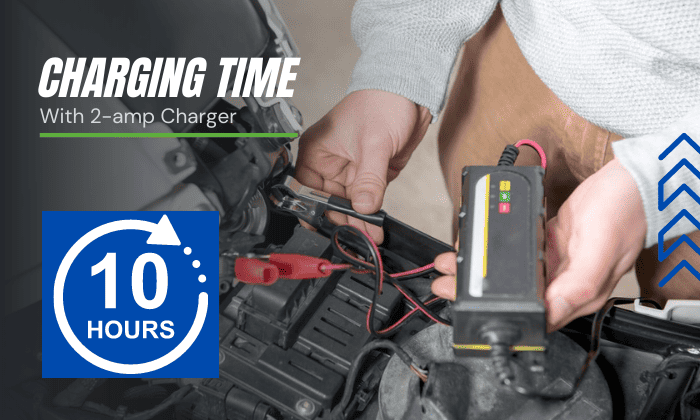
So, how long should you actually charge your motorcycle battery at 2 amps? Unfortunately, there's no one-size-fits-all answer. The charging time depends on several factors, including the battery's capacity (measured in amp-hours or Ah), its current state of charge, and the efficiency of your charger. A completely dead battery will obviously take significantly longer to charge than one that's only partially discharged.
As a general rule of thumb, you can estimate the charging time by dividing the battery's Ah rating by the charging current (2 amps in this case). For example, if your battery is rated at 10Ah and is completely dead, it could theoretically take around 5 hours to fully charge (10Ah / 2A = 5 hours). However, this is a simplified calculation. It's crucial to monitor the battery's voltage and temperature during the charging process. Ideally, you should use a smart charger that automatically switches to maintenance mode once the battery is fully charged, preventing overcharging. If you're using a basic charger, you'll need to manually disconnect it once the battery reaches its full voltage (typically around 12.6-12.8 volts for a 12-volt battery).

Here are a few practical tips to enjoy more effective 2-amp charging:
- Invest in a smart charger: A smart charger is your best friend. It monitors the battery's condition and adjusts the charging process accordingly.
- Check the battery's voltage regularly: Use a multimeter to monitor the voltage during charging.
- Don't overcharge: Overcharging is more harmful than undercharging. Disconnect the charger once the battery is full.
- Ensure proper ventilation: Charge the battery in a well-ventilated area to prevent the buildup of flammable gases.
- Consult your motorcycle's and battery's manuals: Always refer to the manufacturer's recommendations for specific charging instructions.
By understanding the principles of slow charging and following these tips, you can keep your motorcycle battery in top condition and enjoy many more miles of open-road freedom.