
How Long Does A Sump Pump Battery Backup Last

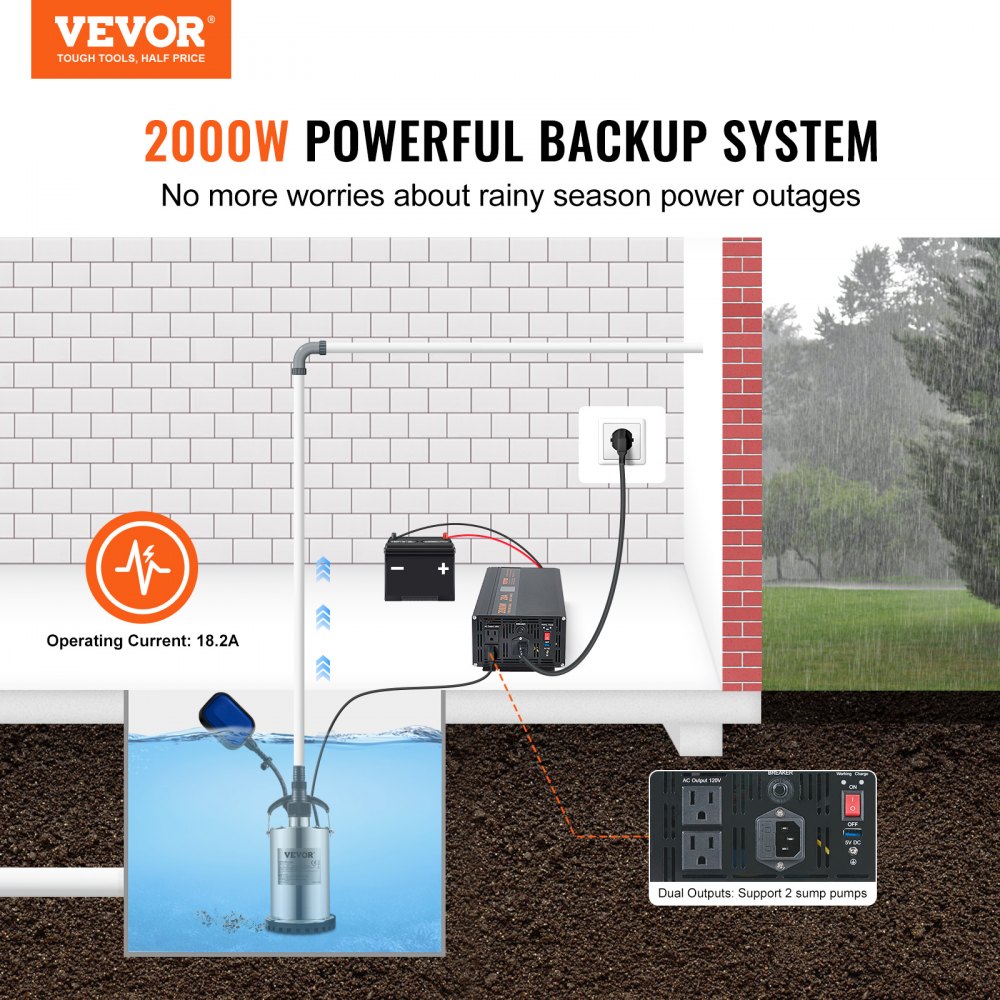
Okay, let's talk about sump pump battery backups. Think of your sump pump as that tireless friend who’s always there to bail you out – literally. And the battery backup? Well, that's their trusty sidekick, ready to jump in when the power goes out, turning your 'oh no!' moment into a 'whew!' one.
But here's the million-dollar question, the one that keeps us all up at night during a thunderstorm (besides the thunder, obviously): How long does that superhero battery backup actually last?
The Big Question: How Many Hours?
The truth is, it’s not a straightforward answer. It’s more like asking, "How long will a tank of gas last in your car?" Depends on the car, the road, and how heavy your foot is, right?
Must Read
Generally speaking, a fully charged sump pump battery backup should give you anywhere from 5 to 12 hours of runtime. Some premium models can even push that to 24 hours or more! But that's under "ideal" conditions. What exactly does 'ideal' mean? Let's unpack that.
Factors That Drain the Power
Think of your battery backup like a phone battery. Several things can impact its lifespan when the power goes out:

- How often the pump has to kick on: This is huge! If you’re in the middle of a biblical flood, and the pump is running every five minutes, that battery is going to drain faster than your bank account on Black Friday. A slow, steady trickle is much easier on it.
- The age and condition of the battery: Batteries degrade over time. A brand new battery is like a fresh-faced rookie, full of energy. An older one? Well, let’s just say it’s seen better days. Imagine trying to run a marathon after ten years of couch surfing. The older a battery, the lower its capacity.
- The pump's power consumption: Some pumps are energy hogs. Like that friend who always orders the most expensive thing on the menu. If your pump drinks power like it's going out of style, your battery backup will feel it.
- The efficiency of the charger: A charger that's not working correctly won't fully charge the battery, leaving you with less runtime. This is like trying to fill a water bottle with a leaky hose.
Real-Life Scenarios (and Laughs)
I remember one time, during a particularly nasty storm, my neighbor's power went out. He had a battery backup, but it only lasted about three hours. Turns out, his basement was flooding so badly, his pump was working overtime. It was like a tiny water park down there! He learned the hard way that a backup is great, but a proper drainage system is also essential.
Another friend of mine swore his battery backup would last all day. Turns out, it hadn’t been charging properly for months. When the power went out, the pump sputtered for about 15 minutes before giving up the ghost. Needless to say, he spent the rest of the night with a bucket and a prayer.
Tips for Maximizing Battery Life
Okay, enough horror stories. Here's how to be the hero of your own basement:
- Regularly test your backup system: Don’t wait for a flood to find out it’s not working. Flip the breaker to simulate a power outage and see how long it runs.
- Replace the battery every 3-5 years: Batteries don't last forever. Treat them like tires on your car – replace them before they blow out at the worst possible moment.
- Keep your sump pit clean: Debris can clog the pump and make it work harder, draining the battery faster.
- Consider a second battery: If you live in an area prone to extended power outages, a second battery can buy you extra time.
In Conclusion: A sump pump battery backup is a fantastic safety net, but it's not a magic bullet. Understanding its limitations and taking proper care of it is key to keeping your basement dry and your peace of mind intact. And who knows? Maybe you'll even get a good night's sleep during the next thunderstorm.

![Top 3 Best Battery Backups for Existing Sump Pumps [2023] - Batteries](https://biomachineslab.com/wp-content/uploads/2022/12/how-does-a-battery-backup-work-for-a-sump-pump.png)