How Is Oil And Natural Gas Made

You know that feeling when you dig up an old photo album, maybe from your grandparents’ attic, and you find pictures of people and places that look vaguely familiar but are also completely different? It’s like peering into another dimension, a past that’s both connected to yours and utterly alien. You see the fashion, the cars, the blurry sepia tones, and you think, "Wow, things have really changed!"
Well, buckle up, because what we're about to talk about makes those old photos look like they were taken five minutes ago. We're diving into the absolute, mind-bogglingly ancient origins of something you probably use every single day: oil and natural gas. And trust me, their backstory is way more dramatic than any family reunion.
The Great Organic Burial: Step 1
So, where do we start? Not with dinosaurs, surprisingly enough. While they were stomping around, the real magic ingredients for oil and gas were much, much smaller. Think microscopic marine organisms. Yep, tiny bits of algae, plankton, and other critters that lived in vast, shallow seas and lakes millions and millions of years ago. We're talking proper ancient oceans, folks.
Must Read
When these little guys decided their time was up – and let's be real, life in the prehistoric ocean wasn't always a picnic – they didn't just float away. Oh no. They sank. And they sank to the bottom of these bodies of water, along with bits of mud, sand, and other organic debris. It's like a really, really slow-motion underwater confetti party, but with dead organisms.
Crucially, these deep-sea environments often had very little oxygen. Why is that important, you ask? Because oxygen breaks down organic matter. Without it, these tiny dead organisms didn't decompose completely. Instead, they just... accumulated. Layer upon layer upon layer. Imagine that for a second. Millions of years of tiny dead things piling up. Kinda gross, kinda amazing, right?

Pressure Cooker Earth: Step 2
Now, here's where things start to get interesting. Over geological timescales (which, let's be clear, are incredibly long – we're talking tens to hundreds of millions of years), more and more sediment piled on top of these organic-rich layers. Think of it like a giant, super-slow sand timer, but instead of sand, it's mud, silt, and more dead things.
As these layers grew thicker, the weight increased dramatically. That massive weight led to immense pressure. It literally squeezed everything below it. Water was forced out, and the loose sediment and organic matter started to compact. This process transformed the squishy sediment into what we call sedimentary rock. And that buried organic goo? It started its long transformation into something known as kerogen. Still not oil or gas, but we're getting warmer!
The Slow Cooking Begins: Step 3
Deep underground, things also get hot. Really hot. The deeper you go into the Earth's crust, the higher the temperature. So, our buried kerogen, squashed under incredible pressure, now starts to get cooked. This is the ultimate slow cook, folks. Forget your crockpot; this is a geological oven running for eons.
The specific temperatures are key here. If the kerogen reaches temperatures between roughly 60 to 120 degrees Celsius (about 140 to 250 degrees Fahrenheit), over millions of years, it literally "cracks" and transforms into liquid crude oil. Geologists call this the "oil window." Pretty neat, huh?
But wait, there's more! If that kerogen gets pushed even deeper, into even hotter zones (think 120 to 220 degrees Celsius or 250 to 425 degrees Fahrenheit), it continues to cook and breaks down further, eventually forming natural gas. This is the "gas window." Go too hot, and you just end up with carbon, like graphite. So, it's a very specific, temperature-dependent transformation. Talk about precision!
The Great Escape & Trap: Step 4
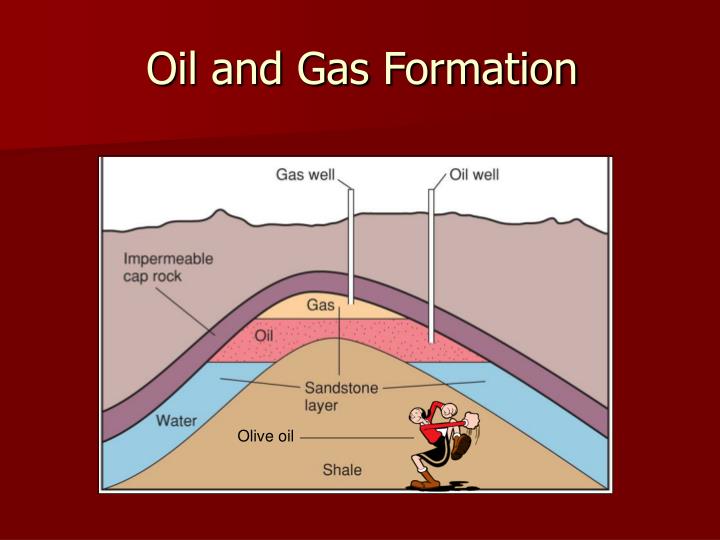
Once formed, oil and natural gas are lighter than water, which is usually saturating the surrounding rock. So, like bubbles in a drink, they start to slowly migrate upwards through any tiny pore spaces or cracks in the rock. They're basically trying to escape their deep, hot confinement.
However, they often hit a wall – literally. Or rather, a layer of impermeable rock, like dense shale or salt. This acts as a cap rock, stopping their upward journey. Below this cap rock, if there's a layer of porous rock (like sandstone or limestone) that has spaces for the oil and gas to collect, they'll accumulate there, forming a reservoir. These are the underground pools we eventually drill into. Without a good cap rock, all that ancient, slow-cooked goodness would simply seep out into the shallower layers or even to the surface and dissipate. And then where would our cars be, eh?
So, there you have it. From microscopic organisms swimming in ancient seas to being buried, squeezed, cooked for millions of years, and then trapped underground, that's the epic journey of oil and natural gas. It's a testament to the incredible power of time, pressure, and heat – and a friendly reminder that everything we use has a story, even if it's one that started millions of years before we were even a twinkle in a single-celled organism's eye.