
How Is Nuclear Energy Used To Create Electricity
Alright, buckle up buttercups! We're about to dive headfirst into the wonderfully weird world of nuclear energy. And trust me, it’s not as scary as it sounds. In fact, it’s downright fascinating.
The Atomic Oven: Nuclear Power Demystified
Forget everything you think you know about glowing green goo and mutant squirrels. We're talking about a way to make electricity that’s surprisingly similar to… baking a cake. Sort of.
Step 1: The Special Ingredient – Uranium
Our star ingredient is Uranium! Imagine it as super-powered sugar. It’s a naturally occurring element that has a secret superpower: it's unstable.
Must Read
This instability is key, because it allows uranium atoms to split apart, releasing a massive amount of energy. Think of it like a tiny, atomic firecracker.
Step 2: The Chain Reaction Cake
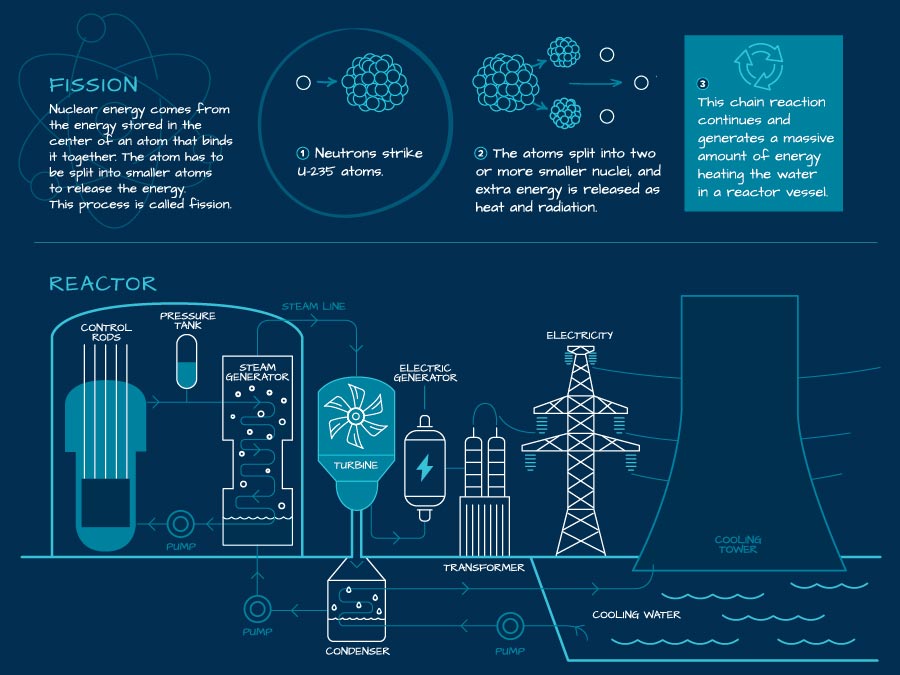
Now, the fun begins! This splitting process is called nuclear fission, and it's not just a one-time thing.
When a uranium atom splits, it releases neutrons. These neutrons then go on to split other uranium atoms, creating a chain reaction! Imagine dominoes falling, but instead of dominoes, it's energy being unleashed.
Step 3: Taming the Atomic Inferno
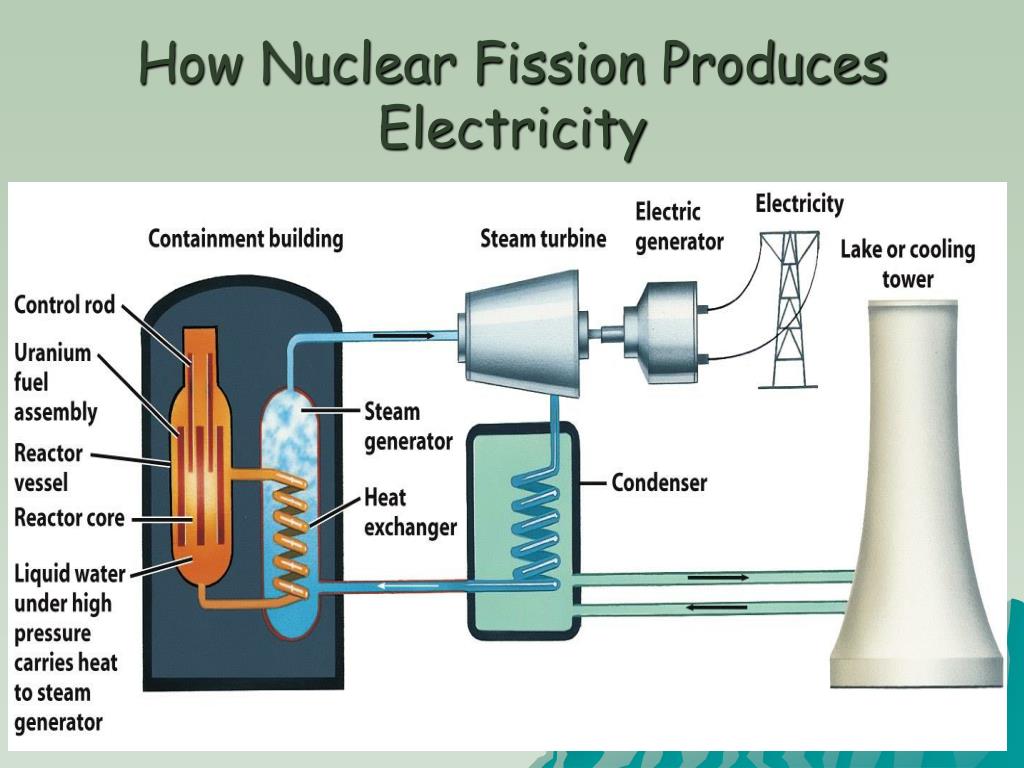
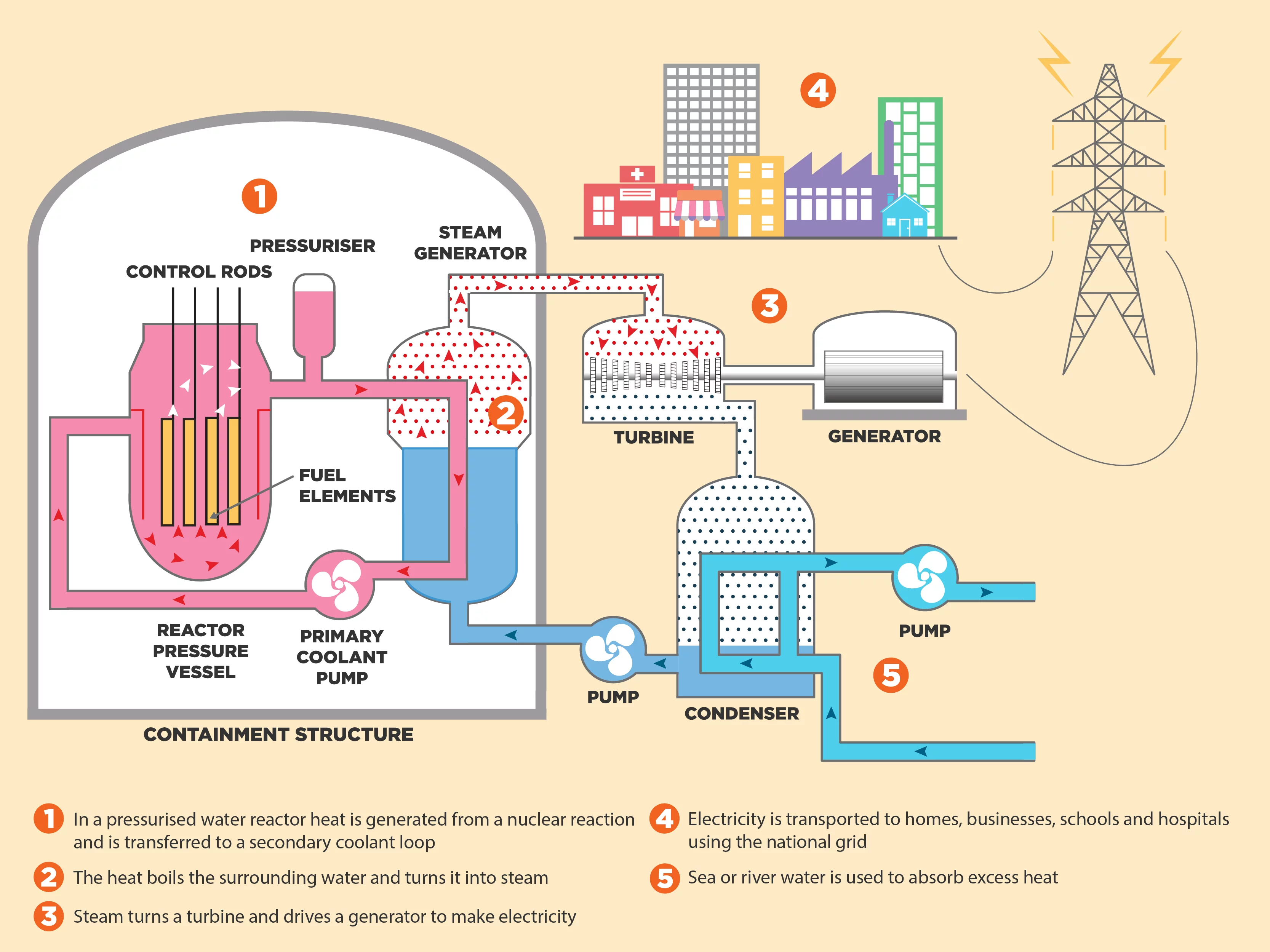
This chain reaction is happening inside a nuclear reactor. The reactor is basically a very sophisticated, very safe, and very important pressure cooker. It's not as scary as it sounds, I promise.
Inside, control rods – special materials that absorb neutrons – are used to control the speed of the chain reaction. These rods are the equivalent of having a volume knob for an atomic concert. Too loud? Turn it down!

Step 4: Making Steam, The Real Magic Begins
All that fission creates a tremendous amount of heat. This heat is used to boil water. Yes, just like making tea! The reactor heats water under intense pressure.
This high-pressure steam is then piped to a turbine. Think of a turbine as a super-powered pinwheel connected to a generator.
Step 5: Turning Turbines, Generating Electricity
The steam blasts against the turbine blades, making it spin. As the turbine spins, it turns a generator.
And guess what? The generator converts that spinning motion into electricity! It’s like the dynamo on your bike, but on a much, much grander scale.
Step 6: Cooling Down, A Crucial Step
After the steam has done its job turning the turbine, it needs to be cooled down. This is usually done using water from a nearby river, lake, or cooling tower.
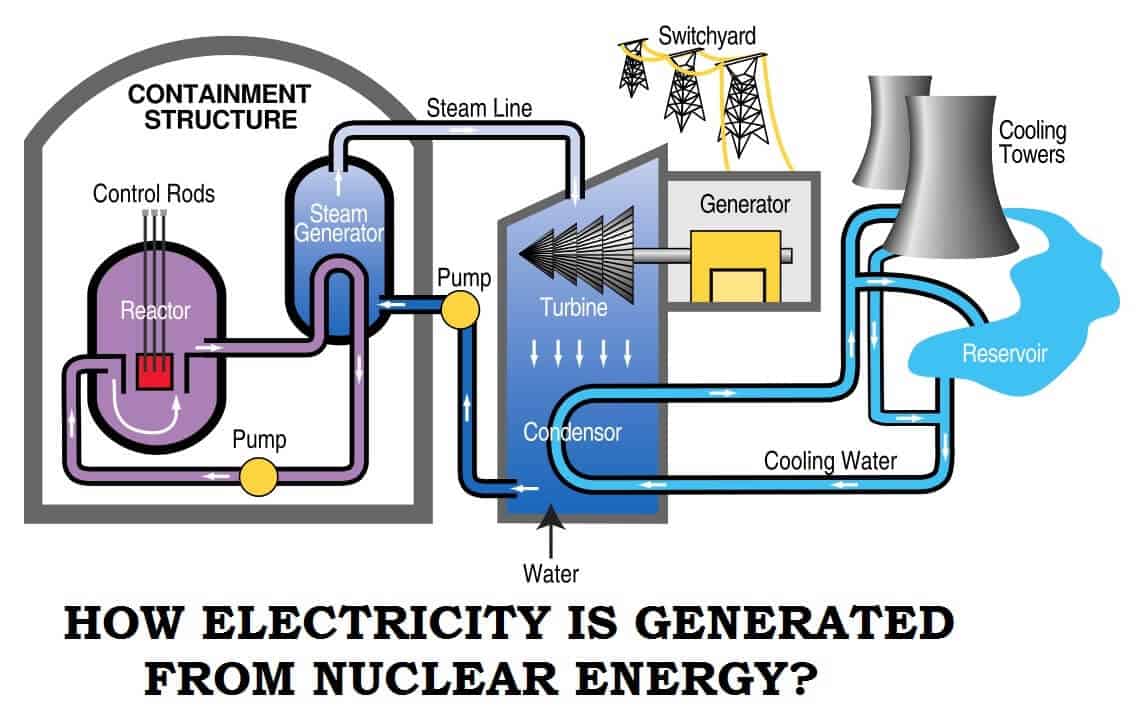
Those giant, hyperbolic cooling towers you often see? They're not billowing smoke. They're releasing steam! The water used for cooling is often recycled, minimizing environmental impact.
So, Nuclear Power = Boiled Water? Kinda!
Okay, so maybe comparing nuclear power to boiling water is a slight oversimplification. But the core principle is surprisingly straightforward.
Nuclear fission generates heat, which boils water, which creates steam, which spins a turbine, which generates electricity. Boom!
Why All The Fuss About Nuclear Power?
Now, you might be wondering, "Why not just use coal or gas?" Well, nuclear power has some pretty significant advantages.
For starters, nuclear power plants produce a lot of electricity from a relatively small amount of fuel. Think of it as getting way more mileage from a single tank of gas.
Even better, nuclear power plants don't produce greenhouse gases like carbon dioxide, which contribute to climate change.
That’s a big win for the environment! It's a major player in our quest to create a more sustainable future.
The Waste Factor: Addressing The Elephant In The Room
Let’s be real: Nuclear waste is a concern. But it's a manageable concern.
The amount of nuclear waste produced is relatively small compared to other industrial wastes. And it’s carefully stored in specially designed facilities.
Scientists are also working on new technologies to recycle nuclear waste and reduce its volume. This is still in the early stages of research.
The Future is Nuclear (Maybe!)
Nuclear power is a complex issue, but it's an important part of the energy mix. It offers a low-carbon alternative to fossil fuels. It is definitely worth considering.
New types of nuclear reactors are being developed that are even safer and more efficient than current designs. The future of nuclear is bright!
From tiny uranium atoms to massive power plants, the process of generating electricity from nuclear energy is a testament to human ingenuity! So next time you flip on a light switch, remember the amazing science that makes it all possible.
The Power of the Atom
Think about the humble uranium atom. It is capable of powering cities.
It is like a superhero in disguise. It waits patiently to release its energy to the world.
The future is in our hands. We have the power to make informed decisions about our energy future.