
How Is Geothermal Used To Produce Electricity

Okay, so picture this: I'm on vacation in Iceland (bucket list, checked!), and I'm showering. Nothing unusual, right? Except, this water is HOT. Like, ridiculously, volcanically hot. I'm talking "peel your skin off" hot if you're not careful. Turns out, that glorious (and potentially dangerous) shower was heated by geothermal energy. Which got me thinking… how exactly do they turn that heat into electricity?
And that, my friends, is what we're diving into today: the surprisingly cool (or rather, steaming hot) world of geothermal power generation. Prepare to have your mind blown... or at least mildly warmed. (See what I did there? Geothermal humor!)
Tapping the Earth's Internal Thermostat
At its core, geothermal energy is all about using the Earth's natural heat. I mean, think about it: deep down, the planet is basically a giant, molten rock furnace. We're just scratching the surface (literally) to get at that sweet, sweet thermal energy. This heat comes from the Earth’s original formation, as well as from radioactive decay of materials in the earth.
Must Read
There are a few main ways we extract this heat and convert it into electricity. Buckle up, because we're about to get a little bit science-y (but don't worry, I'll keep it simple).
The Dry Steam Power Plant: Old School Cool
This is the granddaddy of geothermal power plants. It's the simplest and oldest technology. Basically, you find a place where underground steam is naturally venting to the surface (or close to it). Then, you drill a well, pipe the steam directly into a turbine, which spins a generator, and boom! Electricity.
It's like a giant, natural tea kettle powering the world. Pretty neat, huh? Although, finding naturally occurring dry steam isn't exactly easy. Think of it as finding a unicorn that poops rainbows... except the rainbows are made of sustainable energy. That was too much, wasn’t it?
Flash Steam Power Plants: Adding a Little Water
These plants are a bit more common than dry steam plants. They use high-pressure hot water from geothermal reservoirs. When this water is released from the pressure, it "flashes" into steam. This steam then spins a turbine, just like in the dry steam system. The leftover water can be reinjected back into the reservoir to keep the party going. Resource efficiency for the win!

Imagine opening a can of soda after shaking it vigorously. The pressure release causes a sudden burst of fizz. That's kind of like what happens in a flash steam plant, only instead of sticky soda, we get clean electricity. Less messy too, thankfully.
Binary Cycle Power Plants: The Gentle Giant
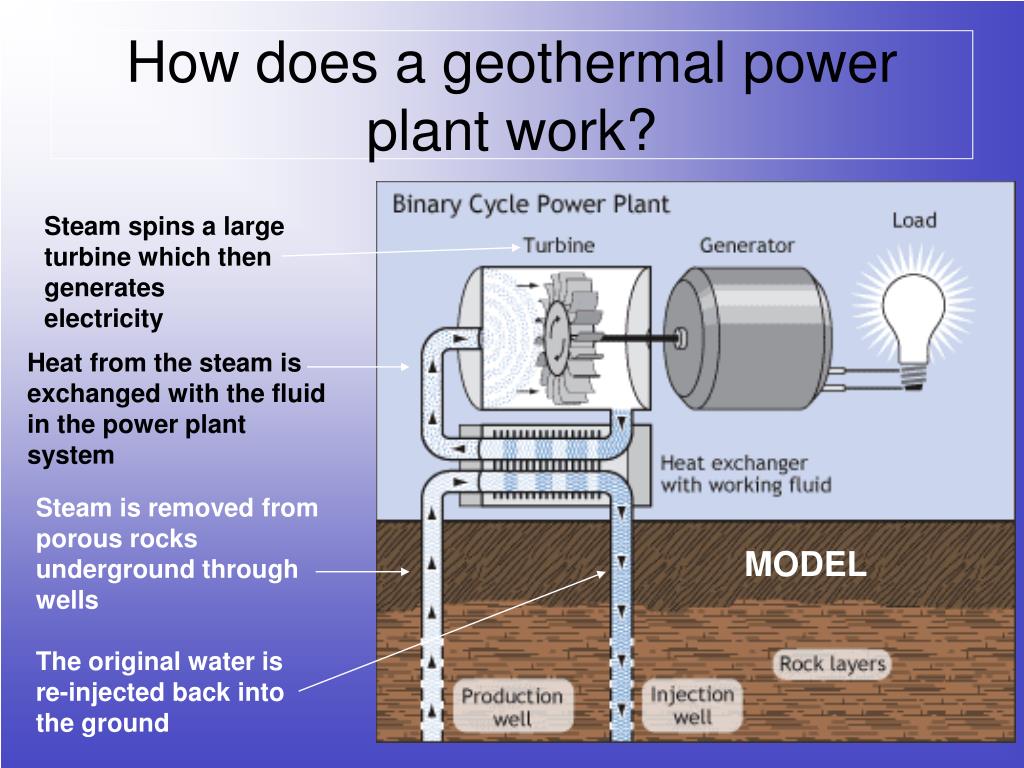
This type of plant is a bit more sophisticated. It's perfect for geothermal resources that aren't quite hot enough to flash into steam. Instead of using the geothermal water directly, it's used to heat another fluid with a lower boiling point – like isobutane or pentane – in a heat exchanger. This secondary fluid then vaporizes, drives a turbine, and generates electricity.
Think of it as a geothermal translator. It takes the "language" of lower-temperature heat and converts it into the "language" of electricity. Pretty clever, if you ask me. And the best part? Because it's a closed loop system, it's super environmentally friendly. Double win!

These systems can use water at lower temperatures (57-170 °C) than is required by the previous two methods.
The Geothermal Advantage: Why We Should Be Hot For It
So, why are we so excited about geothermal energy? Well, for starters, it's renewable. The Earth's heat isn't going anywhere anytime soon (unless, you know, the sun explodes… but let's not dwell on that). It's also reliable. Unlike solar and wind, geothermal power plants can operate 24/7, regardless of the weather. That’s why it’s called a baseload power.

Furthermore, geothermal power plants have a relatively small footprint compared to other energy sources. Plus, they're generally pretty environmentally friendly, producing minimal emissions (especially with binary cycle systems).
Of course, there are challenges. Geothermal resources aren't evenly distributed around the globe. And drilling deep wells can be expensive and, in some cases, cause minor seismic activity (though generally less than a typical fracking operation). However, the potential benefits are huge.
So, next time you hear about geothermal energy, remember my Icelandic shower and think about the incredible power lurking beneath our feet. It's a clean, reliable, and sustainable energy source that could play a vital role in our future. And who knows, maybe one day, your shower will be powered by geothermal energy too! (Just watch the temperature setting… trust me.)