How Is Geothermal Energy Used To Produce Electricity

Alright, gather 'round, folks! Let's talk geothermal energy. You know, Earth's inner hot tub. Seriously, it's like Mother Nature decided to install a giant water heater, and we're finally figuring out how to tap into it. And no, it doesn't involve sticking a giant thermometer down there, though the mental image is pretty hilarious.
So, how do we actually get electricity from the Earth's fiery belly? Well, imagine you’re trying to make a giant, underground cup of tea, but instead of tea, you’re brewing electricity. Sort of.
The Basic Idea: Steam Power!
The core concept is surprisingly simple. Remember those old-timey steam trains? Geothermal power plants basically use the same idea. You need three things: heat, water, and a turbine. The Earth generously provides the heat (usually in the form of superheated water or steam trapped deep underground), we sometimes add the water (if it's not naturally occurring), and the turbine? Well, that's our high-tech hamster wheel that spins and generates electricity.
Must Read
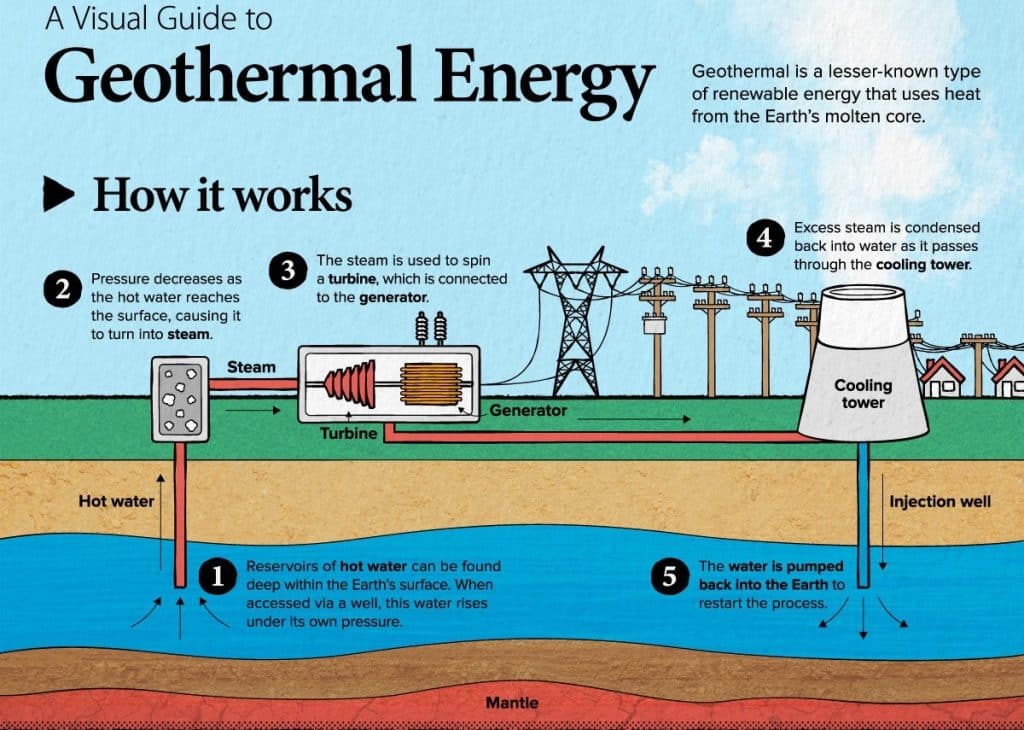
Think of it like this: you've got a pressure cooker. You heat it up, steam builds up, and that steam wants to escape. In a geothermal plant, that steam is channeled to spin a turbine, which is connected to a generator. The generator then converts the kinetic energy (spinning) into electrical energy (electricity!). Voila! Power without fossil fuels. High five, Earth!
Different Flavors of Geothermal Power
Now, just like coffee, geothermal energy comes in different strengths and flavors. We've got a few main methods:

1. Dry Steam Plants: These are the granddaddies of geothermal power. They tap directly into underground reservoirs of pure steam. It's like hitting the geothermal jackpot! This steam, already superheated and ready to go, is piped directly to the turbine. It's the simplest and most efficient method, but also the rarest. Imagine trying to find a geyser that's just the right temperature and pressure – not too hot (meltdown!), not too cold (disappointment!).
2. Flash Steam Plants: These are the more common, slightly less glamorous cousins of dry steam plants. Here, we pump high-pressure hot water to the surface. When it reaches the lower pressure at the surface, some of the water instantly "flashes" into steam. This steam is then used to spin the turbine. It's like a dramatic, pressure-release party for water molecules! These plants are a bit more complex than dry steam, but can utilize more readily available resources.
3. Binary Cycle Plants: These are the cool kids of the geothermal world. They’re the most versatile, because they don't require super-hot water. Instead, they use moderately hot water (still hotter than your bath, though!) to heat a secondary fluid with a lower boiling point. This secondary fluid turns into vapor, which then spins the turbine. Think of it as a geothermal translator – the Earth whispers secrets in hot water, and the binary plant translates it into electricity. They’re also great because they can use water that would be too “dirty” for other plant types. So, a win-win-win!

Geothermal: The Good, the Bad, and the Steamy
So, is geothermal energy the perfect solution to all our energy problems? Well, almost! It's a renewable resource (the Earth's heat is pretty darn constant), it produces very little pollution compared to fossil fuels, and it can provide a stable, baseload power (meaning it's always on, unlike solar and wind, which depend on the weather). That's the good stuff.
The "bad"? Well, building geothermal plants can be expensive upfront. And it's not available everywhere. You need to be in an area with significant geothermal activity (think volcanic regions). Also, there's a small risk of triggering earthquakes, though this is extremely rare and carefully monitored. It’s more likely to find a unicorn riding a bicycle than to have a geothermal plant cause a major earthquake, but hey, you never know!

And lastly, there's the "steamy." Geothermal plants can release small amounts of greenhouse gases that are trapped underground, like carbon dioxide and hydrogen sulfide (which smells like rotten eggs...yum!). But these emissions are still significantly lower than those from fossil fuel plants. Think of it as a tiny, geothermal burp compared to the fossil fuel belch.
The Future is Hot (Literally!)
Despite these minor drawbacks, geothermal energy has a huge potential to play a significant role in our clean energy future. As technology improves and we get better at tapping into the Earth's heat, we can expect to see more and more geothermal plants popping up around the world. So next time you're enjoying a nice, sustainably powered lightbulb, remember that it might just be powered by the Earth's own inner hot tub. And that's a pretty cool thought, isn't it?
Now, who's up for a geothermal-heated coffee?