
How Is Geothermal Energy Transformed Into Electricity
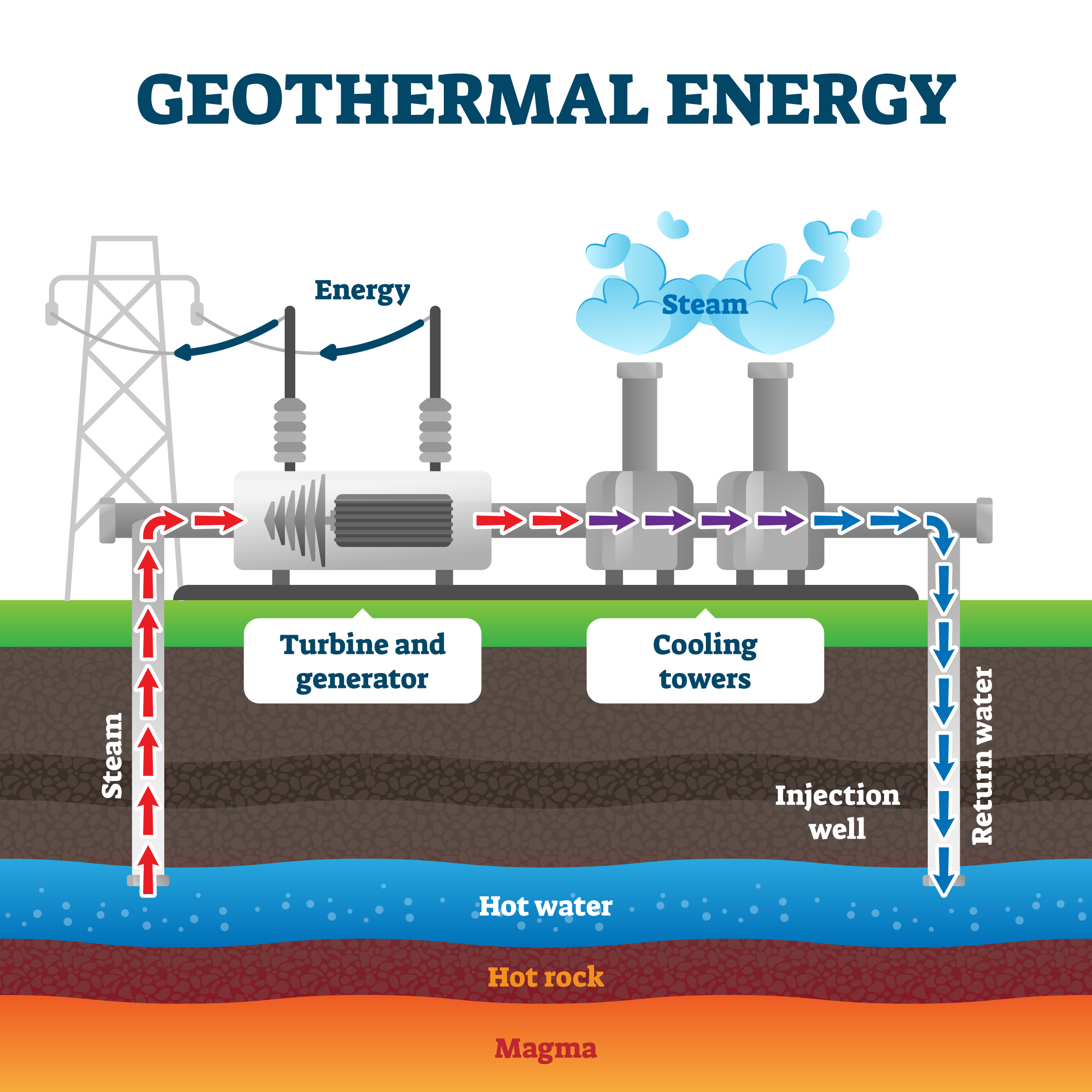
Have you ever wondered where electricity comes from? Sure, you plug something into the wall, and poof, it works! But what if I told you we could tap into the Earth's own internal heat – like a giant, natural radiator – to power our lives? That's geothermal energy, and turning it into electricity is way cooler (or should I say, hotter?) than you might think! It's a fascinating science, and understanding it is becoming increasingly important as we look for cleaner energy sources.
So, why should you care? Well, for beginners, this is a great way to understand renewable energy. Think of it as a science fair project happening on a massive scale! For families, learning about geothermal energy can spark interesting conversations about the planet and how we can protect it. And for budding hobbyists, understanding the basics of geothermal energy opens the door to learning about thermodynamics, geology, and sustainable technology – all fascinating fields!
The basic idea is simple: the Earth's core is incredibly hot, and that heat radiates outwards. In some places, this heat gets close to the surface in the form of hot rocks, steam, and hot water reservoirs. We can tap into these reservoirs to create electricity. There are generally three types of geothermal power plants:
Must Read
- Dry Steam Plants: These are the simplest. They pipe steam directly from underground geothermal reservoirs to turn turbines, which then power generators. Think of it like a giant kettle whistling and powering your lights!
- Flash Steam Plants: These plants take high-pressure hot water from the earth and flash it into steam by releasing the pressure. This steam then turns the turbines.
- Binary Cycle Plants: These are a bit more sophisticated and can utilize lower-temperature geothermal resources. Hot water is passed near a secondary fluid with a lower boiling point, causing it to vaporize and turn the turbines. It's like using one liquid to heat another to create the energy needed.
Each type has its advantages and disadvantages, depending on the specific geothermal resource available. Iceland, for example, is a leader in geothermal energy due to its volcanic activity and abundant hot springs.

Ready to learn more? Here are a few simple tips to get started:
- Visit a Science Museum: Many museums have exhibits on renewable energy, often including geothermal.
- Watch a Documentary: There are excellent documentaries about geothermal energy and its potential.
- Do Some Online Research: The U.S. Department of Energy and other reputable sources have tons of information.
- Build a Simple Model: While you can't build a geothermal power plant at home, you can create a model to illustrate the basic principles.
Geothermal energy offers a clean, sustainable way to generate electricity by harnessing the Earth's natural heat. It's an exciting field with plenty of potential, and understanding its principles is both fun and incredibly valuable. So, dive in, explore, and discover the amazing power beneath our feet! The journey of learning about energy and the planet can be very rewarding.


