
How Is Geothermal Converted Into Electricity
Ever felt like you're just sitting around, doing absolutely nothing, while a valuable resource is being completely wasted? Well, Mother Earth knows exactly how you feel. She's got all this incredible heat bubbling just beneath the surface, and we're only starting to tap into it for electricity. It's like having a giant, subterranean oven preheated and ready to bake…except instead of cookies, we get power!
So, how do we actually turn this geological 'hot potato' into something useful? Let's dive in, but don't worry, we're keeping it simple – no PhD in Thermodynamics required!
Geothermal 101: From Earth's Belly to Your Lightbulb
Think of geothermal energy as Mother Earth's natural spa – all warm and steamy. But instead of relaxation, we're after electricity generation. There are a few different ways we can harness this heat, and they mostly boil down (pun intended!) to using the Earth's heat to spin a turbine.
Must Read
Imagine a really, really big kettle, buried deep underground. That’s kind of the idea, except instead of you filling it with water, the Earth already did, like, a million years ago. Depending on how hot and steamy things are down there, we use a few different techniques.
Direct Steam: The Simple (and Vintage!) Approach
This is the granddaddy of geothermal power. If the underground reservoir is hot enough and produces pure steam, we're in business! It's like finding a geyser in your backyard and hooking it directly to your appliances. (Okay, maybe not your backyard.)

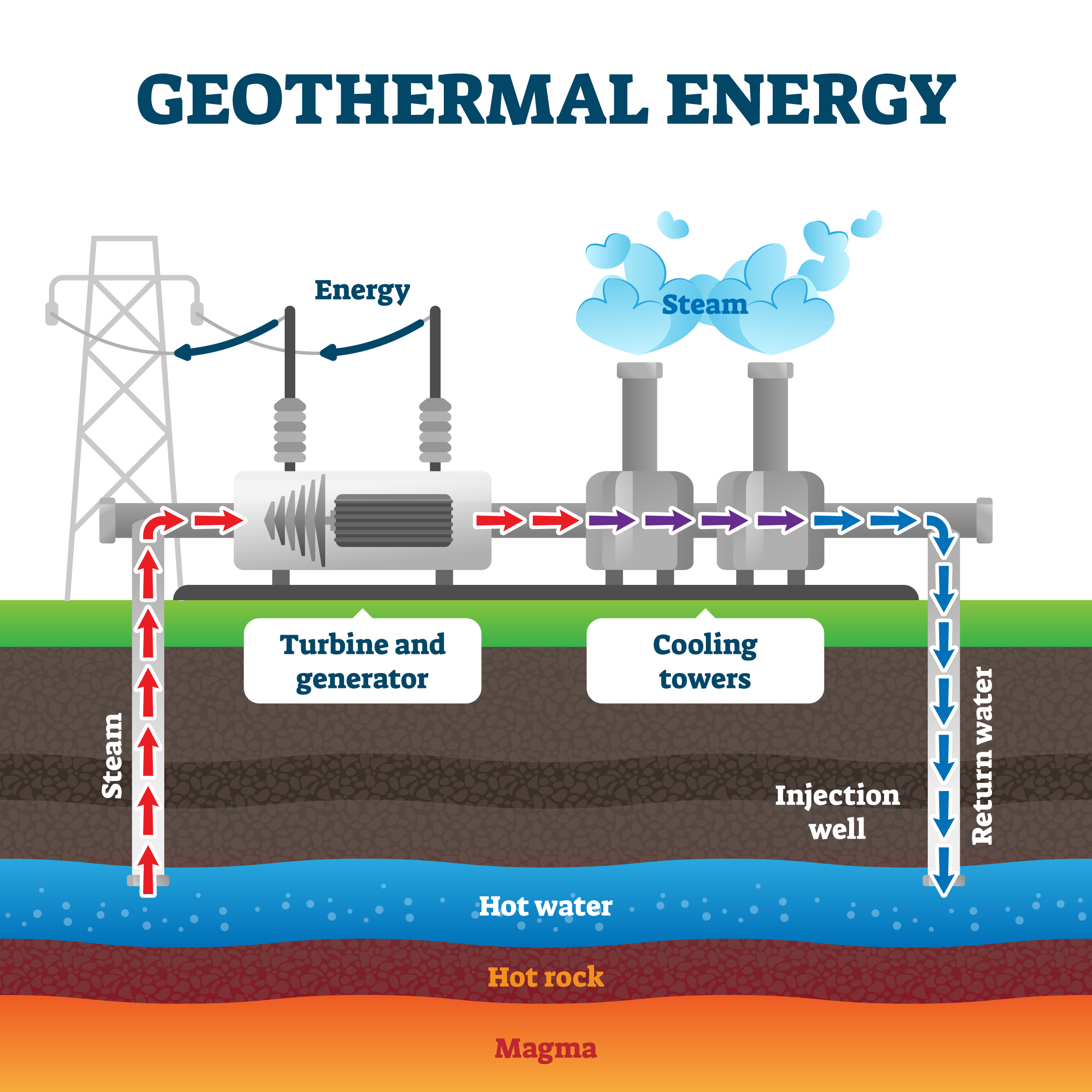
Basically, we drill a well down to this steam reservoir, and the high-pressure steam shoots up, spins a turbine, which then spins a generator, and BAM! Electricity! It's the most efficient and cost-effective method, but it's also the rarest. Finding a pristine, high-pressure steam reservoir is like finding a unicorn that makes coffee.
Flash Steam: Giving Water a Rude Awakening
This is where things get a little more common (and a little more dramatic). Imagine you're at a pressure cooker convention (yes, they exist!), and you suddenly release all the pressure. WHOOSH! The water instantly turns to steam.

That's essentially what happens in a flash steam plant. We pump high-pressure hot water from deep underground to the surface. Once it hits the lower pressure environment at the surface, some of the water "flashes" into steam. This steam then spins the turbine, just like in the direct steam method.
The beauty of flash steam is that it can work with somewhat hotter water than binary cycle (more on that below). It's kind of like the middle child – reliable, hardworking, and always there to pick up the slack.
Binary Cycle: The Sensitive Type
This is the most modern and widely used method. Think of it as a geothermal power plant for the easily-scared water. We're not directly using the Earth's water here, which is great if it's not super-hot or particularly clean.
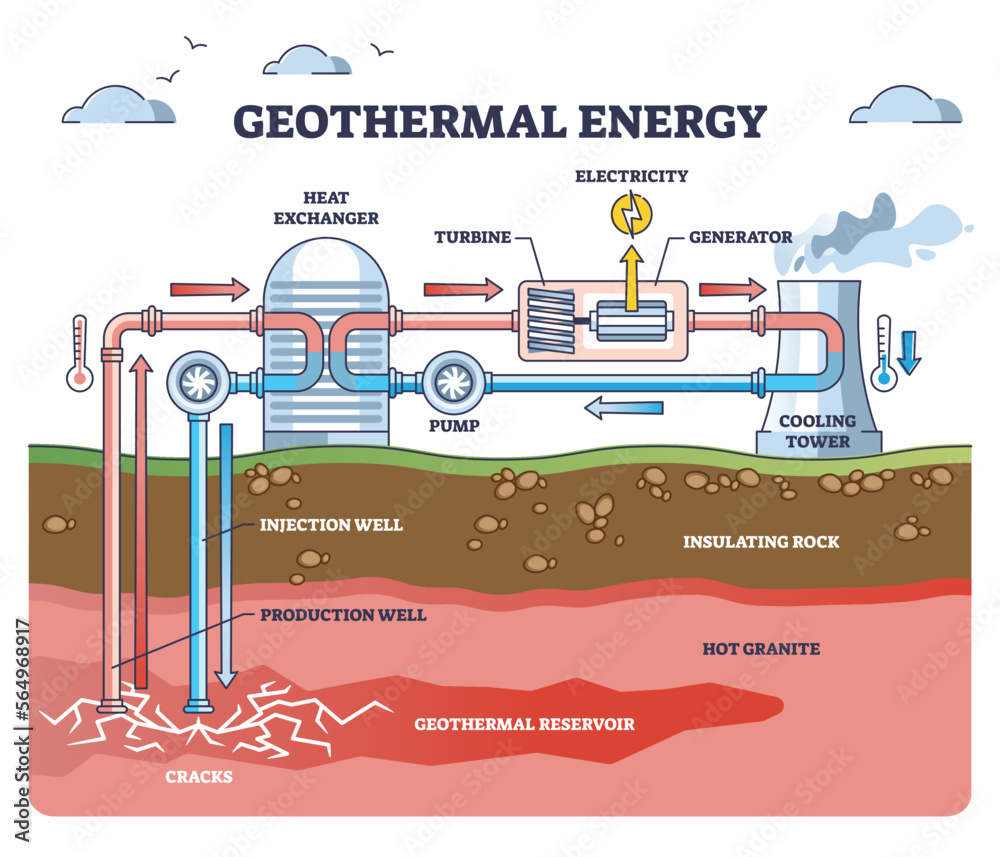
Instead, we pass the hot water (or even just warm water!) through a heat exchanger. This heats up a secondary fluid – often something with a lower boiling point than water, like isobutane. This secondary fluid turns to vapor, which spins the turbine. It's like using the Earth's heat to boil a special kettle that then makes the steam to power everything. Consider it the artisanal approach to geothermal energy.
The binary cycle plants are the workhorses of the geothermal world. They can operate with lower temperature resources, making geothermal energy accessible in more places.

So, What's the Catch?
Okay, nothing's perfect, right? While geothermal energy is clean, reliable, and renewable (unlike that sweater you keep meaning to donate), it does have a few drawbacks.
It's geographically limited. You can’t exactly build a geothermal plant just anywhere. You need to be where the Earth is feeling particularly…heated. Drilling can also cause minor seismic activity (think more "annoying tremor" than "end-of-the-world earthquake"), and the initial setup costs can be high. Think of it as a pricey, long-term investment.
But hey, when you think about it, harnessing the Earth's natural heat to power our lives is pretty darn cool. It's like giving Mother Nature a high-five for all her hard work…and getting electricity in return. Now, that's a deal I'd take any day!