
How Is Electricity Produced From Nuclear Energy
Hey there, energy enthusiasts! Ever wonder how we get that zap of power to light up our lives, binge-watch our favorite shows, and, you know, keep the fridge running? Well, there are tons of ways, from sunshine to wind to good ol' fashioned fossil fuels. But today, we're diving into a particularly fascinating one: nuclear energy!
Now, I know what you might be thinking: "Nuclear? Sounds complicated!" And yeah, the science behind it is pretty advanced, but the core idea is surprisingly straightforward. Stick with me, and I promise it'll be easier than assembling IKEA furniture (okay, maybe that's a low bar...).
The Magic of Atoms: Fission Explained
At the heart of nuclear power is something called nuclear fission. Think of it like splitting the atom...literally! We're talking about the tiniest building blocks of everything around us. Specifically, we usually use a special type of uranium – uranium-235.
Must Read
Okay, a quick science refresher (don't worry, no pop quiz!). Uranium-235 atoms are, shall we say, a bit unstable. And here's where the fun begins. We bombard these atoms with a tiny particle called a neutron. Bam! The uranium atom splits apart.
This splitting, or fission, releases two key things: energy (lots of it!) and more neutrons. And those extra neutrons? They go on to split even more uranium atoms, creating a chain reaction. Think of it like a nuclear domino effect! Pretty cool, right?
Why is this chain reaction important? Because that energy released during fission is what we're after! It's the key ingredient in generating electricity.
Turning Atomic Splitting into Electric Power
So, how do we harness this atomic energy and turn it into the electricity that powers your phone? Well, it involves a few more steps, but they're all pretty logical.
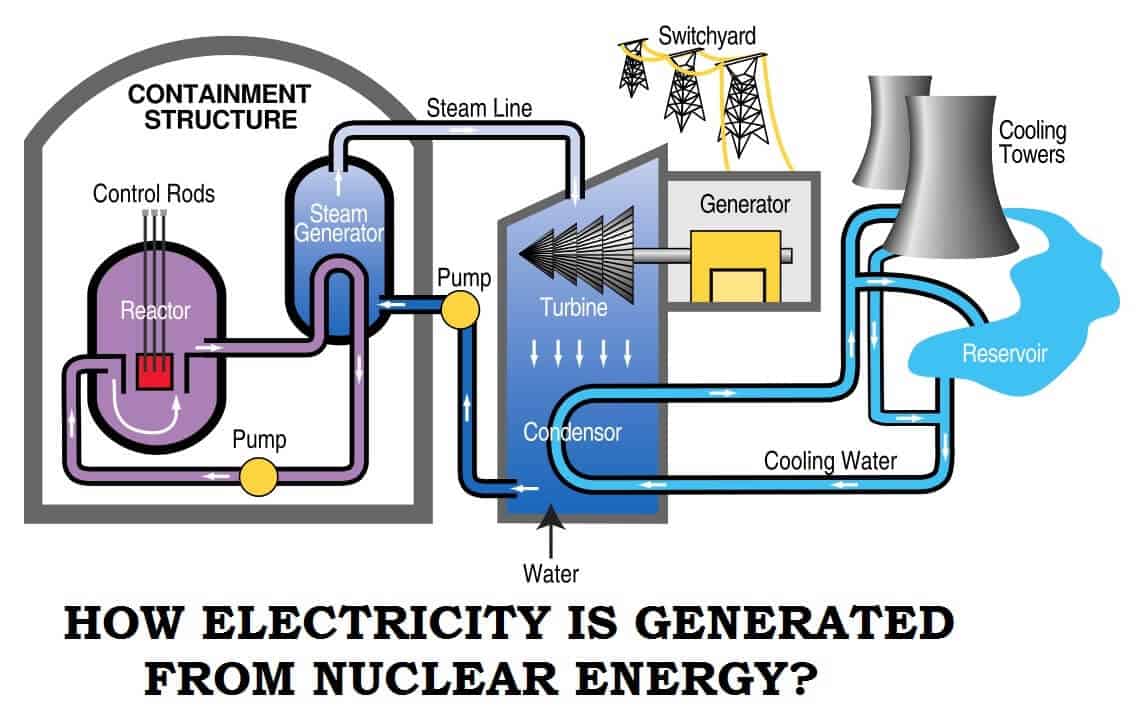
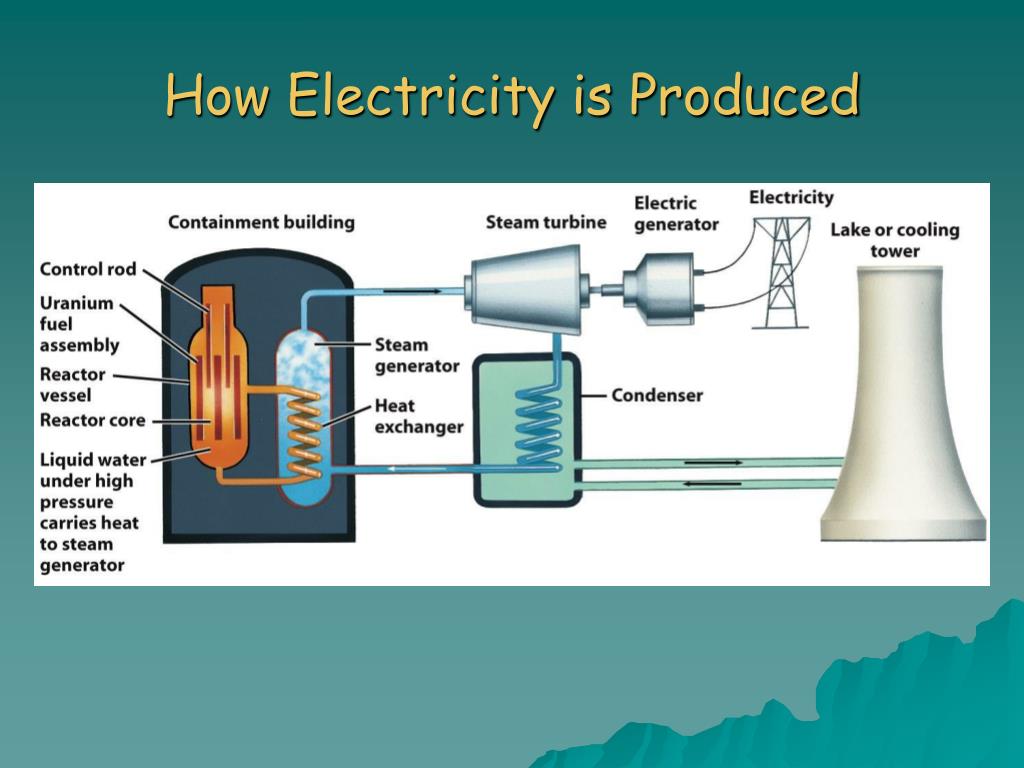
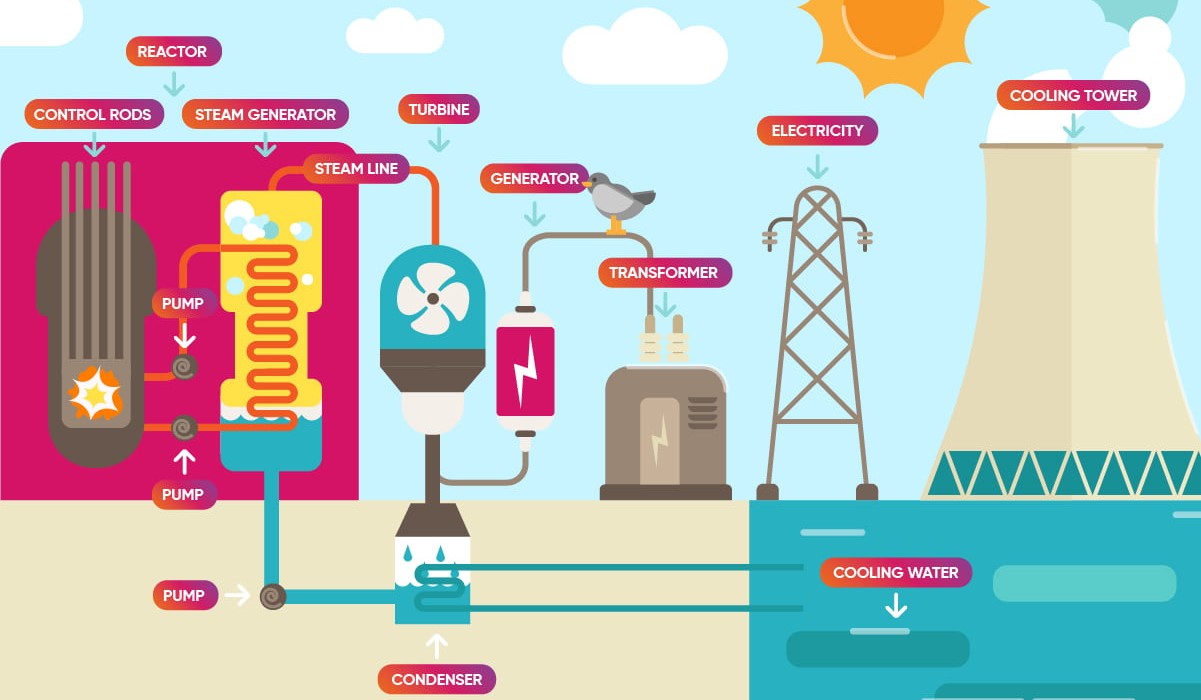
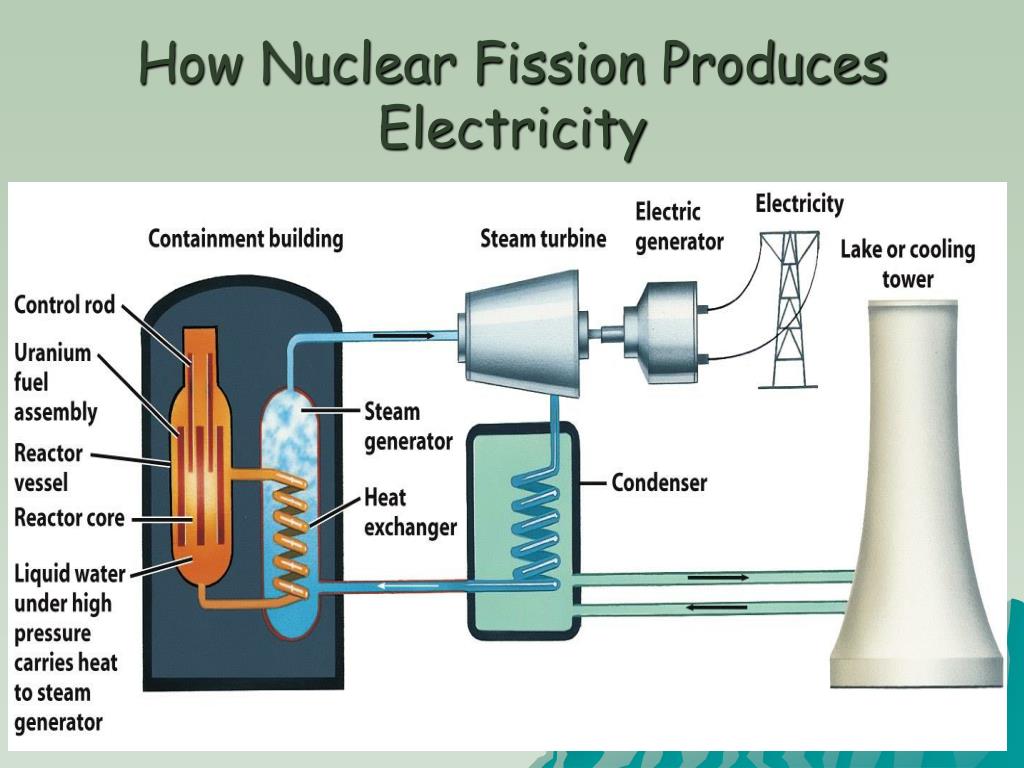
The heat generated from nuclear fission is used to boil water. Yep, just plain old H2O! This creates steam, and that steam is then directed to a turbine.
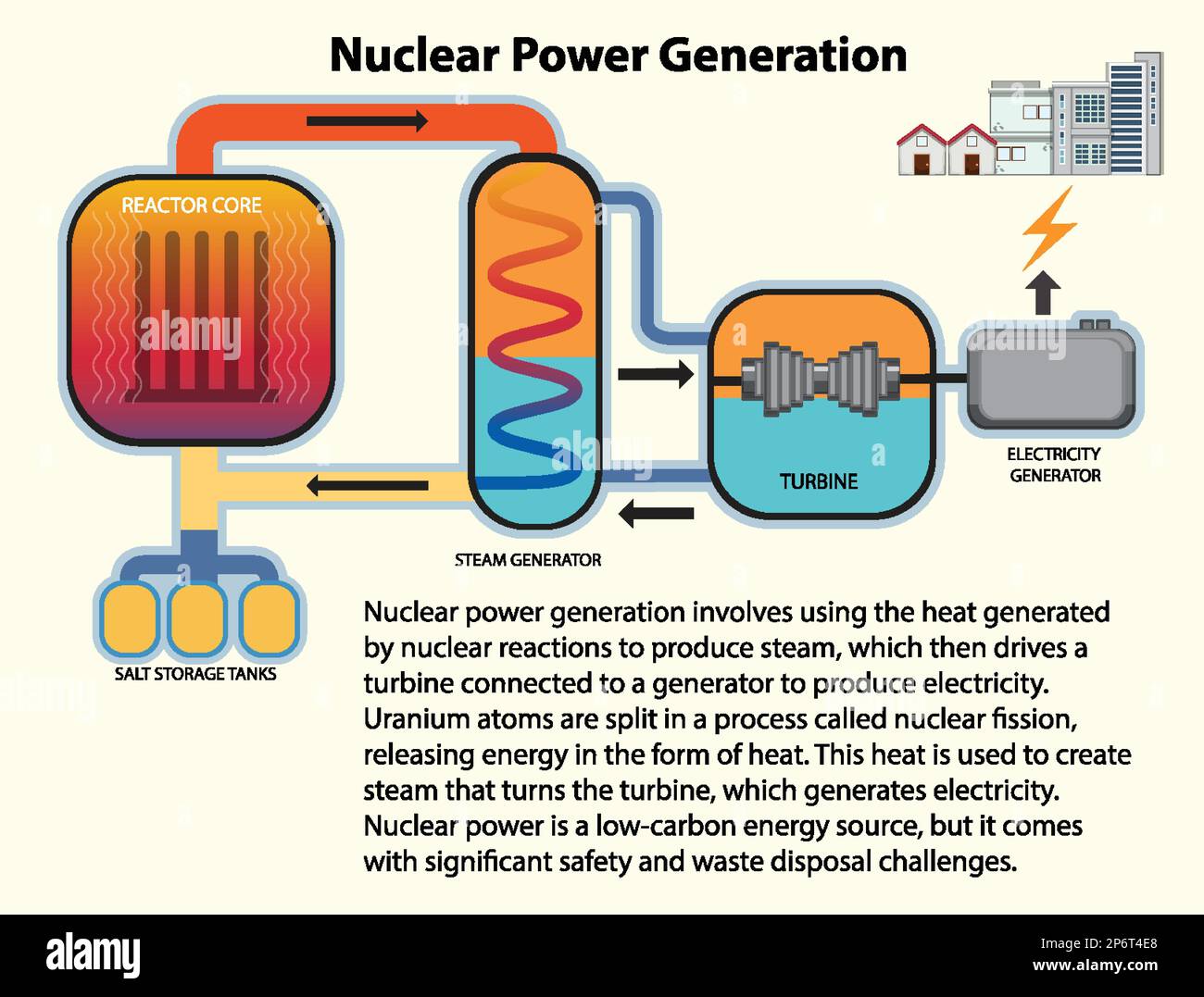
A turbine is basically a giant fan connected to a generator. The force of the steam spins the turbine blades, which in turn spins the generator. And guess what? The generator is what actually produces the electricity!
It's kinda like how a hydroelectric dam uses the force of water to spin a turbine, just on a smaller, more...atomic scale! And once the electricity is generated, it gets sent out through power lines to homes and businesses.
So, to recap: Split atom -> Heat -> Steam -> Turbine -> Generator -> Electricity! Easy peasy, right?
Safety First (and Always!)
Now, you might be thinking about the potential risks associated with nuclear energy, and that's a valid concern. There’s no getting around the fact that nuclear material needs to be handled with extreme care.
Modern nuclear power plants have multiple layers of safety measures in place to prevent accidents and ensure the safe containment of radioactive materials. These measures include reinforced concrete structures, advanced monitoring systems, and strict operating procedures. Safety is the top priority.
Why Nuclear Energy Matters (and Can Be Fun!)
So, why should you care about all this atomic stuff? Well, nuclear energy is a low-carbon source of electricity. This means it doesn't release nearly as many greenhouse gases into the atmosphere as fossil fuels like coal or natural gas. In a world facing climate change, that's a pretty big deal!
Plus, nuclear power plants are incredibly efficient. A small amount of uranium can produce a massive amount of energy. This means we don't need to burn as much fossil fuel, helping to conserve resources and improve air quality. Win-win!
Knowing how things work, understanding the science behind the everyday things that power our lives, makes the world a more interesting and engaging place. It allows us to be more informed, to make better decisions, and to appreciate the ingenuity of human innovation. Think of how amazing it is to have something like nuclear energy lighting your home -- and all because of tiny atoms getting split!
The journey into understanding our world is an exciting one. So, go out there and explore! Read a book, watch a documentary, and don't be afraid to ask questions. The more you learn, the more amazing and connected you'll feel. Who knows? Maybe you'll be the one designing the next generation of nuclear reactors!