
How Is Electricity Generated In A Generator

Ever wondered how electricity magically appears from that generator humming away, ready to power your party, construction site, or even your entire home during a blackout? It's not magic, though it feels pretty close! It's a story of dancing electrons and a rather insistent magnetic field, all working in perfect harmony.
Think of it like this: imagine you're at a concert, and everyone starts jumping up and down. That's kind of what's happening inside a generator, only instead of people, it's tiny particles called electrons getting excited and moving around.
The Magnetic Maestro
Now, the conductor of this electron concert is a powerful magnetic field. It's like the band leader, guiding the electrons and telling them where to go. A magnetic field is basically an invisible force field that magnets create around themselves.
Must Read
We use magnets every day, from sticking notes to the fridge to those cool magnetic toys. In a generator, these magnetic fields are much, much stronger and play a vital role.
Moving is the Key
Here's the really cool part: electricity generation relies on movement. You see, when you move a wire through a magnetic field (or move a magnetic field around a wire), the electrons in the wire start to get a little antsy.
They're like, "Hey! Something's happening! I feel a force!" And that force compels them to move, creating an electrical current. This is known as electromagnetic induction, a concept discovered by Michael Faraday.
It's like pushing a swing – the more you push, the higher it goes, and the more force you're using. The faster you move the wire or magnetic field, the more electrons move, and the more electricity you generate. That's genius!
The Generator's Dance: Rotor and Stator
So, how do generators make all this movement happen? They use two main parts: the rotor and the stator. Think of them as the dancers in this electricity-generating ballet.

The rotor is the part that spins. It's often a set of magnets or an electromagnet (a magnet created by electricity). The stator is the stationary part that surrounds the rotor. It contains coils of wire.
As the rotor spins, its magnetic field sweeps across the coils of wire in the stator. This moving magnetic field does exactly what we talked about earlier: it gets the electrons in the stator's wires all riled up and sets them in motion, creating electricity.
The Power Source
But wait! What makes the rotor spin in the first place? That's where things get interesting. The rotor needs a source of mechanical energy to get it moving. This energy can come from many different sources.
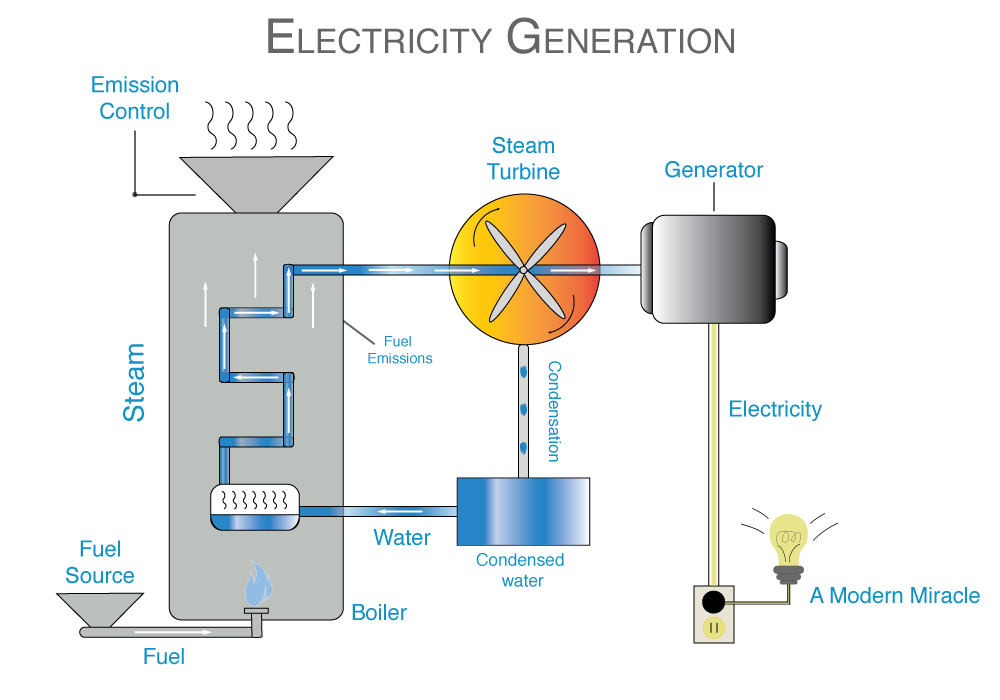
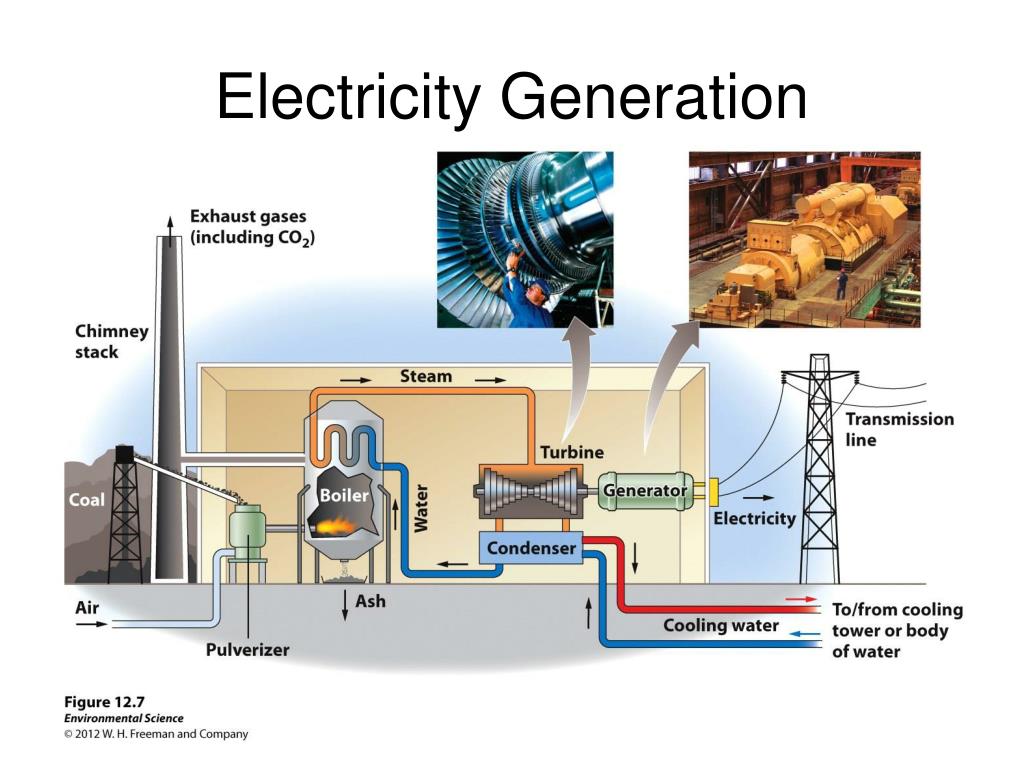
A simple hand-crank generator uses your muscle power. Larger generators, like the ones in power plants, might use steam turbines powered by burning coal, natural gas, or even nuclear energy. Or they can use water turbines spun by the force of a dammed river. Wind turbines use the power of the wind to spin their blades, which in turn spin the generator's rotor.
Essentially, any source of spinning motion can be harnessed to power a generator. It's all about converting one form of energy (mechanical) into another (electrical).
From Spinning to Your Socket
So, the rotor spins, the magnetic field dances, the electrons groove, and electricity is created! But how does that electricity get from the generator to your lightbulb or phone charger?
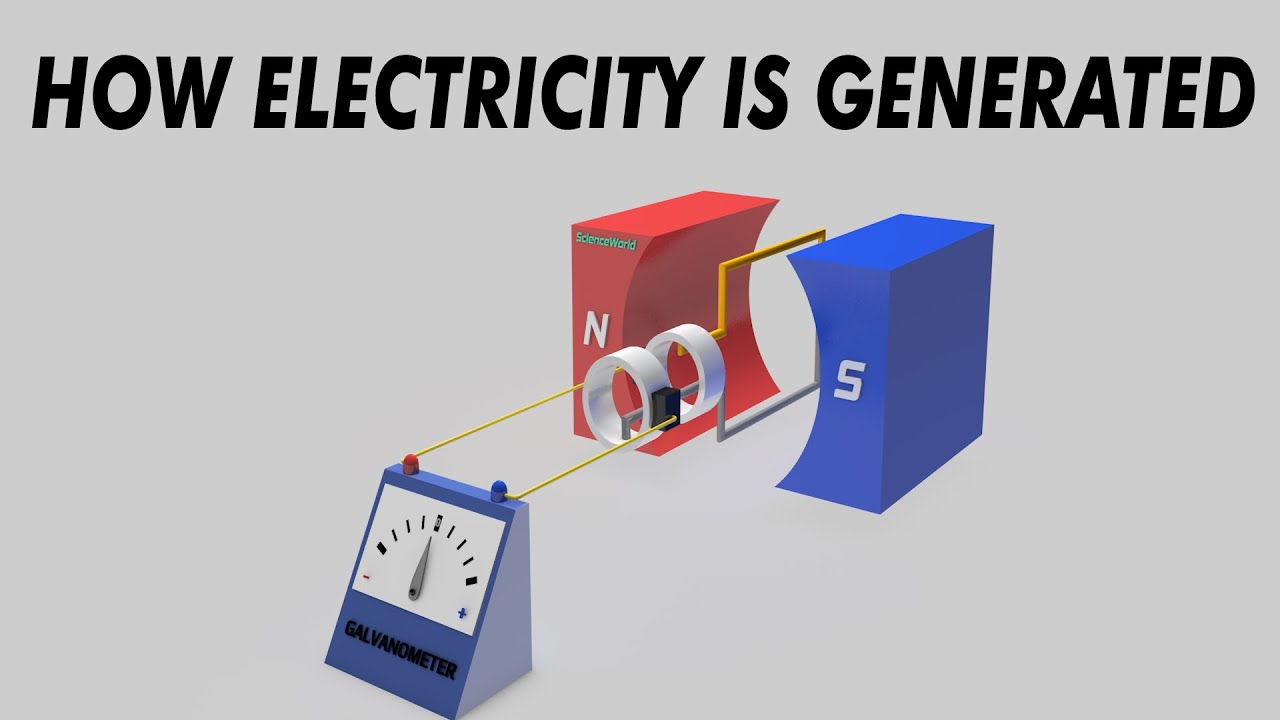
The electricity generated in the stator's wires is then sent through a circuit to whatever needs power. Wires are like the roads electricity travels on.
The current flows through these wires, delivering the energy needed to light up your home, charge your devices, and keep your appliances running. It's a pretty neat system, when you think about it!
A Symphony of Engineering
Generators are marvels of engineering. They take a relatively simple principle – moving a wire through a magnetic field – and turn it into a powerful tool that shapes our modern world.
From the smallest portable generator to the massive ones powering entire cities, they all rely on the same fundamental process. It's a testament to human ingenuity that we've figured out how to harness the power of electromagnetism to create the electricity we depend on every day.
The next time you flip a switch and the lights come on, take a moment to appreciate the amazing journey of those dancing electrons and the magnetic maestro guiding them. You may even hear the faint hum of the generators working tirelessly to keep the electricity flowing.
More Than Just a Machine
Think about the implications. Generators, big or small, represent independence. They allow communities to thrive even when they are not connected to large power grids.
They are vital during emergencies, providing crucial power for hospitals and shelters when disaster strikes. Tesla, with his vision of accessible electricity, would have been proud.
There's a certain romance to the idea of harnessing the fundamental forces of nature to create something useful, something that empowers us and connects us all.
Beyond the Basics
Of course, there are many different types of generators, each with its own specific design and features. Some use direct current (DC), while others use alternating current (AC). They also vary widely in size and power output, depending on their intended use.
But the basic principle remains the same: spin a magnet (or a magnetic field) near a wire, and you'll get electricity. It's a recipe for power that has been refined and perfected over centuries of scientific discovery and engineering innovation.
So next time you see a generator, remember the dance, the maestro, and the power of electrons in motion. It's a story worth telling, and a technology worth celebrating.
A Heartwarming Tale
Imagine a remote village, once shrouded in darkness after sunset. Now, thanks to a small, community-owned generator, children can study at night, families can connect, and small businesses can thrive.
Electricity, made possible by a simple generator, brings not just light, but also hope and opportunity.
That's the heartwarming side of this electrical story – the potential to improve lives and empower communities, one electron at a time.
The Future of Generation
The story of electricity generation isn't over. Scientists and engineers are constantly working on new and more efficient ways to generate power, from harnessing the power of the sun and wind to developing advanced nuclear reactors.
The future of electricity generation is likely to be more diverse and sustainable, with a greater emphasis on renewable energy sources.
But no matter how advanced the technology becomes, the fundamental principle will remain the same: the dance of the magnetic field and the excited electrons, working together to power our world. It started with Faraday, evolving through the brilliance of Tesla and others, and continues to be shaped by those who seek innovative and sustainable solutions for the energy needs of tomorrow.
It is still fascinating to discover how the simplest concepts, like the dance of the rotor and stator, can produce such a transformative and impactful phenomenon. The story of electricity generation is not just about science and engineering; it is a narrative of human innovation, empowerment, and the potential to create a brighter future for all.