
How Is Acrylonitrile Butadiene Styrene Made
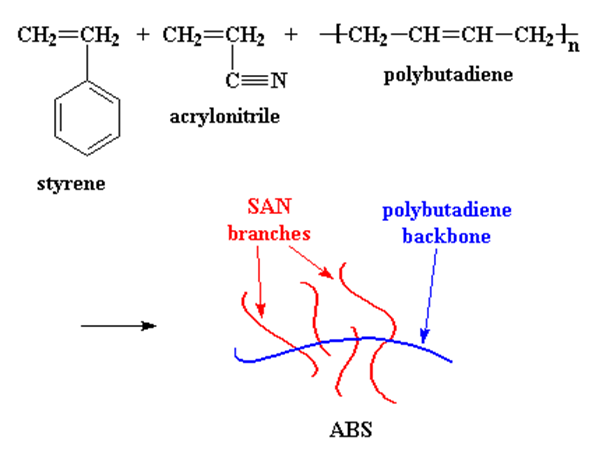
Ever wonder about that stuff your LEGOs are made of? Or maybe that sturdy phone case you dropped (again)? Chances are, you've encountered Acrylonitrile Butadiene Styrene – or ABS, for short. But how does this magical, moldable material even exist?
Well, imagine a party. A wild party with three distinct guests: Acrylonitrile, Butadiene, and Styrene. Each brings their own unique personality to the bash. And somehow, these three end up… bonded. Forever.
Acrylonitrile? The tough guy. He's all about chemical resistance and strength. Think "I can handle anything!" But he's not exactly flexible. A bit rigid, some might say.
Must Read
Butadiene? The bouncy one! This guy brings the impact resistance. Drop your LEGO tower? Butadiene says, "No problem! I got this!" He's all about absorbing the shocks, but on his own, he's a bit... soft.
Then there's Styrene. The smooth operator. He’s the king of processability. Making the whole thing easy to mold into whatever shape you want. He's got the good looks, but can be a bit brittle on his own.

Now, how do you get these three to play nice? This is where the magic happens. It’s not just throwing them all into a blender. (Though, wouldn't that be a sight?). It involves a special process called polymerization. Essentially, tiny molecules (monomers) link together to form giant chains (polymers). It's like Legos building a bigger Lego creation!
The Polymerization Party: A Few Ways it Goes Down
There are a few different ways to host this polymer party. Let's briefly consider two of these:
Emulsion Polymerization: Imagine a bubbly hot tub filled with soap and water. That's where our monomers get to mingle. It's a bit chaotic, but the result is consistent, tiny ABS particles. It’s like making mayonnaise, but with chemicals. (Please don't make mayonnaise with chemicals.)

Continuous Mass Polymerization: Picture a long, fancy conveyor belt, constantly feeding in the monomers. The reaction happens as they travel along, giving you a steady stream of ABS. Less messy than the hot tub, but requires more precision.
Regardless of which method is used, the goal is the same: to create a polymer with the best characteristics of all three monomers. A perfect blend of strength, impact resistance, and processability. A material that can withstand daily abuse (looking at you, phone-droppers!).

The ABS Secret Sauce: Ratios Matter
But here's the secret. The ratio of each monomer in the final ABS blend is key. Too much Acrylonitrile and you get a super-strong but brittle plastic. Too much Butadiene and it’s rubbery but weak. It's a delicate balancing act, a carefully guarded recipe. It's like baking a cake. Too much sugar, and it's gross. Not enough, and it's just… bread.
After the polymerization party, the ABS is usually in the form of small beads or pellets. These are then melted down and molded into all sorts of wonderful things. From car parts to vacuum cleaners, from toys to instrument cases. The possibilities are virtually endless. That's the beauty of ABS! It is so moldable.
Unpopular Opinion: ABS is Underrated
And here's my unpopular opinion: ABS is seriously underrated. Sure, it's not the flashiest material. It doesn't scream "high-tech" like carbon fiber or titanium. But it's reliable. It's affordable. It's durable. It gets the job done. And let's be honest, most of us need reliable, affordable, and durable more than we need flashy.
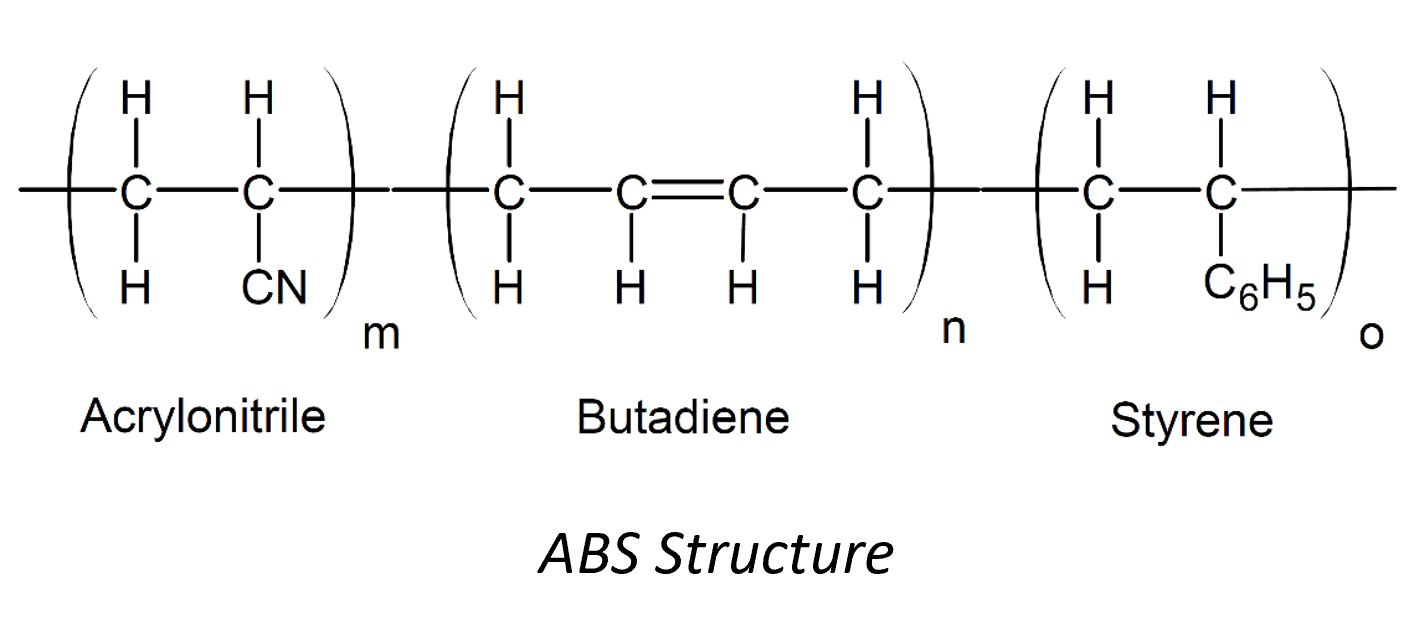
So, the next time you encounter something made of ABS, take a moment to appreciate the intricate chemical dance that brought it into existence. The wild party of Acrylonitrile, Butadiene, and Styrene. The polymer that keeps our LEGOs from shattering and our phone cases from crumbling. It's not just plastic; it's a testament to the power of chemistry (and maybe a little bit of luck).
And, if you ask me, a really great acronym. Think about trying to remember "Polyoxymethylene". Yikes.
Now if you'll excuse me, I think I hear my own personal ABS tower (aka, my toddler's block creation) calling my name...