
How High Should A Ceiling Fan Be

Ever gazed up at a spinning ceiling fan and wondered, "Is that thing just right?" It’s a profound question, my friends, a dizzying dilemma that impacts our comfort and our very sense of home harmony! Fear not, fellow adventurers in interior design, for we are about to unravel the magnificent mystery of the perfectly placed fan.
Think of it like Goldilocks and her porridge, but instead of bears and breakfast, we're talking about airflow and avoiding accidental high-fives with fast-moving blades. We're on a quest for that magical height, that sweet spot where your fan isn’t too low, not too high, but just… perfect.
The Great Headroom Debate: Too Low!
Let's kick things off with the most dramatic scenario: the fan that hangs a little too low. We’ve all been there, or at least heard the cautionary tales! It’s the kind of fan that makes tall guests unconsciously duck, even when it's turned off.
Must Read
Imagine hosting a lively dance party, and suddenly, Uncle Barry's legendary high-five gets a little too close for comfort with a whirring blade. Yikes! That’s an instant party stopper, turning joyful jiving into cautious creeping.
Or perhaps you’re just reaching for that top shelf, stretching for that elusive jar of pickles, and WHUMP! You’ve just performed an unscheduled and potentially painful fan-f five. Your fan should be a breeze-maker, not a head-bonker!
A low-hanging fan transforms your cozy living space into a perpetual obstacle course. You might find yourself doing the "fan limbo" every time you cross the room, a skill perhaps impressive at a luau, but less so in your own home.
And let's not forget the sheer anxiety! Every time someone jumps up in excitement, or a child waves a toy sword, your heart might just leap into your throat. Nobody wants a perpetually stressed out homeowner, especially not because of a ceiling fan.
The general consensus, the whispered wisdom passed down through generations of home decorators, is that fan blades should be at least 7 feet from the floor. That's a good solid chunk of space, perfect for most normal human activities.
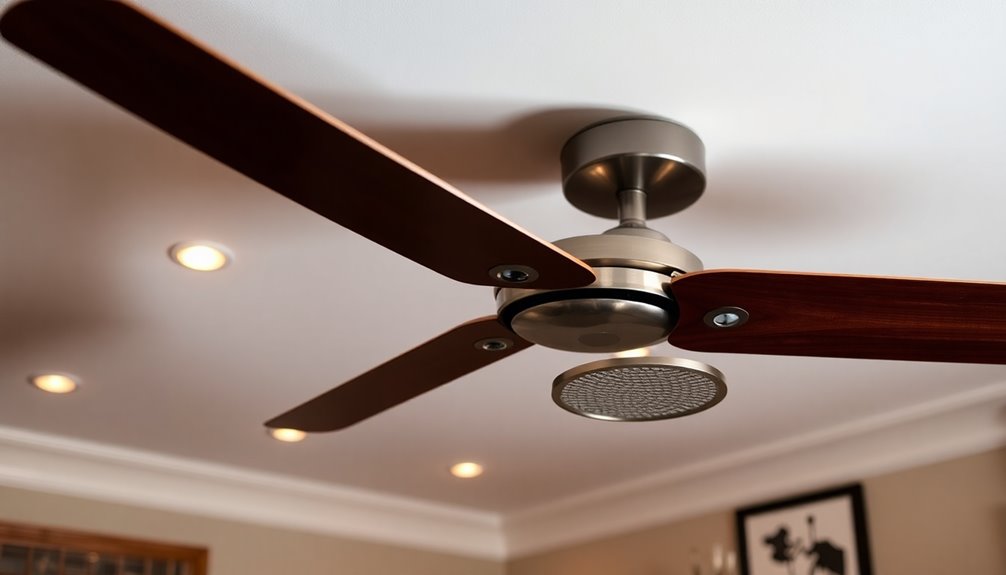
"A fan too low is a constant reminder of impending doom, turning your living space into a perilous gauntlet of spinning blades. Let freedom ring, and heads remain unbumped!"
The Tall Tale of the High-Flying Fan: Too High!
Now, let’s swing to the opposite end of the spectrum, where our fan friends venture into the stratosphere. A fan perched way up high, like a lonely astronaut orbiting the moon, might look magnificent, a tiny artistic detail against a vast ceiling.
But is it actually doing its job? Is it truly delivering that refreshing breeze you crave on a sweltering summer day? It's like asking a whisper from across a football field to cool your brow – a noble effort, perhaps, but ultimately futile.
When a fan is too high, its mighty air-moving power dissipates into the vastness of your room, becoming a mere suggestion of a breeze. You’ll feel a gentle flutter, maybe, if you stand directly underneath it and stretch your neck like a giraffe.
It’s the equivalent of having a tiny, well-meaning squirrel trying to push a feather through a hurricane. The effort is there, the intent is pure, but the practical effect is negligible. We want a gale, not a ghost of a breeze!
Furthermore, cleaning a fan that's soaring among the clouds becomes an Olympic event. You'll need a ladder so tall it might require a flight plan, and a brave spirit ready to tackle dusty blades at dizzying heights. Who needs that kind of drama?
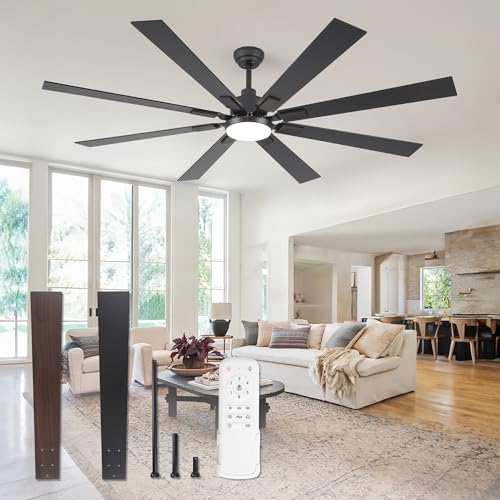
The sweet spot for effectiveness generally means the fan blades shouldn't be much higher than 9 feet from the floor. Beyond that, unless you’re in an airplane hangar, you're just ventilating the upper atmosphere.
So, while it’s tempting to let your fan float freely in a cavernous room, remember its primary mission: to move air where people actually are! It needs to be close enough to be effective, without being an intrusive presence.
The Goldilocks Zone: Finding Your Fan's Happy Place
Ah, the legendary Goldilocks Zone! This is where your ceiling fan truly shines, where it's not a hazard and not an ornament, but a harmonious helper. We’re talking about that glorious sweet spot where air circulates like a gentle, invigorating whisper.
This is where the fan is visible enough to admire its graceful spin, accessible enough for the occasional dusting, and yet completely out of the way of everyday life's spontaneous moments. No ducking, no stretching, just pure, unadulterated comfort.
For most standard rooms with 8-foot ceilings, a fan mounted flush or with a very short downrod is often perfect. The blades usually end up around 7.5 to 8 feet from the floor, hitting that ideal range.
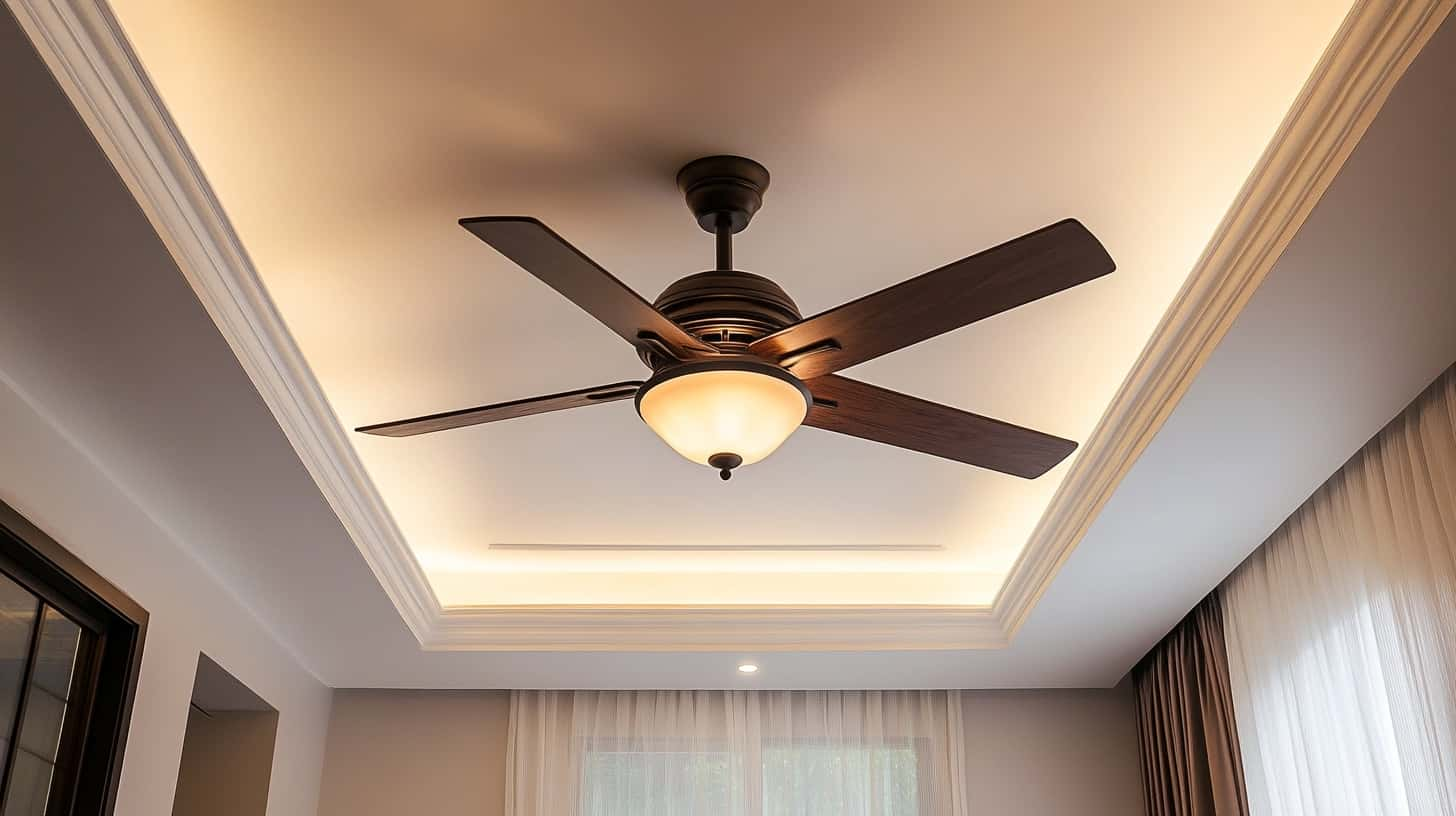
But what if your ceilings are soaring high, like those majestic cathedral ceilings you see in magazines? Fear not, for this is where the noble downrod comes into play, a hero of ceiling fan placement!
Downrods are simply extensions that drop the fan lower from the ceiling. They come in various lengths, allowing you to customize your fan's descent into that perfect zone. Think of them as stilts, but for your fan, guiding it gently into its functional sweet spot.
The rule of thumb for taller ceilings is to bring the blades down so they are ideally between 8 and 9 feet from the floor. This ensures optimal airflow without making the fan feel like it's looming over you.
"The truly magnificent ceiling fan doesn't just spin; it orchestrates a symphony of cool air, perfectly placed to dance with your every breath, without ever bumping your head or losing its chill."
A Dash of Playful Practicality
Consider the size of your room, too. A huge, sprawling great room might need a larger fan (or even two!) positioned strategically. In such cases, you might err slightly on the higher side of the Goldilocks zone, say 9 feet, to ensure broader coverage without feeling overwhelming.
In a cozy bedroom, where you might have a canopy bed or tend to stretch a lot in the morning, sticking closer to that 7-foot minimum clearance is usually a wise choice. Safety first, always, even in slumber!

Also, don't forget about your light fixtures! If your ceiling fan also doubles as your primary light source, make sure its height allows the light to spread effectively throughout the room, not just illuminate a small circle directly below it.
Ultimately, choosing the right height for your ceiling fan is about finding that beautiful balance between safety, efficiency, and aesthetics. You want it to look good, feel good, and perform its duty without drama.
If you're ever in doubt, or if your ceilings are particularly quirky (we love quirky ceilings!), a quick chat with a professional installer can save you a world of head-bonks and ineffective breezes. They are the true gurus of fan placement!
So go forth, armed with this vital knowledge! Measure twice, perhaps even thrice, and confidently place your ceiling fan in its rightful domain. May your home be breezy, comfortable, and utterly free of unexpected fan encounters!
Your ceiling fan isn’t just an appliance; it's a partner in creating your ideal home atmosphere. Give it the respect it deserves by placing it exactly where it can do its best work – right in that glorious, just-right Goldilocks Zone!