How Does Wind Energy Work To Produce Electricity
Okay, so picture this: I'm driving through West Texas, right? Miles and miles of...well, not much. But then, BAM! Suddenly, I'm surrounded by these enormous, graceful white giants slowly twirling in the breeze. I mean, you can't miss 'em! For a second, I thought I'd accidentally driven onto the set of a sci-fi movie. But no, folks, those weren't alien invaders – they were wind turbines, and they got me thinking: How exactly does all that wind power turn into electricity? It seems like magic, right? But spoiler alert: it's science!
Harnessing the Power of the Breeze
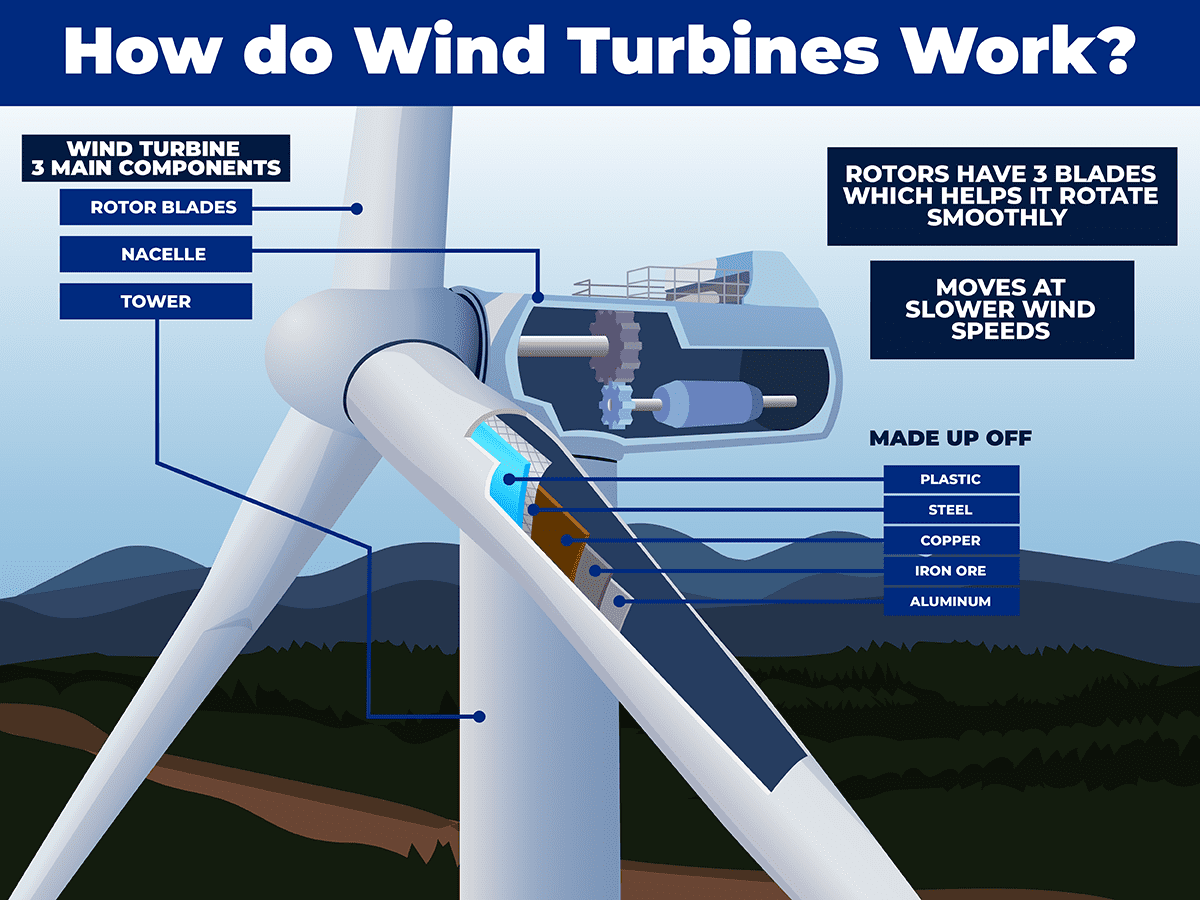
At its core, wind energy is all about converting the kinetic energy of the wind – that's just a fancy way of saying the energy of moving air – into electrical energy. Think of it like this: the wind is pushing against something (in this case, the turbine blades) and making it move. And that movement, with a little help from some clever engineering, becomes the electricity that powers our homes and businesses.
The main components of a wind turbine are, obviously, the blades. These blades are carefully designed with an aerodynamic profile – similar to an airplane wing. This shape allows them to efficiently capture the wind's energy. As the wind blows across the blades, it creates lift, causing the blades to rotate. You know, like how an airplane wing creates lift and enables the plane to fly... kinda. But sideways, and powering something instead of lifting it.
Must Read
So, what happens when the blades spin? Glad you asked! (I'm pretending you actually asked. Work with me here.)
The Generator: Where the Magic Really Happens
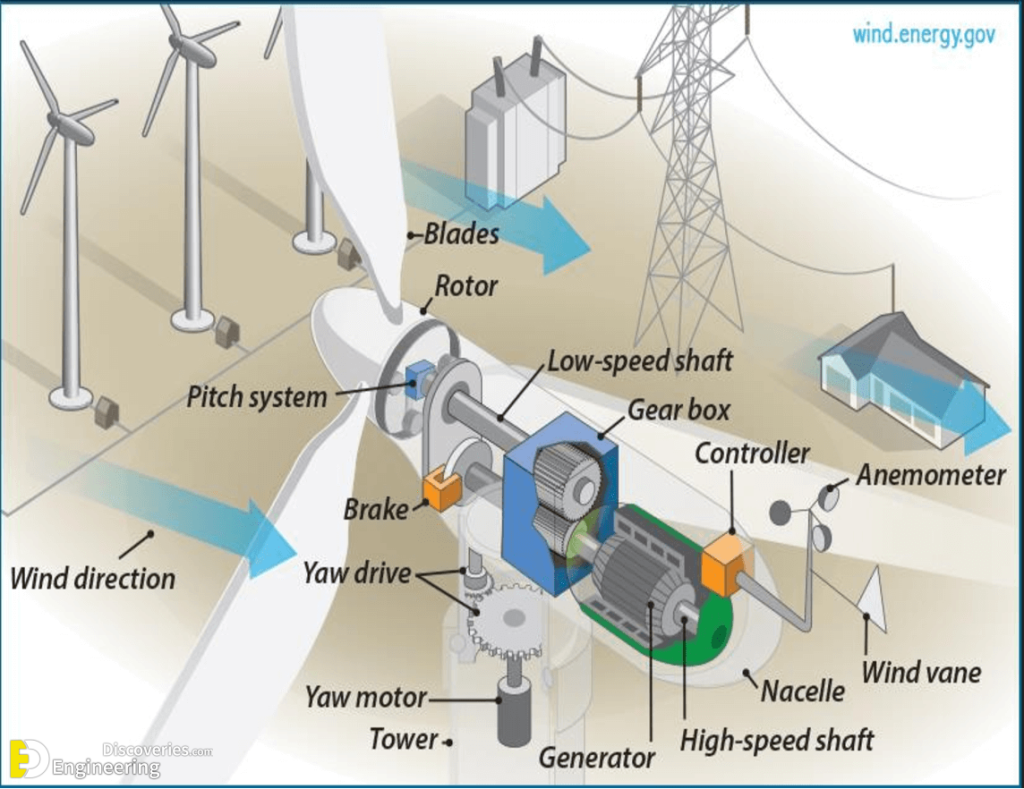
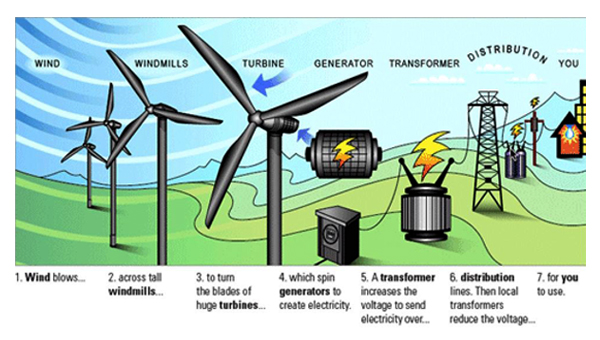
The rotating blades are connected to a rotor, which is attached to a generator inside the nacelle. The nacelle is that big boxy thing sitting on top of the tower. It houses all the important bits. Think of it as the brain of the wind turbine.
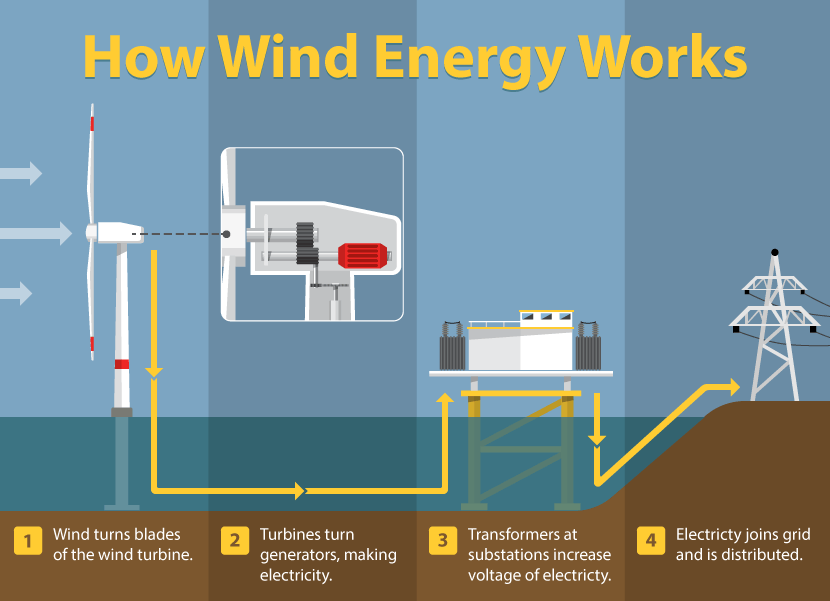
The generator is where the real magic happens. It uses a principle called electromagnetic induction to convert the mechanical energy of the rotating rotor into electrical energy. Basically, the rotating rotor spins a series of magnets inside the generator. This spinning magnetic field induces an electric current in nearby wires, creating electricity. Sounds complicated? It is a bit! But the key takeaway is that movement becomes electricity thanks to magnets and wires! Remember those science class experiments with magnets and coils of wire? Turns out they’re powering a small town near you!
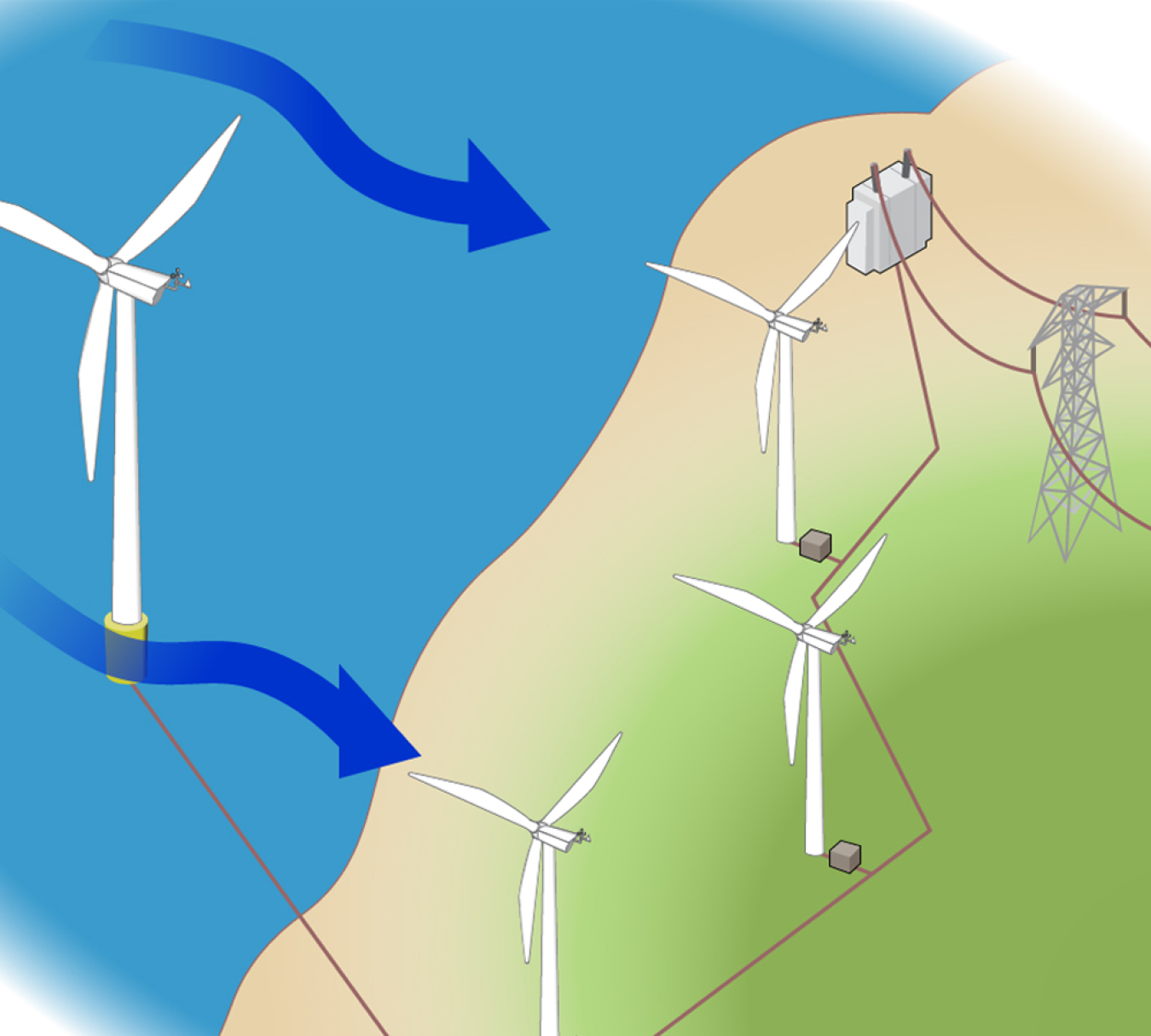
The electricity generated is then sent down the tower through cables to a substation. At the substation, the voltage of the electricity is increased so it can be efficiently transmitted over long distances to homes, businesses, and other users. Think of it as "supercharging" the electricity so it can travel farther. (It's not actually supercharging, but you get the idea.)
Modern Marvels: Not Your Grandma's Windmill
These aren't your grandma's windmills! Modern wind turbines are incredibly sophisticated pieces of engineering. They're equipped with sensors that monitor wind speed and direction, allowing them to automatically adjust the angle of the blades to maximize energy capture. They also have braking systems to prevent damage in high winds. Did you know that some turbines can even feather their blades – meaning they turn them parallel to the wind – to reduce drag in extreme conditions? Pretty neat, huh?
And get this – some turbines can even communicate with each other to optimize energy production across an entire wind farm. Like a synchronized energy symphony! It's all pretty impressive stuff when you stop and think about it. Way more advanced than my attempt to build a working birdhouse last summer. Which, uh, let's just say it ended poorly for the birds.
Wind energy is a clean, renewable source of power that is playing an increasingly important role in our energy future. While it's not a perfect solution (it's intermittent, meaning it depends on the wind blowing), it's a vital part of the transition to a more sustainable energy system. So, next time you see those majestic wind turbines spinning, remember the amazing science and engineering that goes into turning the breeze into electricity. And maybe, just maybe, think about all the birds I didn't accidentally displace. Silver linings, people!